
The t-shirt is about as American as clothing gets, and it's also the single most popular garment in the world. For something built from a few panels of fabric and a collar, the range is remarkable: dozens of fabric types, a wide spread of weights, and cuts that have shifted a lot in the past few years. Worth learning if you're placing a big order or building a brand around one.
You've got the design. You've got a headcount. This guide covers the best t-shirts for custom printing brand by brand, with a plain verdict on each one: how it feels, how it fits, what it costs relative to the others, and how it takes ink. Then there's a table that points from the job you're doing to the shirt that suits it. Style numbers throughout, since that's how buyers search and how reps talk.
Fabric, Weight, and Fit: The Three Decisions That Matter
Almost every t-shirt choice comes down to three things, with one constraint sitting over all of them.
- Fabric determines how the shirt feels against the skin and how ink behaves on the surface. Finely spun cotton holds small types and fine details. Coarser cotton is more forgiving with big, simple graphics.
- Weight is measured in ounces per square yard. A 6 oz shirt has structure and body, and it stands up to hard wear. A 4.2 oz shirt drapes, breathes, and feels closer to something you'd pick off a rack at retail. They suit different jobs.
- Fit covers the classic straight cut, the modern retail cut, and the roomier shapes that have taken over lately. When the box arrives, fit is the first thing people comment on.
Fit is also where the market has moved most. The tight fashion-fit era of the 2010s turned out to be the outlier, and roomier silhouettes are back: wider through the chest, shoulder seam sitting a little down the arm, hem stopping higher. People find it comfortable, it photographs well, and it has a practical upside for group orders, since a generous chest means fewer people land between sizes. Heavier cotton has come along with it, which is why the heavyweight category has grown so quickly. I've written more on that in the custom heavyweight t-shirt trend, and how a t-shirt should fit walks through the measurements.
Budget is the fourth factor, and it overrides the other three. Price per shirt falls as the order grows: volume discounts can cut the per-shirt price by 20 to 60 percent on larger runs, and free standard shipping comes with every order.
T-Shirt Fabrics, Explained in Plain English
Three families cover nearly everything you'll see on a product page.
- 100% cotton is the default. It breathes well and gets softer with every wash. It also absorbs ink cleanly, which is why it prints so nicely. Best for casual wear and retail merch.
- 100% polyester is light, durable, and pulls moisture away from the skin. This is the pick for athletic teams, outdoor events, and active work. Browse performance shirts to compare.
- Blends cover a lot of ground. A 50/50 blend t-shirt mixes cotton and polyester for durability and less shrinkage. A tri-blend adds rayon to the mix for a vintage look and serious softness. Both are popular for premium corporate apparel and streetwear.
There's a reason cotton stays the default for group orders. Nearly everyone is comfortable in it, and it's gentle on skin that reacts to synthetics. Some people find polyester and blends mildly itchy, and a small number react more strongly than that. If you're buying for a large group and can't poll everyone, cotton is the safe call. Our guide to cotton, polyester, and 50/50 blends goes deeper into the trade-offs, and the softest t-shirt material ranks them by feel.
Three more words show up on every spec sheet, and they all describe how the yarn was made:
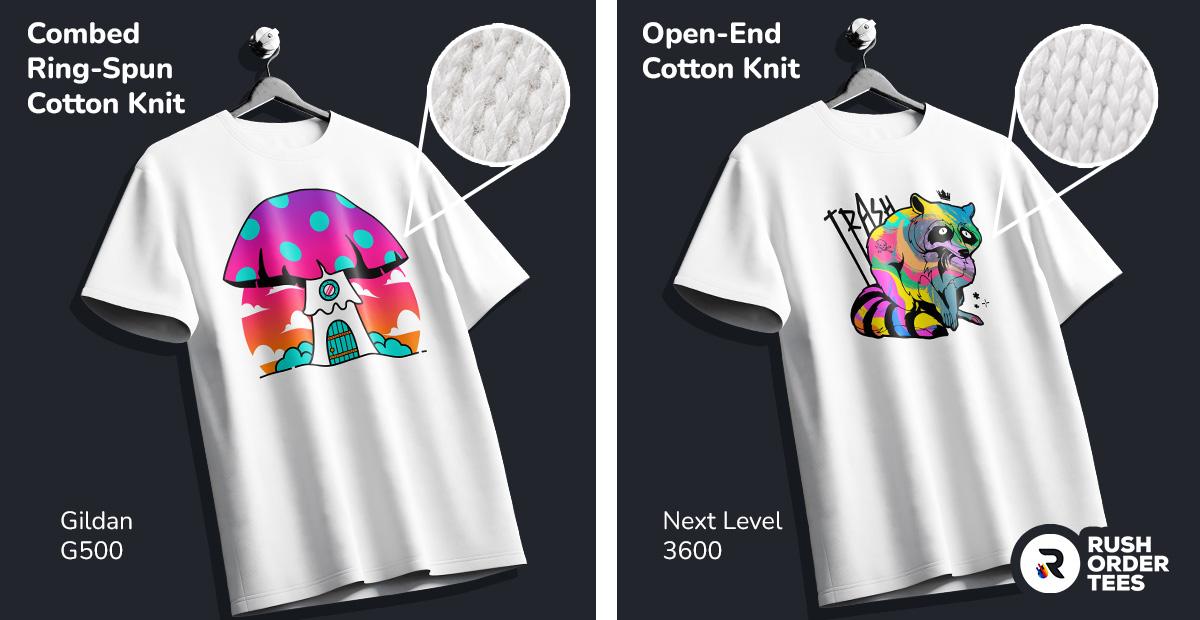
- Open-end (or carded) cotton is spun quickly and cheaply. The yarn comes out a little coarser and the surface a little more textured. It prints fine, and it's what keeps budget tees cheap.
- Ring-spun cotton twists and thins the fibers continuously, producing a finer, stronger, smoother yarn. Softer to wear, smoother to print on.
- Combed cotton gets brushed before spinning to pull out the short and stray fibers. Combed and ring-spun together is the premium combination, and what ring-spun cotton means covers the process in detail.
Airlume is simply Bella+Canvas's name for that combination: combed and ring-spun cotton. When you see it on a spec sheet, that's all it means.
The Best T-Shirt Brands for Custom Printing, Compared
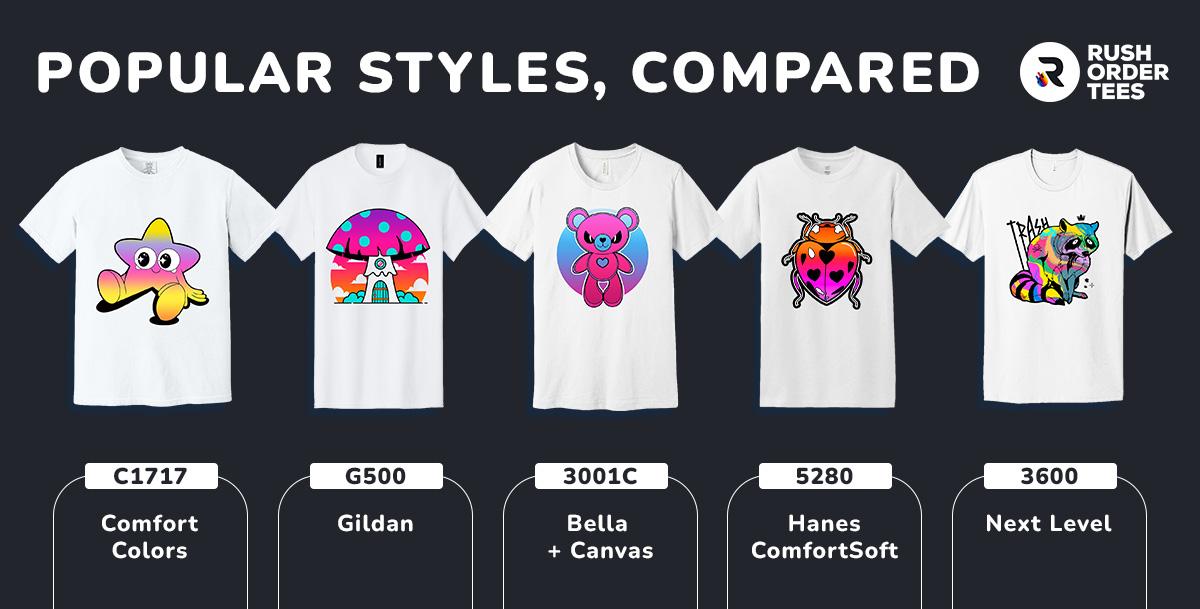
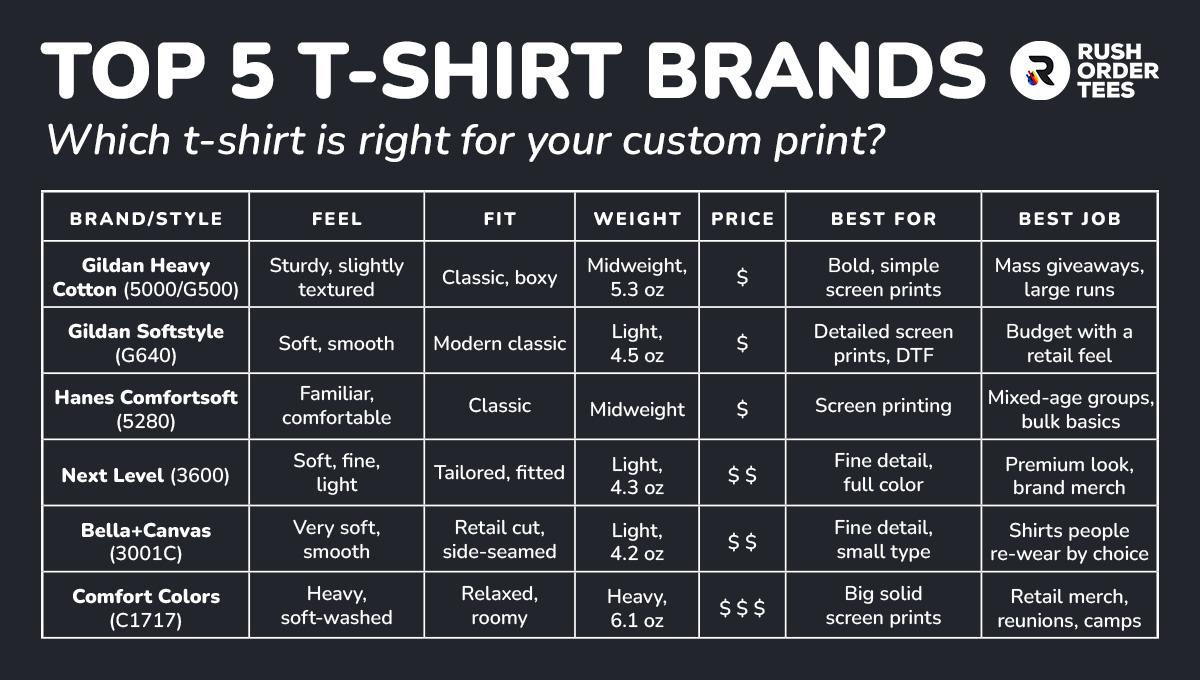
These five brands cover the large majority of custom orders in the US, and they're the ones every roundup of best blank t-shirts for printing will name. Here's a plain verdict on each, then a table you can scan. If you're after the best t-shirt for screen printing specifically, the short answer sits in the fabric column: 100% cotton, and heavier if your design has large solid areas.
Gildan Heavy Cotton (Style 5000 / G500)
The workhorse of the industry. The Gildan Heavy Cotton T-Shirt is 5.3 oz of 100% preshrunk cotton jersey with a classic, slightly boxy fit, taped shoulder-to-shoulder, and a seamless rib collar. It runs S–5XL in 75-plus colors. The cotton is standard carded yarn, so the surface has a bit of texture, and bold simple graphics land beautifully on it. Budget tier, and the sizing and stock are dependable at volume, which matters more than people expect on a 400-piece order.
Gildan Heavy Cotton T-Shirt
- +75 colors
5.3 oz cotton with a taped neck and shoulders, double-needle hems, and a tearaway label. Sizes run S to 5XL. The heavier surface takes bold screen-printed designs well, which makes it the workhorse for high-volume events.
2,367 reviews
Gildan also makes the Softstyle (G640), a lighter 4.5 oz ring-spun cotton tee with a modern classic fit and a high stitch density that gives a noticeably smoother print surface. If you're weighing Gildan Softstyle vs Ultra Cotton (G200, the heavier 6 oz classic), the Softstyle is the softer, more retail-feeling option and the Ultra Cotton is the sturdier one. Our comparison of the top Gildan styles sorts them out properly, and you can see the whole range on the Gildan t-shirts page.
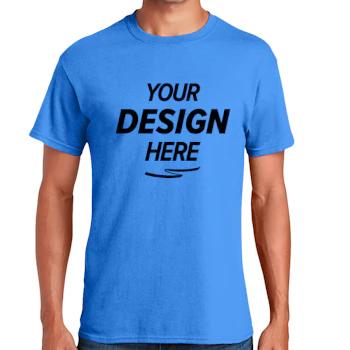
Gildan Adult Softstyle Short Sleeve T-Shirt
- +73 colors
4.5 oz ring-spun cotton in a semi-fitted cut with side seams, a narrow rib collar, and a tearaway label. Sizes S to 3XL. The finer surface keeps full-color printing sharp, so choose it for artwork with small text or shading.
458 reviews
Bella+Canvas (Style 3001C)
The modern default, and my personal favorite. The Bella+Canvas Soft Cotton T-Shirt is 4.2 oz of Airlume combed and ring-spun cotton at 32 singles, side-seamed, cut for a retail fit, and available XS–4XL in 85-plus colors. Athletic Heather and Black Heather are 90/10 cotton/poly, and Ash is 99/1. The fine yarn and smooth surface hold small type and detailed artwork better than anything else in this price tier. Order it when people are going to wear the shirt again by choice. For the head-to-head, see Bella+Canvas vs Gildan.
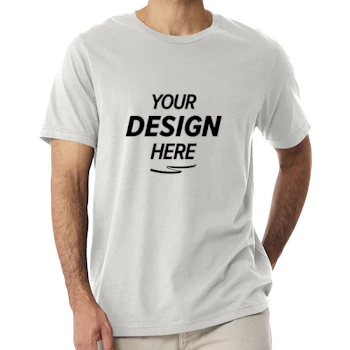
Bella + Canvas Soft Cotton T-Shirt
- +85 colors
4.2 oz combed, ring-spun cotton with side seams, shoulder taping, and a tearaway label. The retail cut runs XS to 3XL, and the color library is unusually deep, which helps when you're matching a brand palette.
307 reviews
Comfort Colors Heavyweight (Style 1717 / C1717)
Garment-dyed and substantial. The Comfort Colors Heavyweight T-Shirt is 6.1 oz of 100% ring-spun US cotton with a relaxed fit, set-in sleeves, twill-taped shoulders, and a seamless body, running S–4XL in 60-plus colors. The shirt gets constructed first, then dyed and soft-washed as a finished garment, which is why it arrives already soft with that faded, lived-in color. Being preshrunk and garment-dyed, it moves less in the wash than a standard tee. Our complete guide to Comfort Colors has the full lineup.
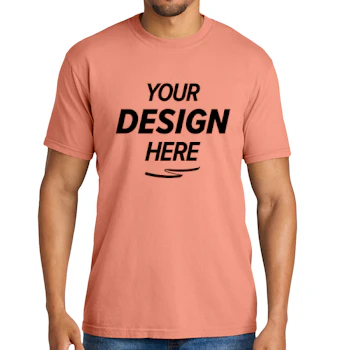
Comfort Colors Heavyweight T-Shirt
- +60 colors
6.1 oz ring-spun cotton, garment-dyed for a soft, lived-in finish, with a twill-taped neck and shoulders and a relaxed cut. Sizes S to 3XL. Garment dyeing leaves slight color variation between shirts, so expect character rather than an exact match.
199 reviews
Next Level (Style 3600)
Soft, light, and tailored. The Next Level Apparel Cotton T-Shirt is 4.3 oz of 100% combed ring-spun cotton at 32 singles, pre-laundered to limit shrinkage, sized XS–3XL. Heather Grey is 90/10. This is the premium look without the garment-dyed weight, and it's a favorite for brands that want a fitted silhouette. See Bella+Canvas vs Next Level for the comparison, or browse Next Level t-shirts.
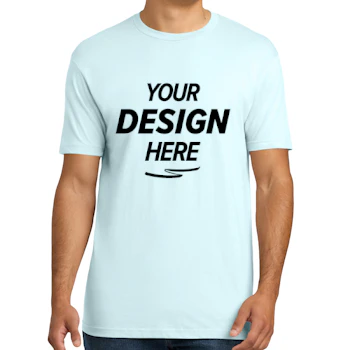
Next Level Apparel Cotton T-Shirt
- +38 colors
4.3 oz combed, ring-spun cotton in a fitted cut with side seams, set-in sleeves, and a tearaway label. Sizes XS to 2XL. It runs trimmer than the rest, so size up on group orders where you're guessing.
1,216 reviews
Hanes (Style 5280)
The name everyone's family already knows, which counts for something when you're handing shirts to 200 people. The Hanes ComfortSoft Cotton T-Shirt runs S–5XL at a budget price, and the Beefy-T (5180) is the heavier 6.1 oz classic. Solid mid-tier value on bulk basics. Hanes vs Gildan settles that matchup, and the full range is on the Hanes t-shirts page.
Hanes ComfortSoft® Cotton T-Shirt
- +48 colors
5.2 oz ComfortSoft cotton with a tagless neck label, ribbed collar, shoulder-to-shoulder taping, and double-needle hems. Sizes S to 3XL. Stock stays deep and consistent, which makes reordering the same shirt next season simple.
154 reviews
Which Shirt for Which Job?
Most guides stop at the brand comparison. This is the part that actually answers your question, because the right shirt depends far more on what you're doing than on which spec sheet reads best.
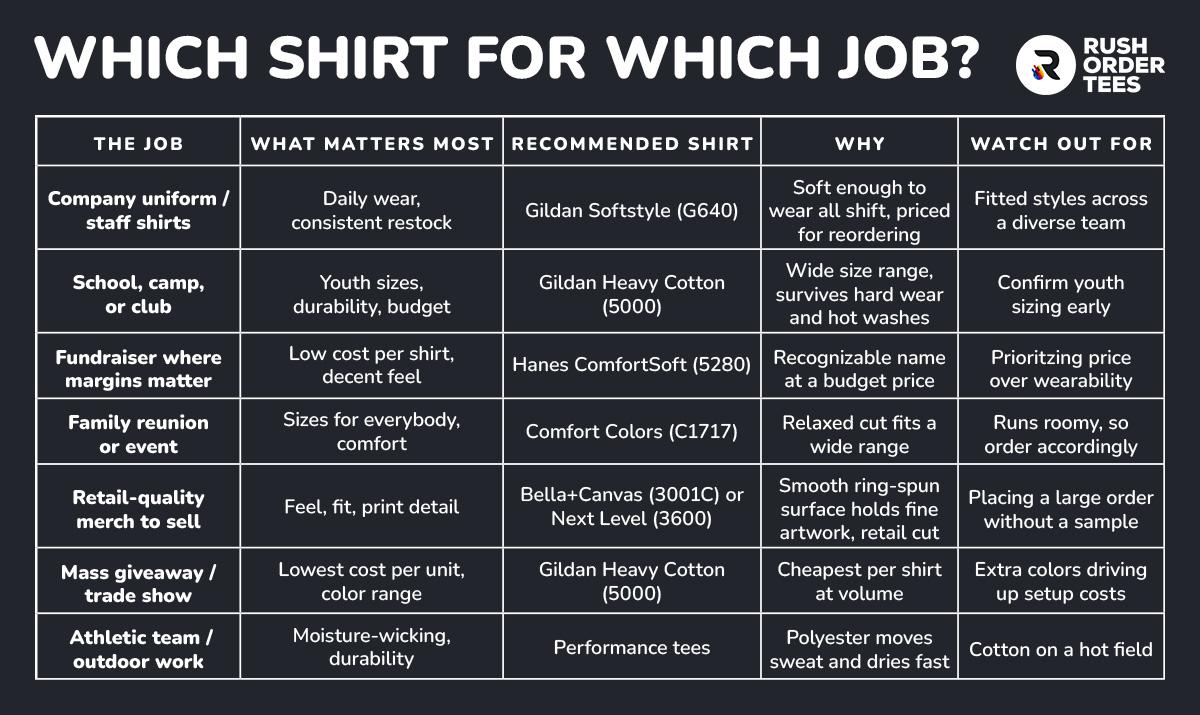
Two decisions here are worth making on purpose.
The first is the merch decision. When people are meant to want the shirt, buy it, wear it out, and keep it, then the shirt itself is the product. ASI's 2026 Ad Impressions Study found that four in five consumers hang onto a promotional t-shirt for at least a year, and nine in ten wear it at least once a month. A well-liked branded tee generates roughly 3,500 impressions over its life, at about a third of a cent each. Every one of those numbers depends on somebody liking the shirt enough to keep reaching for it.
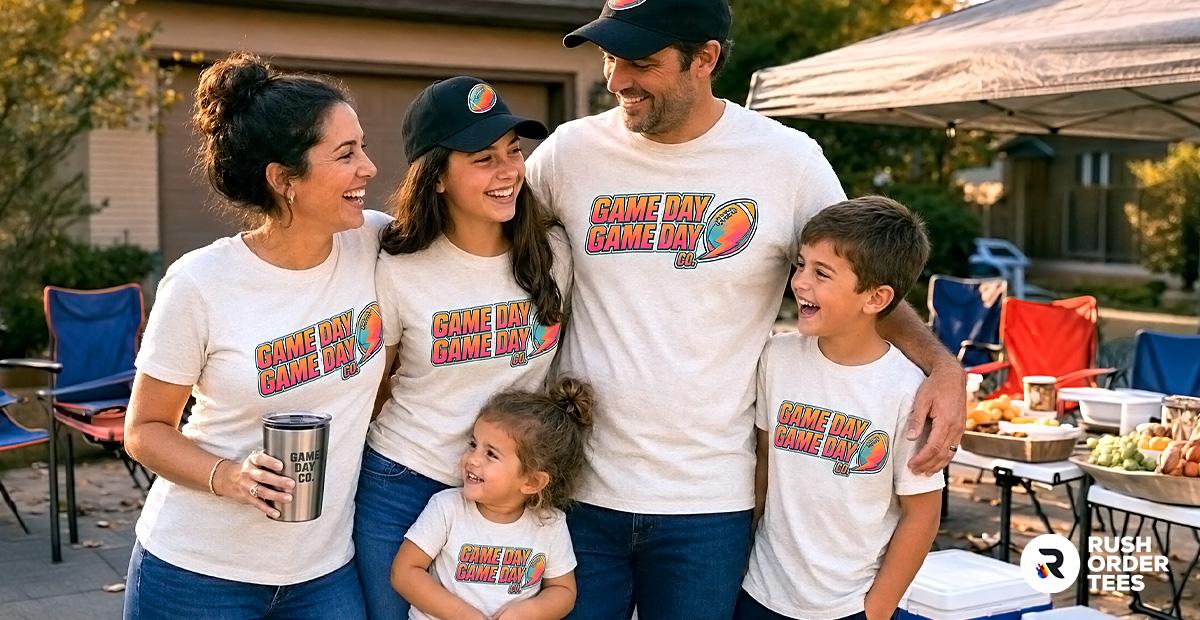
The second is fit across a mixed group. A fitted retail cut looks sharp on the people it's cut for and leaves everyone else out. For a family reunion, a company picnic, or anything spanning a wide age range, a classic or relaxed cut serves more people comfortably. Our group t-shirt sizing guide has the size breakdown that works for most bulk orders.
Every shirt above is on our custom t-shirts page, and the Price Calculator on each product page gives you a real per-shirt number at your quantity before you commit to anything.
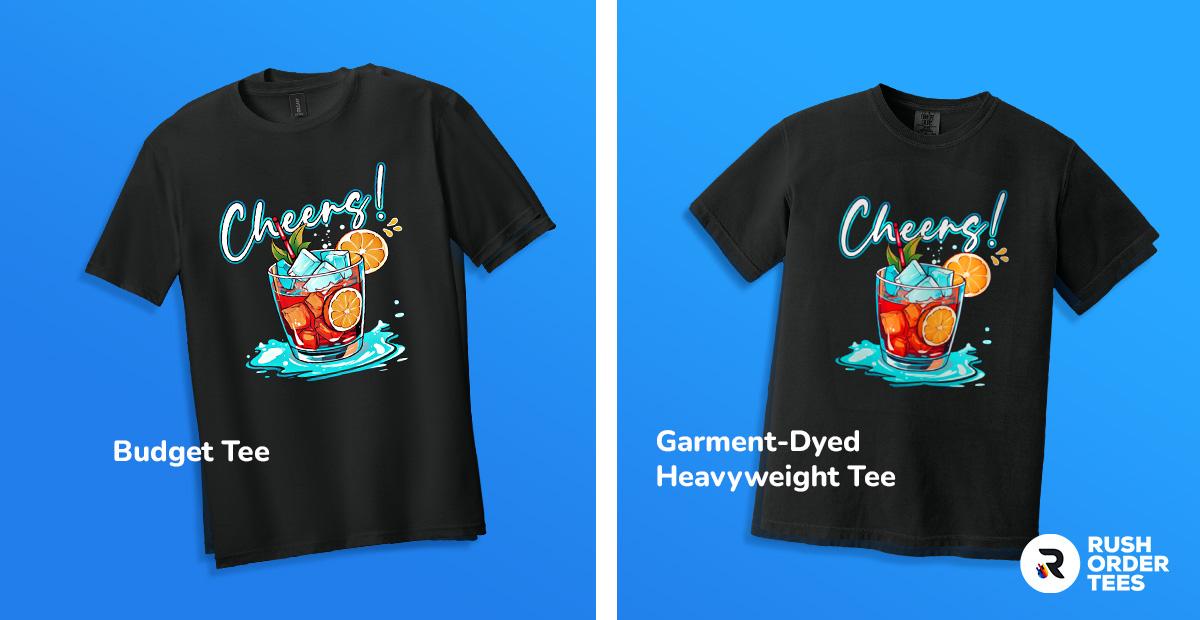
How Your Print Method Changes the Shirt You Should Pick
Most brand roundups skip this, and it closes the loop on the whole decision.
Screen printing pushes ink through a mesh screen into the fabric. 100% cotton is the safest surface for it, and heavier weights help, since a dense knit gives a flat, stable base that lets large solid areas lay down smooth. Each color in your design needs its own screen, ink, and press pass, and that setup is a fixed cost for the job. Three screens cover 24 shirts or 240, which is why the per-shirt price drops so sharply as quantity climbs. Our screen printing vs digital printing guide covers the screen side in depth.
DTF, or direct to film, is our current digital method. So what is DTF printing on shirts? Your design gets printed onto a film and then heat-pressed onto the garment, so the ink sits on the surface of the fabric. That means it adheres to cotton, polyester, and blends alike, and it holds fine detail and full-color artwork at low quantities. Our sister brand Ninja Transfers sells DTF transfers directly if you'd rather press your own.
For contrast, older direct-to-garment (DTG) printing relied on water-based ink bonding into natural fibers, so high-polyester shirts gave it trouble. DTF removes that constraint entirely.
Embroidery wants structure. Stitches don't stretch and knit fabric does, so heavier wovens and heavyweight tees hold a design better than thin tri-blends, which can pucker and curl after a few washes. Embroidered t-shirts and pocket tees require a minimum order of 6 pieces. Printed tees have no minimum at all.
DTF widens what's printable, so on a digital order you can choose almost entirely on feel, fit, and budget. With screen printing and embroidery, the fabric still shapes the decision.
Frequently Asked Questions
What is the best t-shirt for screen printing?
For most jobs, 100% cotton in a midweight or heavier fabric. The Gildan Heavy Cotton (5000) is the volume standard, and the Comfort Colors 1717 is the premium pick when you want large solid areas to look rich. Ring-spun cotton like the Bella+Canvas 3001 gives a smoother surface for fine detail.
What is the difference between Bella+Canvas and Gildan?
Bella+Canvas uses Airlume combed and ring-spun cotton in a lighter, side-seamed retail cut, so it feels softer and holds finer detail. Gildan's Heavy Cotton uses standard carded cotton in a classic straight cut at a lower price. Gildan wins on cost per shirt; Bella+Canvas wins on feel and fit.
What does ringspun cotton mean, and does it matter for printing?
Ring-spinning twists and thins the cotton fibers continuously, producing a finer, stronger, smoother yarn than standard open-end spinning. Yes, it matters. The smoother knit surface holds small type, halftones, and fine linework more cleanly, and the shirt feels considerably softer to wear.
What is the best shirt for embroidery?
Something with structure. Heavyweight tees and cotton wovens hold stitches better, because knit fabric stretches and thread doesn't. Thin tri-blends tend to pucker under dense designs. Embroidered t-shirts and pocket tees require a minimum order of 6 pieces, though printed tees have no minimum.
Do I have to order all the same shirt, or can I mix styles and colors?
You can mix. Add different products, colors, and sizes within a single design or order directly in the Design Studio as you're building it, then choose your size breakdown per product before checkout. Handy when a group wants a unisex tee and a women's cut of the same design.
What size range can I get for a group with mixed sizes?
Adult t-shirts run XXS to 5XL, and we carry a full range of youth sizes as well, so you can cover a whole family or an entire school in one order. Size availability varies by style, so check the specific product page. Extended sizes are widest on Gildan and Hanes.
Order Samples Before You Order 200
One rule carries this whole guide: pick for the job and the wearer. The spec sheet tells you what a shirt is made of. The person putting it on tells you whether you chose right.
If the order is large, or you're building merchandise you plan to sell, get samples of two or three styles before you commit. It costs very little; there's no minimum on printed tees, and half an hour with the actual garments teaches you more about weight and drape than any spec sheet will. Wash one. See how it hangs afterward. That's the step people skip and later wish they hadn't.
When you've settled on a favorite, our custom t-shirts page has the full lineup, and the Design Studio lets you drop your artwork onto the shirt and see it before you order. Free standard shipping comes with every order, and the Price Calculator on each product page shows your real per-shirt price at your quantity.

About the Author
A graduate of the Multimedia program at the University of the Arts in Philadelphia, Imri Merritt is an industry veteran with over 20 years of graphic design and color separations experience in the screen printing industry.