
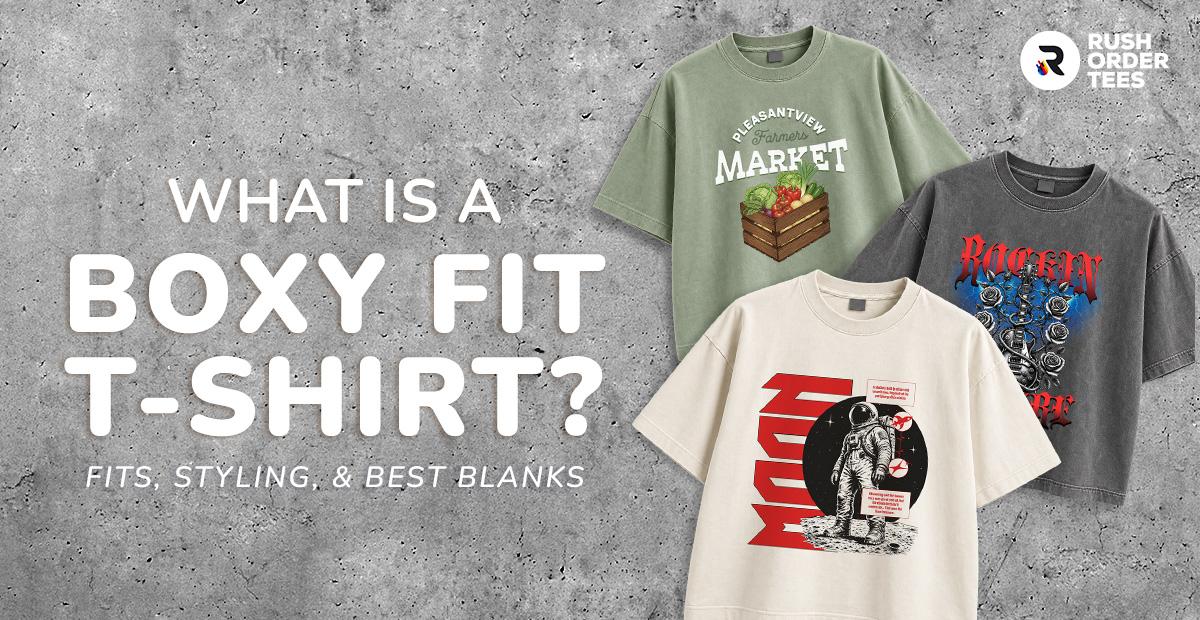
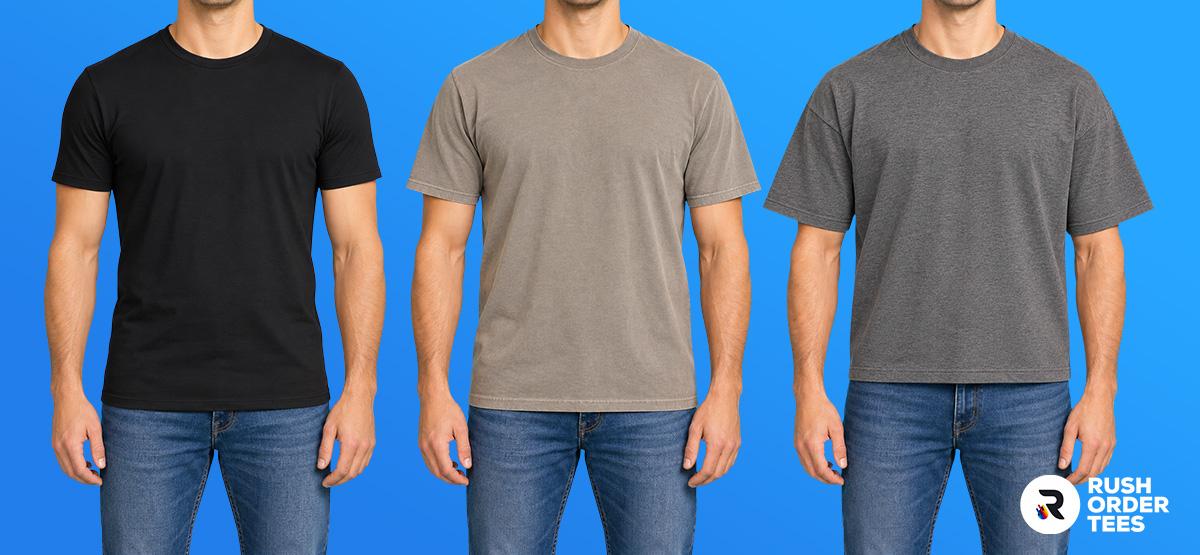
You know the look when you see it. Wide through the chest, a little short at the hem, shoulder seam sitting slightly down the arm. It photographs well, and it's comfortable on a lot of different bodies. When you go to order some, the product pages hit you with five words for what looks like the same shirt: boxy fit t-shirt, oversized, drop shoulder, relaxed, streetwear fit.
Those words describe real construction differences. Boxy, oversized, and drop-shoulder are three separate decisions a manufacturer makes about a garment, and a single tee can have one of them, two, or all three.
Roomier tees have always had a following. The tight fashion-fit era that dominated the 2010s was the outlier, and the pendulum has swung back toward drape, comfort, and a lived-in feel that suits a wider range of body types. Below, I'll separate the three fits, walk through eight heavyweight tees that actually deliver them, and cover how to keep the shape and print them well.
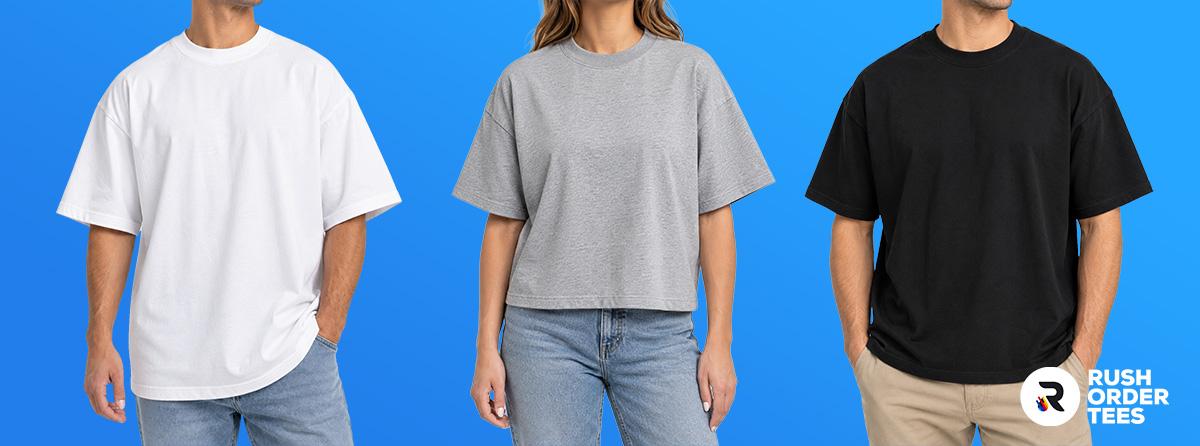
What Is a Boxy Fit T-Shirt? (vs. Oversized vs. Drop Shoulder)
One note on vocabulary first. Fit and cut mean the same thing here, and brands swap between them freely. A page might say "boxy fit" on one style and "boxy cut" on the next, describing identical construction. Our guide to t-shirt styles covers the broader vocabulary if you want the full map.
Worth saying plainly: no standards body governs these words. Brands apply them loosely and inconsistently, so treat the descriptions below as the general sense of each term, then confirm against the actual garment.
- Boxy generally means wider through the chest and often shorter through the body, giving a squared silhouette that lands around the waist.
- Oversized generally means roomier throughout, and the body length often runs longer as well.
- Drop shoulder describes one thing only: the shoulder seam sits below the natural shoulder point, partway down the upper arm. It says nothing about the width or length of the body, and it appears on boxy tees, oversized tees, and standard ones alike.
Two tees from one brand show how this works in practice. The AS Colour Box Tee and Classic Oversized Tee both list dropped shoulders, both come pre-shrunk, and both run S–3XL. The difference sits in the body: the Box Tee specs call out a shorter body length, while the Oversized Tee describes an oversized fit with no mention of a shortened body. Same shoulder construction, two different silhouettes.
Relaxed fit is worth pinning down too, since it appears constantly. The term came into use to distinguish a garment from fitted or fashion fit, and it often doubles as standard fit. Next to a fitted tee, a relaxed tee is roomy. Next to the current wave of streetwear cuts, it's moderate.
So the reliable method is the same every time: read the manufacturer's spec bullets and the product details, then check the garment measurements in your size. Product names and category filters are the two least reliable signals, and I'll come back to why.
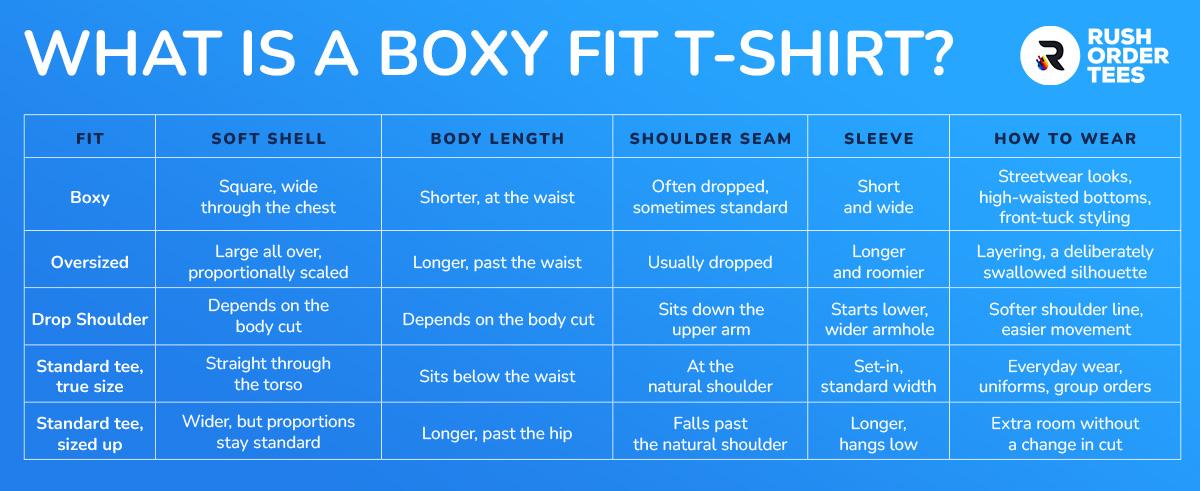
Boxy fit vs. just sizing up
Sizing up scales the whole pattern. Width and length grow together, because that's what grading does. So if you chase the current look by ordering everything two sizes up, you get the width you wanted and a lot of extra torso along with it.
This is also why "oversized" is a slippery word. It describes a look more than a product category. The construction you probably want is the boxy one: a dropped shoulder and a relaxed chest over a body that's cut short. The sleeves come out longer and wider, the chest opens up. The hem still stops at your waist.
The numbers involved are smaller than you'd expect. A standard large tee usually measures around 30 inches from the high point of the shoulder down to the hem. A boxy large often comes in at 28 or 29. One or two inches sounds like a rounding error, and on the body it's the difference between a hem that sits just past your waistband and one that covers your back pockets. Plenty of standard and relaxed styles run past 30 inches to begin with, so sizing up from there compounds it.
[image: Side-by-side comparison of a sized-up standard tee vs. a boxy cut, same wearer]
The last time roomy clothing was the default, in late-90s and early-2000s rave and hip-hop style, everything ran long. Shirts past the hip, pant legs pooling over the shoe. Wide-leg and barrel-leg pants are back now, but the proportions moved: the pant hem stops at or above the ankle, the shirt hem sits at the waist or higher. Same width, different line. Seen that way, the boxy cut is a logical next step. It keeps the room and brings the hemline back up.
Every brand grades differently, so the reliable move is to pull up the garment measurements on the product page and read the body length in your size. Our guide to how a t-shirt should fit walks through those numbers, and the same logic carries over to fleece, which we cover in sweatshirt styles explained.
Where the Boxy Tee Came From, and Why It's Sticking Around
Streetwear labels made the roomy silhouette feel premium, and Fear of God Essentials was among the most visible. The Y2K and 90s revival brought back the proportions. Blank manufacturers then built heavyweight lines with the silhouette engineered in, which is the part that matters if you're printing.
That last piece explains the staying power better than any trend does. The cut is comfortable, since a wider chest and a dropped shoulder let fabric move with you. It sizes well across a group because a generous chest narrows the spread of people who fall between sizes. And a wider chest panel gives you a more usable print area.
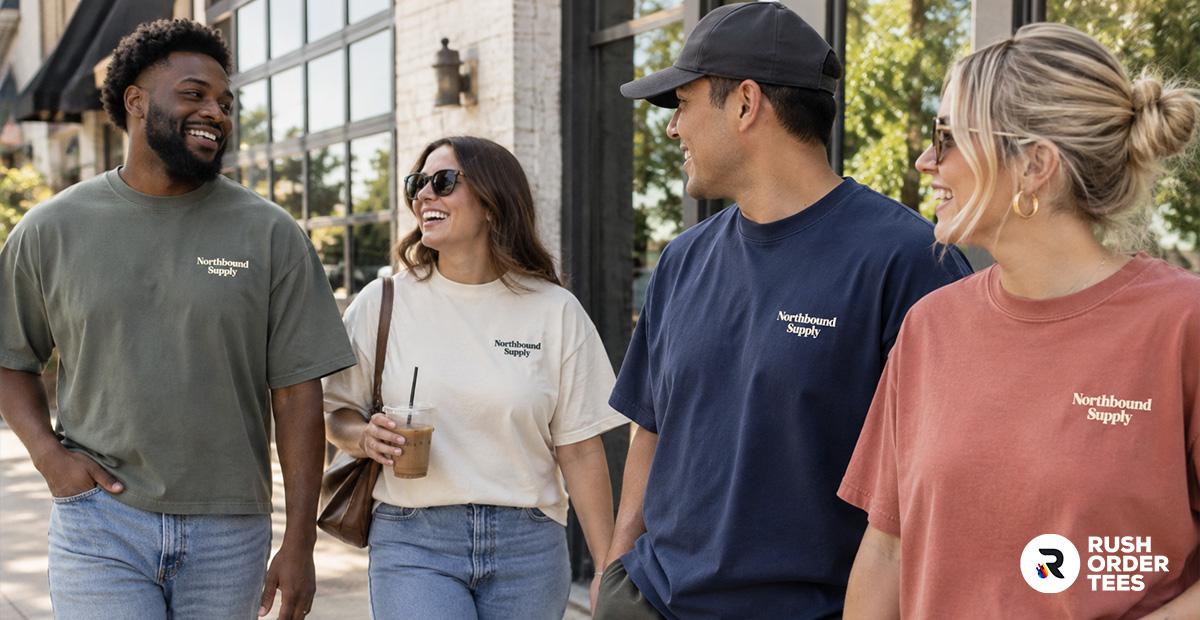
A big part of the current wave is heavyweight 100% cotton, and people genuinely love how it feels. Blends still drape beautifully and still have a place, though they lost ground when the fitted era ended: thinner fabric, and polyester content that can irritate sensitive skin.
Underneath all of it, the standard t-shirt has never gone anywhere. People who want a closer fit buy their true size, sometimes a size down. People following the trend buy a size or two up. I've joked for years that I'm an "extra medium," which describes exactly where I land between a medium and a large depending on the cut.
Which is why the specs matter more than the label. Category filters on any retail site, ours included, are merchandising tools. They group products for browsing, and they can miss how a garment is built. Product names are just as loose: a tee with "Boxy" in the title may say nothing about a boxy fit in its actual specs. Read the product details, and if you're buying to resell, compare the garment measurements and order samples first.
Where the trend stands now — July 2026
Oversized and boxy silhouettes remain strongest with younger shoppers. Survey data collected by ShopLTK and published via Statista in 2024 put Gen Z preference for oversized clothing at roughly one in five, against something closer to one in eight across the general population.
Comfort Colors sits in a useful spot here. The Heavyweight T-Shirt is garment-dyed, preshrunk, roomy, and built with set-in sleeves, which makes it a relaxed tee with the soft-washed character of the look and a fit most people already know they like. Call it an easy alternative for anyone who wants the feel without committing to a streetwear silhouette. We've written a complete guide to Comfort Colors, compared it against Hanes ComfortWash, and covered the fabric side in the custom heavyweight t-shirt trend.
Top 8 Tees for the Boxy / Oversized Look
Every pick below is drawn from the product specs on the page, not from category filters. Where a tee lists boxy, oversized, or drop shoulder in its details, I've said so. Where it doesn't, I've said that too.
Unisex heavyweights
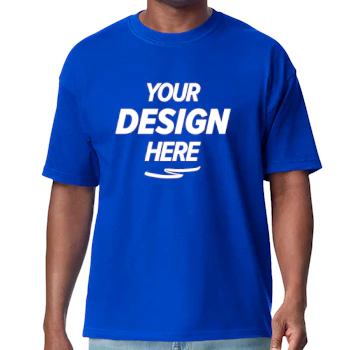
1. Gildan Hammer Maxweight T-Shirt (75000)
- Weight: 7 oz., 100% ring-spun cotton, 14 singles
- Fit: Boxy, oversized
- Drop shoulder: Yes — rolled forward
- Best print method: Screen print
- Sizes: S–3XL
Gildan Hammer Maxweight T-Shirt
A wide rib collar and rolled-forward dropped shoulders give this 7 oz tee a bold streetwear shape. Ring-spun cotton keeps the substantial fabric soft against the skin.
2 reviews
This is the most complete example in the catalog. The specs list a boxy, oversized fit and a rolled-forward drop shoulder, so you get all three characteristics in one garment. Wide rib collar, side seams, taped neck and shoulders. If you want a single blank that demonstrates the whole trend, start here.
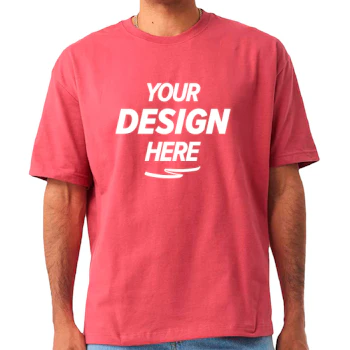
2. Bella+Canvas Unisex 7.5 oz Heavyweight Tee (4610C)
- Weight: 7.5 oz., 100% cotton, 16 singles
- Fit: Boxier, relaxed, unisex silhouette
- Drop shoulder: Yes
- Best print method: Screen print
- Sizes: XS–4XL
Bella + Canvas Unisex 7.5 oz Heavyweight Tee
- +3 colors
Build your next merch collection around substantial 7.5 oz cotton and a roomy, boxier cut. A double-stitched neckband and shoulder taping reinforce the areas that get regular wear.
1 review
The widest size range of the group, which matters for mixed orders. Double-stitched 3/4" neckband, shoulder taping, side seams. Bella+Canvas built this line around the 90s and Y2K proportions deliberately, and the fabric weight backs it up.
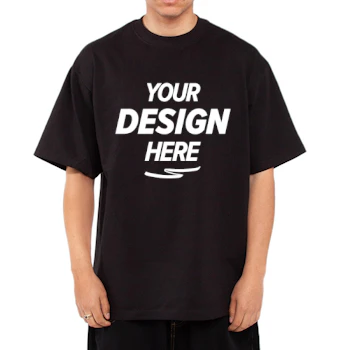
3. Shaka Wear Max Heavyweight T-Shirt (SHMHSS)
- Weight: 7.5 oz., 100% USA cotton, 16 singles
- Fit: Oversized/relaxed streetwear
- Drop shoulder: Slight
- Best print method: Screen print
- Sizes: S–7XL
Shaka Wear Max Heavyweight T-Shirt
- +15 colors
Heavy-duty knitting and reinforced hems make this oversized tee ready for frequent wear. The collar includes Lycra to help retain its shape, with a slight dropped shoulder for extra room.
6 reviews
The oversized example, and the size range runs further than anything else here. The forward-thrusted shoulder seam is a nice touch: it keeps the collar sitting comfortably even with the extra width. Lycra neck rib holds its shape through heavy wear, which is a real consideration on a shirt this heavy.
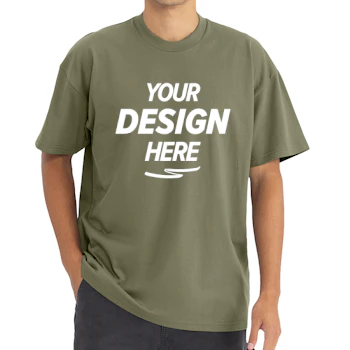
4. Next Level Apparel Unisex Heavyweight T-Shirt (7200)
- Weight: 6.78 oz., 100% USA combed ring-spun cotton
- Fit: Relaxed
- Drop shoulder: Yes
- Best print method: DTF or screen print
- Sizes: XS–3XL
Next Level Apparel Unisex Heavyweight T-Shirt
- +6 colors
Combed ring-spun cotton gives this 6.78 oz tee a smooth, soft feel for everyday wear. Dropped shoulders and a relaxed body leave room to move.
4 reviews
A relaxed body with a genuine dropped shoulder, sitting a little lighter than the tees above. Combed ring-spun cotton gives you a smoother surface than carded cotton, so fine detail holds up well. Good middle ground if 7.5 oz feels like more shirt than your audience wants.
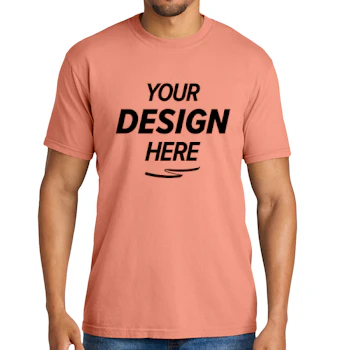
5. Comfort Colors Heavyweight T-Shirt (C1717)
- Weight: 6.1 oz., 100% ring-spun USA cotton
- Fit: Relaxed, garment-dyed, preshrunk
- Drop shoulder: No — set-in sleeves
- Best print method: Screen print or DTF
- Sizes: S–4XL
Comfort Colors Heavyweight T-Shirt
- +60 colors
Soft-washed, garment-dyed cotton delivers a broken-in feel and vintage color. Set-in sleeves keep the shape familiar, making this a natural choice for campus, destination, or everyday merch.
199 reviews
A relaxed garment-dyed tee, included here as the alternative for anyone who wants the lived-in look with a familiar fit. The specs list set-in sleeves and twill-taped shoulders, with no boxy or drop-shoulder language, so this belongs alongside the streetwear cuts as a different option. The soft-washed color range and the price point are what make it worth ordering.
Women's cuts
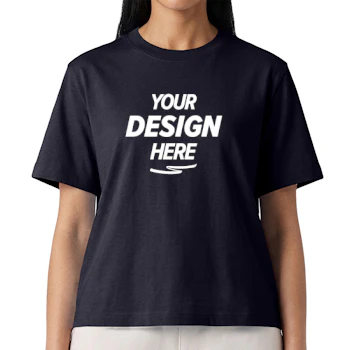
6. AS Colour Women's Box Tee (ASC4030)
- Weight: 7.1 oz. combed cotton
- Fit: Relaxed with a shorter body length
- Drop shoulder: Yes
- Best print method: DTF or screen print
- Sizes: XS–2XL (minimum order of 10)
AS Colour Women's Box Tee
A shorter body and dropped shoulders create a roomy silhouette that pairs easily with high-waisted bottoms. Preshrunk combed cotton and side seams help maintain the fit.
The textbook definition of boxy, written right into the specs: relaxed through the body, cut short, dropped shoulders. Wide ribbed neckline with reinforced stitching, preshrunk, tear-out label. If you're building a retail line and want the silhouette to be unmistakable, this is the one to sample first.
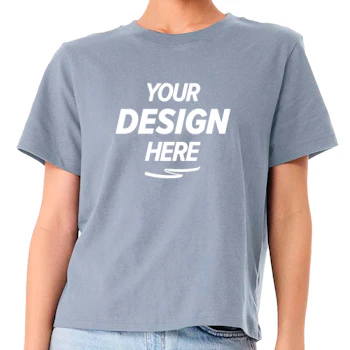
7. Bella+Canvas Women's 6 oz Heavyweight Tee (6110C)
- Weight: 6 oz.
- Fit: Boxy, mid-length
- Drop shoulder: No — set-in sleeves
- Best print method: DTF
- Sizes: [confirm current range on PLP]
BELLA + CANVAS Women's 6 oz Heavyweight Tee
- +9 colors
Get a boxy silhouette with more coverage than a cropped tee. The mid-length body sits away from the skin, while Airlume combed cotton provides a smooth surface for printed artwork.
A boxy cut that stops short of cropped, which broadens who'll wear it. The shoulder is a standard set-in seam, so this is a clean example of boxy width working independently of shoulder construction. Bella+Canvas built it as the women's companion to the 3010 body, tailored to a woman's frame rather than scaled down from a unisex pattern.
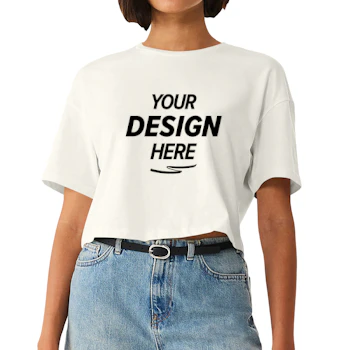
8. Bella+Canvas Women's Garment-Dyed Cropped Tee (6882GD)
- Weight: 6.5 oz., 100% Airlume combed and ring-spun cotton
- Fit: Cropped boxy, with oversized sleeves
- Drop shoulder: Oversized sleeve construction
- Best print method: DTF or screen print
- Sizes: S–2XL
BELLA + CANVAS Women's Garment-Dyed Cropped Tee
Oversized sleeves and a boxy crop give this tee its distinctive proportions. Garment-dyed Airlume cotton adds soft, vintage character, and a tear-away label makes it easy to rebrand.
Cropped boxy fit plus deliberately oversized sleeves, finished with a garment dye for the faded look. Side-seamed with double-needle cover stitching, so it holds shape better than most cropped styles. Pairs naturally with high-waisted bottoms.
Browse the full heavyweight t-shirts selection if you want to compare beyond these eight.
How to Style the Boxy / Oversized Tee
Volume on top wants structure on the bottom. That's the whole principle, and nearly every styling decision follows from it.
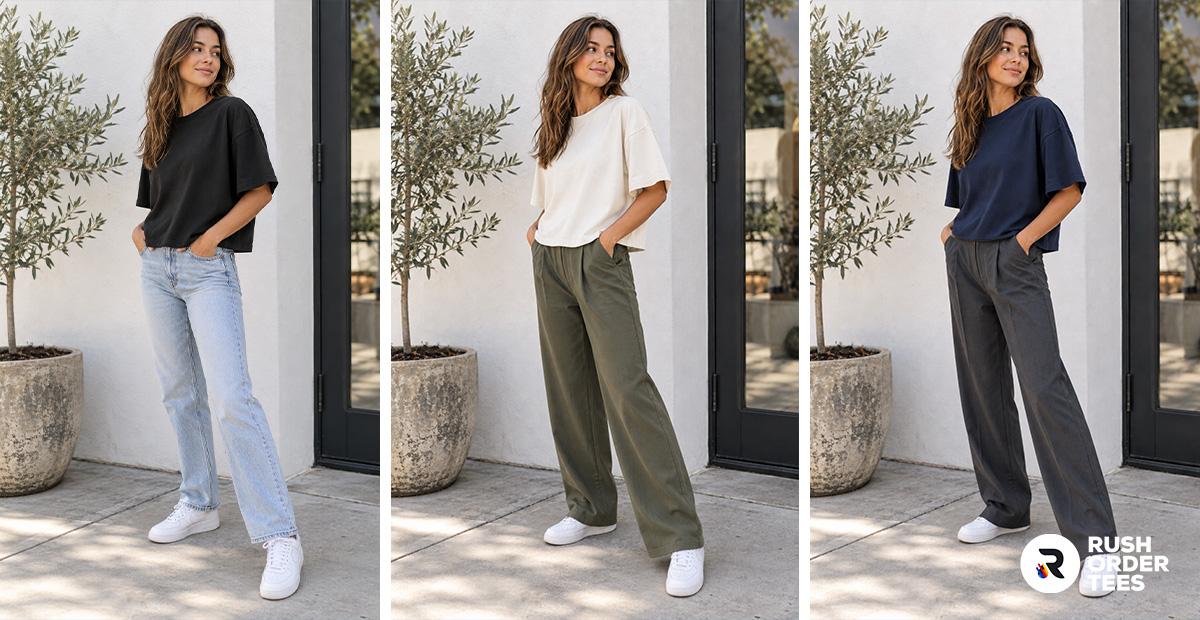
- Balance the proportions: A wide, short tee pairs well with a fitted or straight-leg bottom. If you want the full current silhouette with wide-leg or barrel-leg pants, keep the pant hem at or above the ankle so the eye has a clean break.
- Use the front tuck: Tucking just the front a few inches into the waistband keeps the boxy shape visible while defining where your waist is. Works with a boxy tee, works better with an oversized one.
- Layer with intent: An open shirt, a vest, or a light jacket over a boxy tee creates a vertical line down the middle, which offsets the horizontal width.
- On height and frame: Shorter frames generally do better with a boxy cut than a true oversized one, because boxy adds width without adding length. Taller frames can carry a full oversized tee without the shirt swallowing the proportions. Broader builds often find that a dropped shoulder sits more comfortably than a set-in sleeve, since the seam stops pulling across the shoulder. Slimmer builds get visual weight from the extra fabric, which is often the goal.
- For women's styling specifically: A cropped or middie length gives you a defined waistline without any tucking at all. The Comfort Colors Women's Heavyweight Middie hits between cropped and standard, which is the easiest version to wear for most people. For a fully cropped boxy silhouette, the Bella+Canvas 6882GD above works well with high-waisted denim or trousers. We've written more on who's buying this category in who wears custom crop tops.
One practical note from ordering these for groups: a boxy cut narrows the size spread you need. Fewer people fall between sizes when the pattern is already generous through the chest.
Care & Keeping the Shape: Washing Heavyweight Cotton
Heavy cotton holds its shape well, and a few habits keep it that way. The concern with any dense 100% cotton tee is shrinkage in the length, which is the exact dimension a boxy cut depends on.
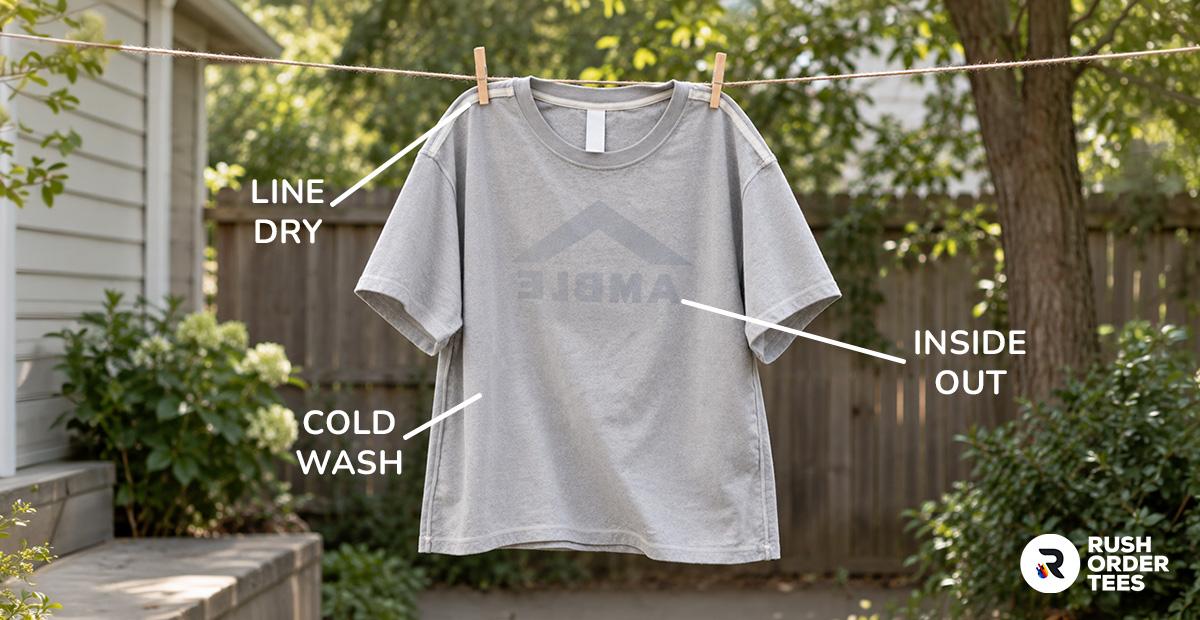
- Wash cold, inside out. Cold water protects both the fabric dimensions and the print. Turning the shirt inside out keeps the printed surface off the drum.
- Skip the hot dryer. Heat is what causes most shrinkage. Tumble dry low, or hang dry if you can. On a heavyweight tee, air drying takes a while, and it's the single best thing you can do for the fit.
- Expect some shrinkage on untreated cotton. A dense cotton tee that hasn't been preshrunk will typically pull in a bit through the body on the first few washes. Preshrunk and garment-dyed styles move much less, which is one of the quiet advantages of the Comfort Colors and AS Colour options above.
- Garment-dyed needs a little extra care. Garment-dyed pieces are dyed after construction, so they can release some color in early washes. Wash with similar colors the first couple of times. The gradual fading is the point of the finish, and it develops rather than degrades.
- Skip fabric softener on printed shirts. Softener builds up on the print surface and can shorten the life of the artwork.
Print durability depends just as much on how the shirt was decorated in the first place, which is worth understanding before you place an order.
Printing on Heavyweight Boxy Tees: Screen Print vs. DTG vs. DTF
Heavy cotton is one of the best surfaces to print on. Dense knits give you a flat, stable canvas; ink sits down cleanly, and there's less of the fiber fuzz that softens fine detail on lighter jersey. The wider chest panel on a boxy body also gives you more usable print area than a standard tee.
That extra room comes with a caveat worth taking seriously. Just because you can print bigger doesn't mean you should. What affects the shirt is the total surface area of ink, not the dimensions of the design. You can run a giant lettering across the whole chest, and if it's outlined rather than filled, the shirt keeps its drape and its hand feel. Fill that same lettering solid, and you've laid down a sheet of ink that stiffens the panel and changes how the garment moves. Fashion brands use the oversized-print look on purpose and use it well, and the ones who do it well are watching coverage, not size.
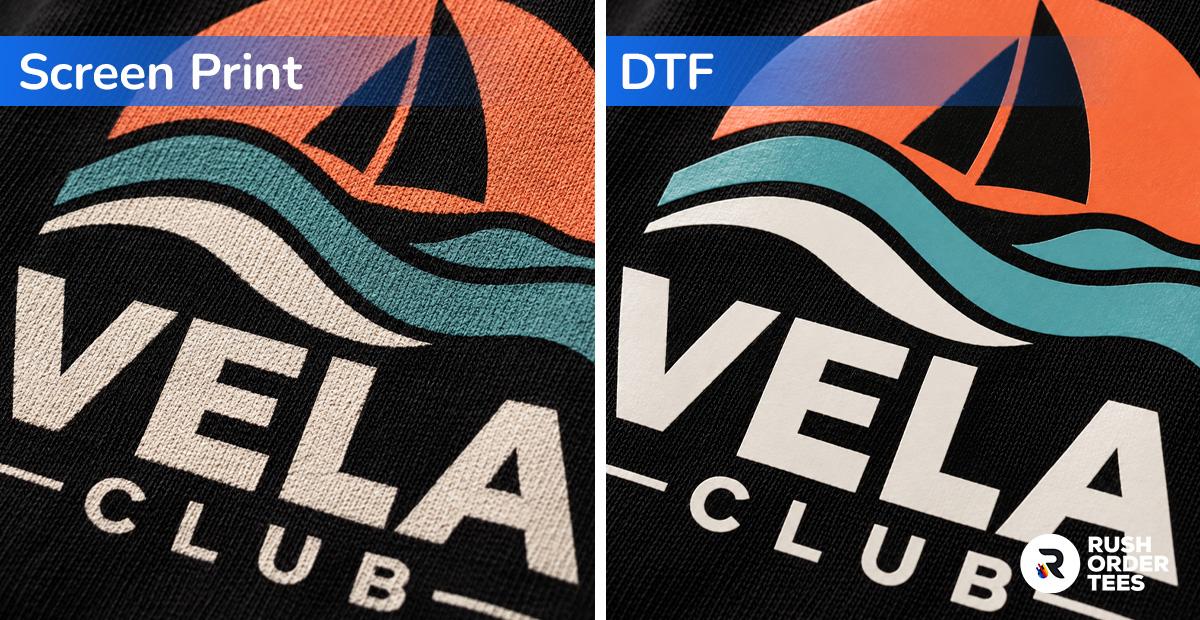
- Screen printing pushes ink into the fabric, so the print becomes part of the shirt. That's where the softest hand feel comes from. Screen printing is the right call for one- and two-color designs, anywhere you need a specific Pantone match, and for specialty inks like metallics and fluorescents. On a 7 oz cotton body, screen printing is hard to beat.
- DTF (direct-to-film) transfers the design onto the surface of the garment. Historically, that meant a heavier, plasticky feel, but the technology has moved considerably. We use current-generation DTF that's lightweight and flexible, with a drape and hand feel much closer to screen printing than it used to be. In practice, most people can't tell the difference by touch. What you get in exchange is far more detail and more accurate color reproduction, which makes DTF the better choice for photographic artwork, gradients, and anything with a lot of colors.
- DTG (direct-to-garment) prints inkjet-style directly onto cotton and works best on 100% cotton, which describes almost every tee in this category. It's common across the industry for small runs with complex artwork. Our own printing lineup is built around screen printing and DTF, and between those two we can cover the same ground with better durability.
- The simple version: one or two colors, or a Pantone match, or a specialty ink, go screen print. Full color, fine gradients, small quantities, go DTF.
One more thing on the sustainability question, since heavy cotton uses more of everything. A 7 oz shirt takes more cotton and more water to produce than a 4.5 oz one. The offset is lifespan. Heavyweight tees survive far more wash cycles before they thin out or lose shape, and a shirt someone wears for five years is a better environmental outcome than three shirts worn for one year each. Several styles here carry OEKO-TEX certification for low-impact dyes.
When you're ready, pick a blank and open the Design Studio to lay out your artwork and see it on the shirt before you commit.
Frequently Asked Questions
What does "boxy fit" mean on a t-shirt?
Boxy fit means the shirt is cut wider through the chest and shorter through the body than a standard tee, producing a squared silhouette. The hem lands at or just above the waist. Look for the phrase in the product detail bullets rather than in the category filters, since filters group products for browsing and won't always reflect the actual pattern.
Is a boxy fit the same as oversized?
They're different builds. A boxy tee gains width while keeping the length short. An oversized tee grows in every direction, including length. A garment can be both, and the Gildan Hammer Maxweight lists boxy and oversized together in its specs, but plenty of oversized tees run long and plenty of boxy tees stay compact.
What is a drop-shoulder t-shirt, and how is it different from a regular tee?
A drop-shoulder t-shirt moves the shoulder seam below the natural shoulder point, so it sits partway down the upper arm. A regular tee uses a set-in sleeve with the seam at the shoulder. The dropped seam creates a softer shoulder line and a wider armhole, which most people find more comfortable through the range of motion.
Are oversized and boxy t-shirts still in style?
Yes, and the underlying reasons for the shift are durable ones. Comfort, easier sizing across a group, and more room for artwork all outlast any particular season. Interest runs strongest with younger shoppers, but the general move toward roomier, more comfortable clothing is broad.
Who should wear a boxy fit? (body type)
Almost anyone, with one adjustment. Shorter frames usually do better in a boxy cut than a fully oversized one, since boxy adds width without adding length. Taller frames can carry either. Broader builds tend to be more comfortable in a dropped shoulder, and slimmer builds gain visual presence from the extra fabric.
Where can I buy boxy or heavyweight tees to customize?
We carry the full range at RushOrderTees, including every style listed above. Browse the heavyweight t-shirts category to compare weights and fits side by side. Printing has no minimum order, so you can run a single sample before committing to a full production run, which I'd recommend for anyone building a retail line.
Get the Silhouette You Want
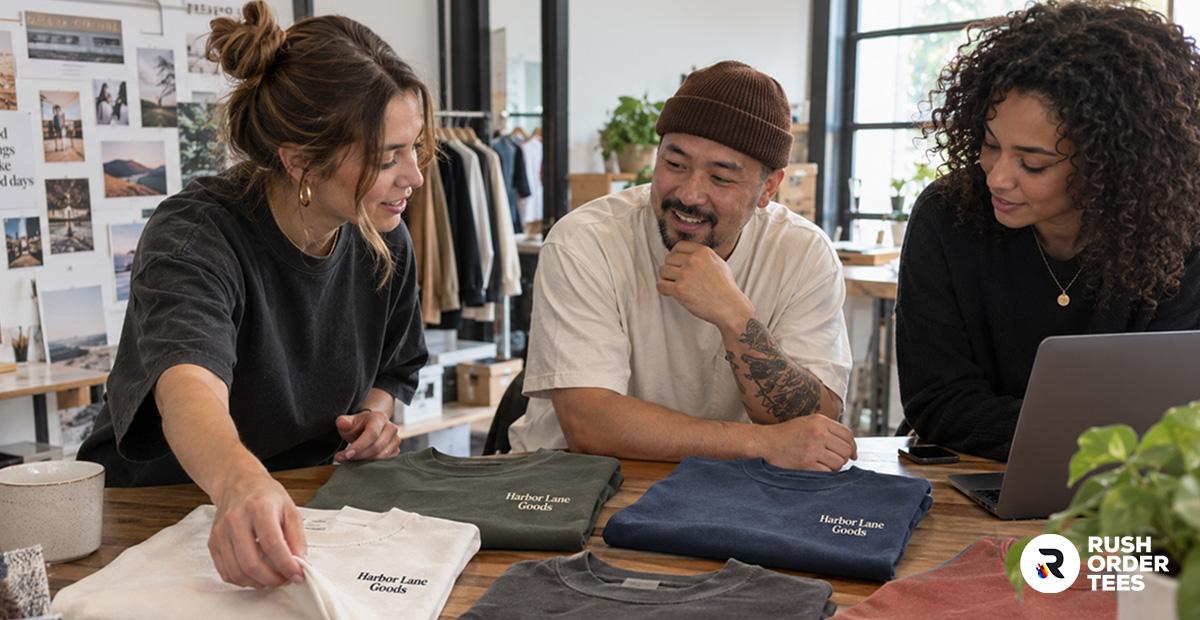
Three terms, three different construction choices, and the freedom to combine them. Boxy gives you width without length. Oversized scales everything up together. Drop shoulder moves the seam down the arm. Once you can read those from a product page, the ordering part gets a lot simpler, and you stop relying on a size label to do work it was never designed to do.
The blanks are genuinely good right now. Manufacturers spent the last few years building this silhouette into heavyweight cotton properly instead of just grading patterns bigger, and the results print beautifully. Order a sample of whichever style caught your eye, wash it once, and see how it hangs. Then come design something on it.

About the Author
A graduate of the Multimedia program at the University of the Arts in Philadelphia, Imri Merritt is an industry veteran with over 20 years of graphic design and color separations experience in the screen printing industry.