
"Brand awareness" may sound like the topic of a corporate strategy meeting, but it might be the most important thing a business has going for it: whether the right people know you exist and think of you when they need what you sell. The companies that win a category outright become the word for it. You Google a question, grab a Kleenex, ask for a Band-Aid. McDonald's spent decades making those golden arches recognizable anywhere in the world. Your goal sits closer to home: getting the few thousand people in your market to know your name and reach for you first.
This guide covers what brand awareness is, why it compounds faster for a small business than you'd expect, how to lock your brand so every impression counts, eight ways to build awareness on a real budget, how to measure it with free tools, and where to spend your first $500 to $10,000. Let’s jump in.
What Is Brand Awareness? (And the 4 Levels That Matter)
Brand awareness is how familiar your target customers are with your business: how easily they recognize it when they see it and recall it when they need what you offer. It runs on a spectrum, from a vague "I've seen that around" to being the first and only name a customer thinks of.
The 4 Levels of Brand Awareness
Awareness builds in stages, and each one is worth more than the last.
- Brand recognition: A customer sees your logo, colors, or name and knows they've come across you before ("I've seen that logo").
- Brand recall: A need comes up and your name arrives on its own ("I need a plumber. Call Hendrick's").
- Top-of-mind: You're the first name a customer thinks of in your category, ahead of every competitor.
- Brand dominance: Your name stands in for the category itself. This is the Kleenex tier, and most businesses will never need it.
Most small businesses win by reaching top-of-mind with one audience in one service area. That's a realistic target, and it's plenty to grow on.
Awareness vs. Recognition vs. Visibility
These three get used interchangeably, and they describe different things. Brand recognition is the entry point: a customer connects your logo or name to your business when they encounter it. Brand visibility is how often and how widely you show up. Brand awareness is the full range, from that first flicker of recognition up through recall and top-of-mind familiarity. Visibility feeds awareness; being seen is what makes you familiar, as long as you look like the same company each time.
Aided vs. Unaided Awareness
Marketers split awareness into two types, and the difference tells you how deep your brand actually sits:
Aided awareness measures recognition. A customer is given a prompt ("Have you heard of Hendrick's Plumbing?") and confirms they know the name. It proves your marketing has reached them enough to trigger a memory when nudged.
Unaided awareness measures recall. A customer names you with no prompt at all ("Name a plumber you'd call"), which proves your brand is embedded in their memory on its own.
Unaided is the more valuable of the two, for a few reasons. The first brand a customer names unprompted is the top-of-mind brand, and top-of-mind tracks closely with market share. It also matches how people buy: when a pipe bursts, nobody scrolls a list of options; they call the first name they remember. Aided awareness can flatter you, since people say "yes, I've heard of them" to a name that merely sounds familiar, which makes it a softer read on what a customer will do. Unaided is the harder number to move, and the one worth chasing.
Why Brand Awareness Matters More for Small Businesses Than Big Ones
A national brand buys reach. It runs a Super Bowl spot, blankets a market, and moves on. A small business earns familiarity in a different way, and the good news is that the method is open to anyone with a logo and some patience.
When you're starting out or staying local, you're up against established players who already own recognition in your space. You close that gap by building: steadily, with repetition, across every place a customer might run into you. A funded campaign or a viral hit can manufacture awareness overnight. Your version comes from turning up at your customer's touchpoints with a consistent look, again and again, until the name sticks.
That makes it worth getting inside your customer's day. How do your customers spend their time? What do they see on a normal Tuesday: the sign on a work truck, a sponsor banner at their kid's game, a coworker's shirt, a Google search when something breaks? Every one of those is a place your brand can show up, and the businesses that get recognized are the ones that turned up in several of them.
The math is in your favor, too. You need the few thousand people in your service area, and reaching them is a smaller, cheaper job than it sounds. Familiarity also does more work than most owners expect. Salsify's 2022 research found 45% of shoppers will pay more for a brand they trust, a figure that climbed to 68% in its 2026 report. Edelman's 2025 data puts trust among the top three things buyers weigh before they purchase. And consistent brand presentation has been linked to revenue increases of up to 33%, per Marq's brand-consistency research. The old rule of thumb that someone needs five to seven encounters with you before your name registers is exactly why repetition across touchpoints beats any single big impression.
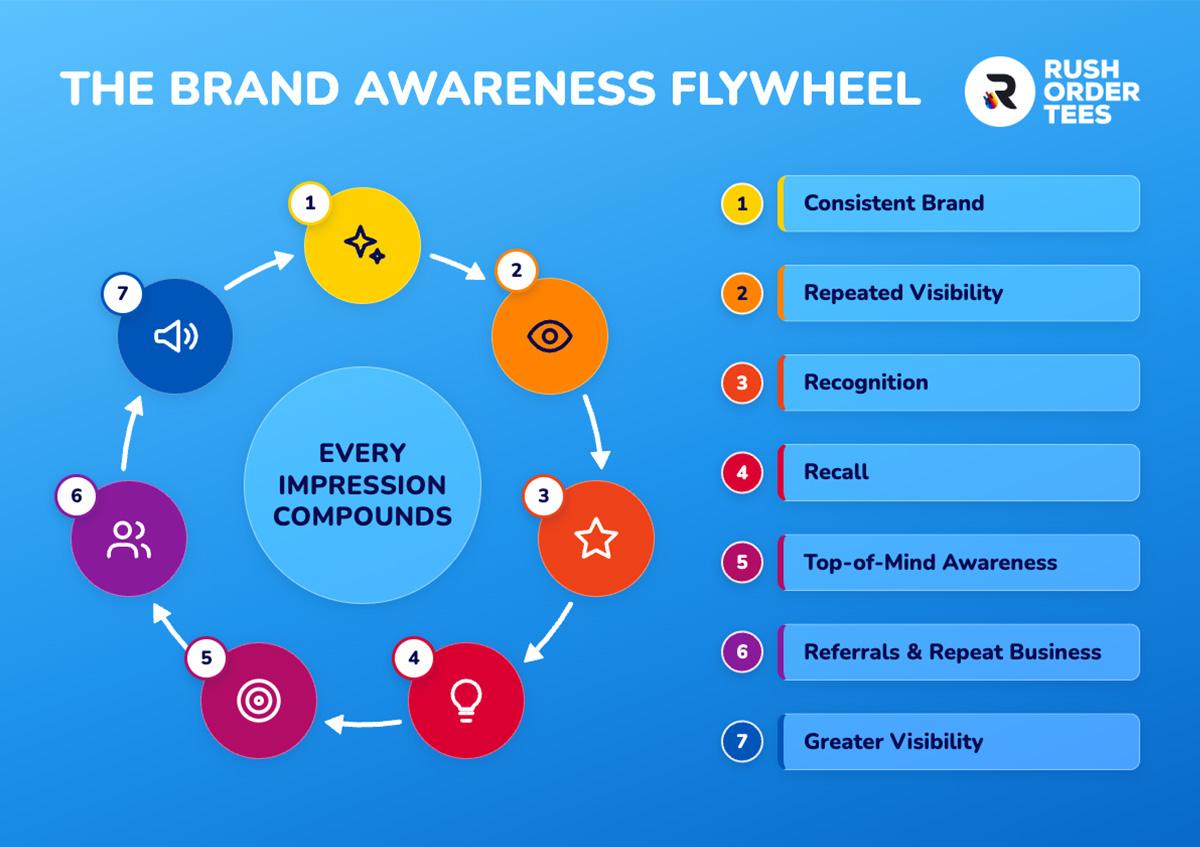
All of these compound when the impressions match. A customer who sees your truck, your shirt, your invoice, and your yard sign should recognize the same company every time. That consistency is what turns scattered impressions into familiarity, and it's worth locking down before you spend a dollar promoting anything.
Before You Spend a Dollar: Lock Your Brand Consistency
Consistency is the multiplier on every other tactic in this article. Get these pieces in place first, and every impression afterward reinforces the last.
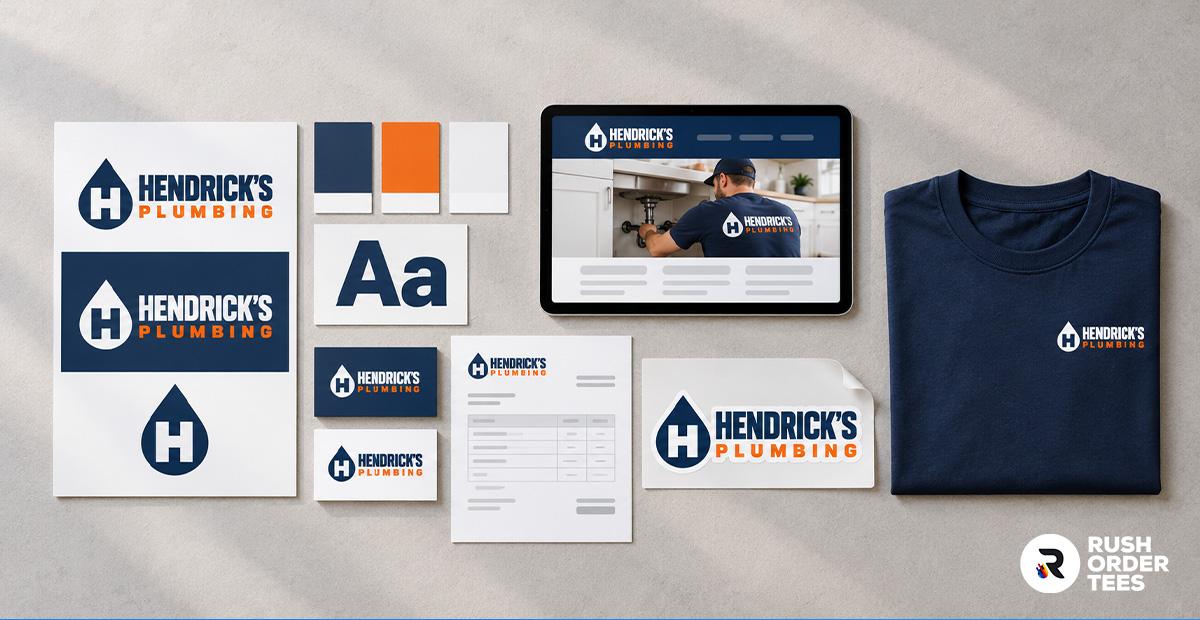
At a minimum, a brand needs a logo, two or three colors you use every time, one font, and a short line that says what you do. Lock those and use them everywhere: your storefront, your website, your business cards, your invoices, your social profiles, and whatever your team wears on a job. People often recall your colors before your name, so treating them as fixed does a lot of quiet work.
Have a one-color version of your logo
Your logo should exist in a single-color version, usually black on white and white on black. Having both is ideal. Full-color logos matter for plenty of brands, and you keep those; the single-color version is the one that survives a stamp, an embroidered cap, an engraved pen, or a one-color screen print on a shirt. Call it the one-color logo test: if your logo needs its gradients and five colors to read, it's carrying too much for the places a small brand actually shows up. I've watched good-looking logos come apart the moment they hit one color on fabric, and a quick test print catches it early. You can drop your artwork into the free online design studio and see it on a real product before you commit.
Have a digital home
Give people one link that leads to you. Best case, that's a website: it's yours, it can rank, and it holds up as the center of everything else. A social profile or a storefront on an existing platform can work in a pinch, and a tool like Linktree can bundle all your links into one landing spot. With how easy websites are to build now, a serious brand should have one. Plenty of businesses see more engagement on social than on their own site, and that's fine, as long as there's a home base you can point everyone to.
Establish your brand guidelines
Most established brands keep a brand guidelines document: the rules that govern how everything looks and reads. Some run to dozens of pages; some fit on one. What matters is that they're specific. A strong set covers your logo and its variations (light-on-dark, dark-on-light, and a small icon version for tight spaces), your exact color values, your fonts, and how much clear space the logo needs around it. This is design work, usually built in a vector program like Illustrator or handed to a designer who sets the rules and delivers the files. Keep your logo and type as vector files so they scale cleanly and print sharp at any size. Once the rules are established, everyone who touches your brand, from a printer to a freelance designer, produces work that matches.
Keep your name short
A shorter name is easier to say, remember, and fit on a shirt. If you can simplify yours before you start spending on promotion, it's worth the thought; even a small trim helps. A friend of mine runs a scenic company and started going by "Creative Scenic" in place of the full "Creative Scenic Associates." The initials would have been too vague to mean anything. Big brands do this constantly: Dunkin' dropped "Donuts," and Federal Express became FedEx. The shorter version is the one people use.
Before you move on, run one quick audit. Put your website, a business card, an invoice, your social profiles, and a team shirt side by side. If they read as the same company at a glance, you're ready to start putting that brand in front of people.
8 Ways to Build Brand Awareness on a Small-Business Budget
These are ordered on purpose. The cheapest, most durable impressions come first, and paid ads come last, once the brand they point to is consistent and worth remembering. Each one lists what it is, what it runs, the effort involved, and one thing you can do this week.
1. Put your logo on things people wear and use
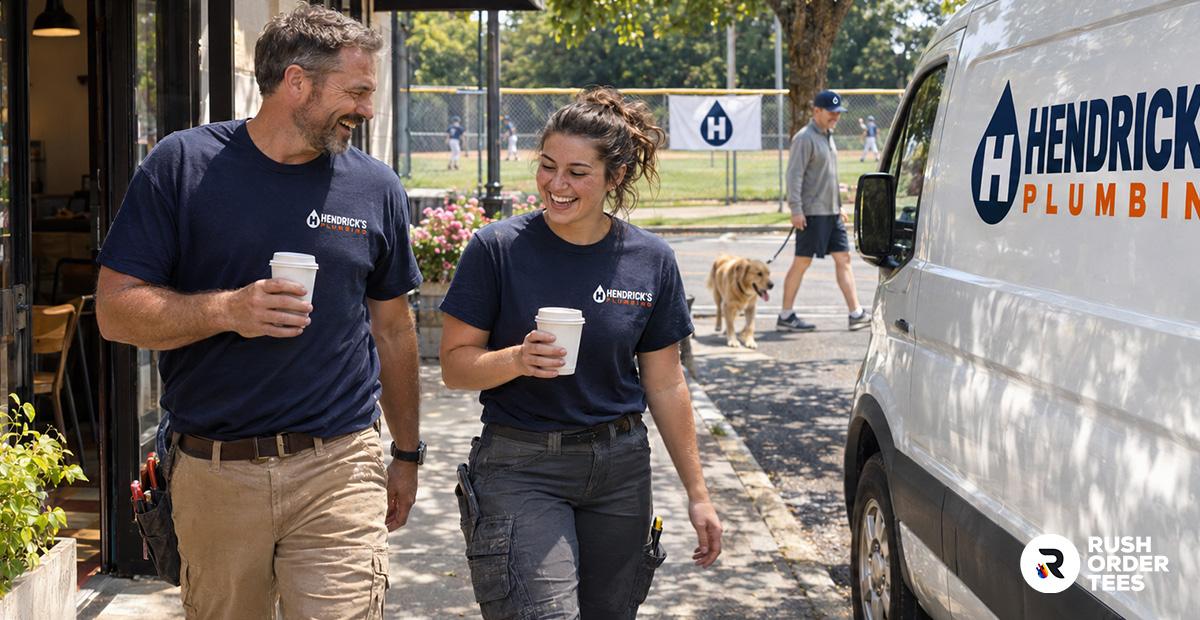
This is the channel the marketing blogs skip, and it's the cheapest impression in the business. A branded t-shirt racks up thousands of views over its life; the Advertising Specialty Institute estimates around 3,500 impressions per shirt, at well under a penny each. That undercuts any digital ad. Promo products stick around, too: four in five people keep them for a year or more, and close to nine in ten can name the company that gave them one, per PPAI's advertiser-recall research. A crew in matching custom company logo shirts turns every job site, delivery run, and coffee stop into an ad that works for free.
Cost: roughly $250 to $400 outfits a ten-person crew in printed tees. Effort: low. Do this week: order a small batch of logo shirts. There's a no minimum order on printed apparel, so you can start with a single piece to check the look, then scale the styles that land. For a full breakdown of the numbers, see how much custom t-shirts cost. And when you're ready to hand things out, custom promotional products like drinkware, totes, pens, and stickers extend the same cheap-impression math to people who aren't on your payroll.
2. Show up where your community already is
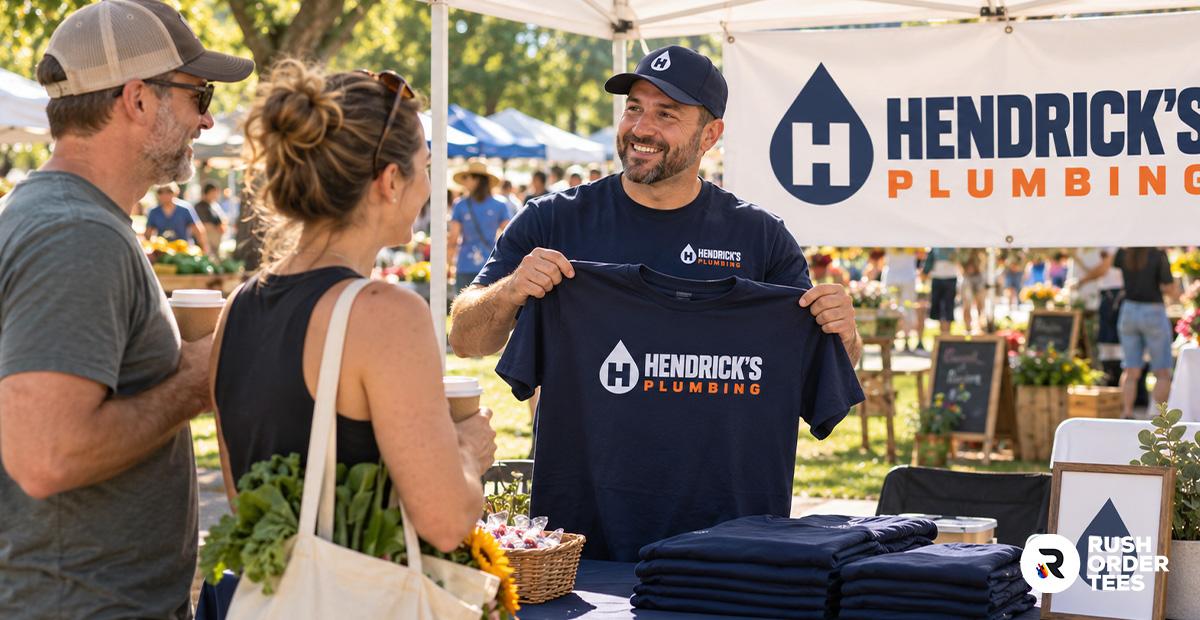
Sponsor the little league team, the neighborhood 5K, the school fundraiser. For $200 to $1,000 you get your logo on a banner, a jersey, or an event tee, plus goodwill a national brand can't buy at any price. At a trade show, put your booth staff in branded shirts so people know who to approach, and give away something people keep. The stadium naming rights you read about are the corporate version; a banner at the farmers market does the same job at your scale.
Cost: $200–$1,000 per sponsorship. Effort: low to medium. Do this week: email one local organizer and ask what a sponsorship includes.
3. Turn your team and customers into walking billboards
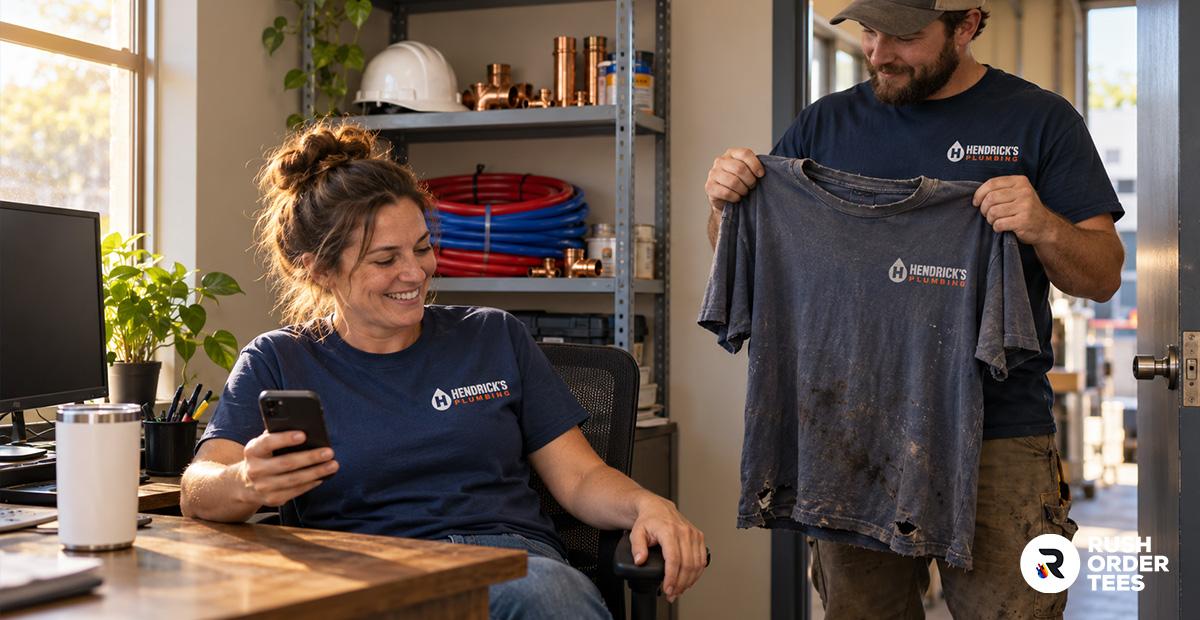
Uniforms and branded workwear do two things at once: they make your team look credible on the job and they repeat your name in front of every customer they meet. Those five-to-seven impressions add up fast when the same crew is out every day. Extend it to customers: hand a free tee to anyone who leaves a review or refers a friend, and drop a sticker in every order. People wear and photograph the stuff they like, which quietly turns your customers into a marketing channel. A run of custom company logo shirts covers both the team and the giveaways.
Cost: folds into your apparel budget. Effort: low. Do this week: add a "free sticker in every order" line to your packing routine.
4. Pick one social channel and post with a real voice
A single channel posted well builds more familiarity than five accounts you can barely keep up with. Choose the platform where your customers spend time, commit to about three posts a week for 90 days, and lean into behind-the-scenes content over polished ad-style graphics. People follow businesses that feel like people. Chasing trends rarely pays off unless you catch them in the first day or two, per Sprout Social's data, so skip trend-jumping unless it's effortless and on-brand.
Cost: $0 plus your time. Effort: medium. Do this week: pick the one channel and schedule three posts.
5. Publish answers to the questions customers ask
Write down the ten questions every customer asks you, then answer them where people can find them: your website, your blog, and your Google Business Profile. This is how people who've never heard of you find you at the exact moment they need what you sell. Cover the local SEO basics while you're at it: claim and fill out your Google Business Profile, keep your name, address, and phone identical everywhere online, gather reviews, and put your city and service area on your site's key pages.
Cost: $0 plus time. Effort: medium. Do this week: publish one page answering your single most-asked question.
6. Team up with a business next door
Find a business that shares your customers without competing for the sale, like a gym and a smoothie shop, or a wedding venue and a florist, and cross-promote. Co-branded events, shared giveaways, a discount for each other's customers: it costs coordination and a little goodwill, and it puts you in front of an audience that already trusts the partner recommending you.
Cost: near $0. Effort: medium. Do this week: list three local businesses that share your customers and message one.
7. Do PR the small way
One good local story outperforms a month of posting. Local news outlets, the chamber of commerce, industry newsletters, and niche podcasts all need content, and a small business with a real story is what they're looking for. Pitch the human angle: why you started, a milestone you hit, a community effort you led. Guesting on one podcast your customers listen to can put you in front of a warm audience for the price of an hour.
Cost: $0 plus time. Effort: medium. Do this week: send one pitch to a local outlet or podcast.
8. Bring in paid ads once the brand is consistent
Ads amplify a brand people already recognize, and they work best once steps one through seven are in place and there's something worth remembering behind the click. When you're ready, start narrow: geo-targeted social ads or Google Local Services in your service area, $10 to $20 a day, run as awareness campaigns. Paid is the layer you add on top of a consistent brand, which is why it comes last on this list.
Cost: $300–$600 a month to start. Effort: medium. Do this week: if the earlier steps are still in progress, hold off. Once they're set, run a $10-a-day geo-targeted test.
Bonus: Guerrilla marketing (for the creative types)
One more worth keeping in your back pocket. Guerrilla marketing lives in a legal gray area, and plenty of brands use it anyway. The basic version is a sticker campaign, and clothing brands have built real recognition this way for decades. Shepard Fairey started with a single "André the Giant Has a Posse" sticker in 1989 and turned it into the OBEY empire, clothing line and all. It can also be a stunt or a prank that gets your name passed around, or riding a wave that's already cresting. Here in Philadelphia, the minute the Phillies or Eagles win, local businesses find a hundred creative ways to get in the spirit and catch the excitement. The best guerrilla campaigns stay within the law and delight people while they're at it, and they can run at little to no cost. Careful, though: do it wrong and the cost arrives later as legal fees.
How to Measure Brand Awareness (Without Enterprise Tools)
You can track whether awareness is growing with free tools you may already have. None of this needs a survey panel or an agency. Check these monthly and judge the trend quarterly.
- Branded search volume in Google Search Console. Is your business name searched more this quarter than last? Rising branded search is the clearest sign your name is spreading.
- Direct traffic in GA4. People typing your URL or coming straight to your site knew to look for you. Watch the trend over months.
- "How did you hear about us?" Add one question at checkout or intake and tally the answers monthly. It's the cheapest brand study there is.
- Social mentions and tags. Search your business name weekly and see who's talking about you unprompted.
- Google Business Profile views and review velocity. Rising profile views and a steady flow of new reviews both track local awareness.
- Repeat and referral rate. When more customers arrive because someone sent them, your name is doing the work.
Awareness moves over months, so give it time before you judge. Check the numbers monthly to catch trends, and look at the full picture quarterly. When you eventually grow large enough to want formal aided and unaided surveys, tools like SurveyMonkey exist for exactly that. Until then, this free stack answers the only question that matters: are more of the right people finding and remembering you?
Your Brand Awareness Budget Playbook
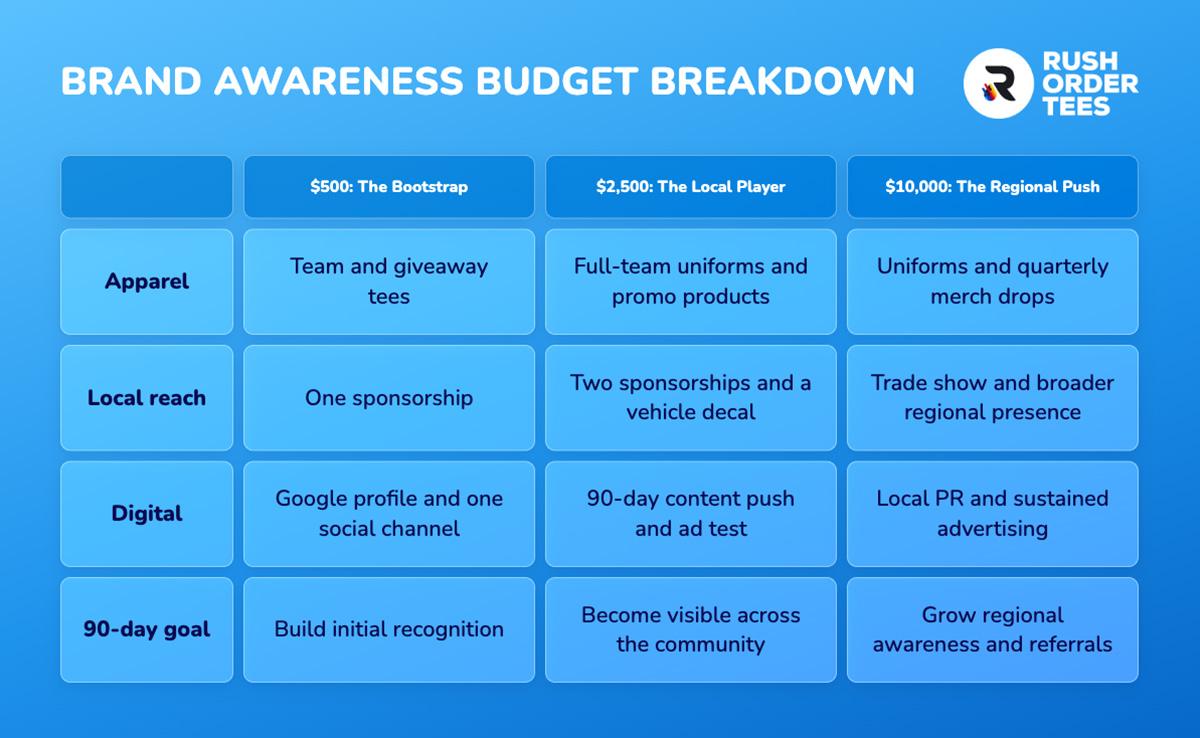
Here's where the money goes: Three example budgets, three realistic plans, each built on the order above: consistency and cheap impressions first, paid layered on when it's earned. Keep in mind that these are loose estimates and don’t account for time spent, so make sure to factor it in.
$500. The Bootstrap
- Logo cleanup, done yourself: $0
- About 25 team and giveaway tees: ~$300
- Google Business Profile, fully built out: $0
- One local sponsorship: ~$150
- One social channel, posted well: $0
With a no minimum order on printed apparel, that tee budget can split between shirts for your team and a handful to give away. What 90 days looks like: your crew is visibly branded, your name shows up at one local event, your Google profile starts collecting reviews, and you should catch the first flicker of branded search.
$2,500. The Local Player
- Uniforms for the whole team: ~$800 (screen-printed shirts drop in price per piece as the count climbs)
- Promo products for events: ~$500
- Two sponsorships: ~$600
- 90-day content push: $0 plus time
- Vehicle magnet or decal: ~$200
- First geo-targeted ad test: ~$400
What 90 days looks like: your brand is consistent across team, vehicles, and events; direct traffic and profile views climb; your ad test shows what a paid layer can do later.
$10,000. The Regional Push
Everything in the two tiers above, plus:
- Trade show presence: ~$3,000
- Quarterly merch drops: ~$2,000
- A local PR effort: ~$1,500
- A sustained ad layer: ~$2,500
What 90 days looks like: multi-channel presence across your region, measurable lifts in branded search and direct traffic, and enough reach that referrals start compounding.
Ready to stock the apparel and giveaways behind any of these tiers? Browse custom promotional products.
$500: The Bootstrap | $2,500: The Local Player | $10,000: The Regional Push | |
|---|---|---|---|
Apparel | Team and giveaway tees | Full-team uniforms and promo products | Uniforms and quarterly merch drops |
Local reach | One sponsorship | Two sponsorships and a vehicle decal | Trade show and broader regional presence |
Digital | Google profile and one social channel | 90-day content push and ad test | Local PR and sustained advertising |
90-day goal | Build initial recognition | Become visible across the community | Grow regional awareness and referrals |
8 Brand Awareness Mistakes That Waste Small-Business Money
These are the ones that quietly drain a budget. Each is common, and each is avoidable once you can name it.
- Running ads before the brand is consistent. Paid ads point people at your brand, so if that brand is still a moving target, you're paying to send strangers somewhere forgettable. Get the logo, colors, and message locked first; then the ad spend has something to land on.
- Running five social accounts you can't keep up with. A single channel posted well builds more familiarity than five that go quiet for weeks at a time. Pick the one where your customers are and give it your full attention.
- Rebranding every 18 months. Awareness compounds only when you let it. Every time you change your name, logo, or look, you reset the counter and spend the equity you built. Choose a brand you can live with and stay the course long enough for it to pay off.
- Cheap merch nobody wears. A scratchy bargain tee that lives in a drawer works against you: it ties your name to something people avoid. Spend a little more on a blank people want, a Bella+Canvas or Next Level over the cheapest option on the shelf, and your logo gets worn in public where it counts.
- Not measuring. If you can't see branded search, direct traffic, or "how did you hear about us" moving, you're guessing about what's working. Pick two or three of the free metrics above and watch them.
- Leaning too hard on AI for your branding. AI tools are fast and cheap, which makes them tempting for logos, taglines, and copy. They also produce inconsistent results, the occasional strange error, and a lot of generic, seen-it-before output. Use AI where it shines: brainstorming, research, outlining a strategy, roughing out a first draft. For the brand identity that has to stay consistent across everything, work with a designer.
- Ignoring your competition. It sounds obvious, and it's skipped constantly. You should know exactly what your top five competitors are doing: their branding, their positioning, where they show up, and what they charge. You can't stand out from a field you haven't looked at.
- Posting into the void. A lot of businesses believe steady posting alone will build awareness. Organic reach rarely works that way. Unless you've got a large following or something genuinely goes viral, plain posting, especially anything that looks like an ad with graphics, headlines, and a call to action, gets very little reach, because platforms like Meta know their users scroll right past it. If your posts pull a handful of likes each, that effort is better spent on a small paid budget or a boosting strategy that puts you in the feed.
FAQs
What are the 4 levels of brand awareness?
Brand recognition (people know your logo when they see it), brand recall (they think of you on their own when they need what you sell), top-of-mind (you're the first name that comes up), and brand dominance (your name stands in for the whole category). Most small businesses win by reaching top-of-mind in one niche or service area.
How do small businesses build brand awareness on a budget?
Start with consistency: one logo, a set of colors, a clear voice. Then go for the cheapest impressions: branded apparel and promo products, local sponsorships, one social channel done well, and answering customer questions online. Paid ads come last, once the brand is consistent and worth remembering.
How long does it take to build brand awareness?
Expect the first measurable movement, like rising branded searches and more "I've heard of you" mentions, in about 90 days of steady effort, and real local recognition in six to twelve months. Awareness compounds over time, so the thing to avoid is resetting it with frequent rebrands or long silences.
How do you measure brand awareness without expensive tools?
Track branded search in Google Search Console, direct traffic in GA4, and add one "How did you hear about us?" question at checkout or intake. Watch your social mentions and Google Business Profile views, too. Check monthly, judge quarterly.
What is an example of a brand awareness campaign?
For a small business: outfit your crew in logo shirts, sponsor a local 5K with branded tees for runners, and run a 90-day behind-the-scenes series on one social channel, all sharing the same look and message. That's a brand awareness campaign, and it needs no ad budget.
What's the difference between brand awareness and brand recognition?
Recognition is one level of awareness: knowing your brand when it's in front of them. Awareness is the whole range, from that first recognition through recall to top-of-mind familiarity. Visibility is how often you're seen; awareness is what sticks.
Start With Something People Can Wear
Brand awareness comes down to being seen consistently by the people who matter to your business, in as many of their everyday moments as you can reach. You've got the four levels, the strategies, the metrics, and three budgets to work from. The businesses that get recognized rarely started with a big ad spend. They started with a clear brand and showed up everywhere their customers already were.
You don't have to do all of it at once. Lock the consistency pieces, add one or two of the cheap-impression tactics, and build from there. Momentum is the whole point, and it rewards the businesses that keep showing up. (If your brand is also a product line you plan to sell, our guide on how to start a clothing brand goes deeper on the apparel side.)
A good first move is also the simplest: get your logo onto something people will wear. Upload it to the Design Studio, see it on a shirt in about a minute, and order as few as one to start. Your brand gets easier to remember the moment it walks out the door on someone's back. → custom company logo shirts

About the Author
A graduate of the Multimedia program at the University of the Arts in Philadelphia, Imri Merritt is an industry veteran with over 20 years of graphic design and color separations experience in the screen printing industry.