
You're walking the floor at a trade show with 200 booths competing for the same attendees, and you can feel it: every booth is fighting for the same scarce resource. Attention. Most people are walking past, eyes glazed, scanning for something–anything–worth slowing down for. The booths pulling people in aren't always the biggest or the flashiest. They're the ones that read as cohesive and inviting in the second or two attendees give them before deciding to keep walking. Everything you put on that floor is a first impression, and you don't get a second one.
The good news: a great trade show booth design doesn't require an enterprise budget. It requires intentionality. This guide breaks down what actually drives foot traffic: from booth layout and signage to display hardware, staff appearance, and the small in-the-moment details that separate booths people stop at from booths people skip.
Why Booth Design Matters More Than Booth Size
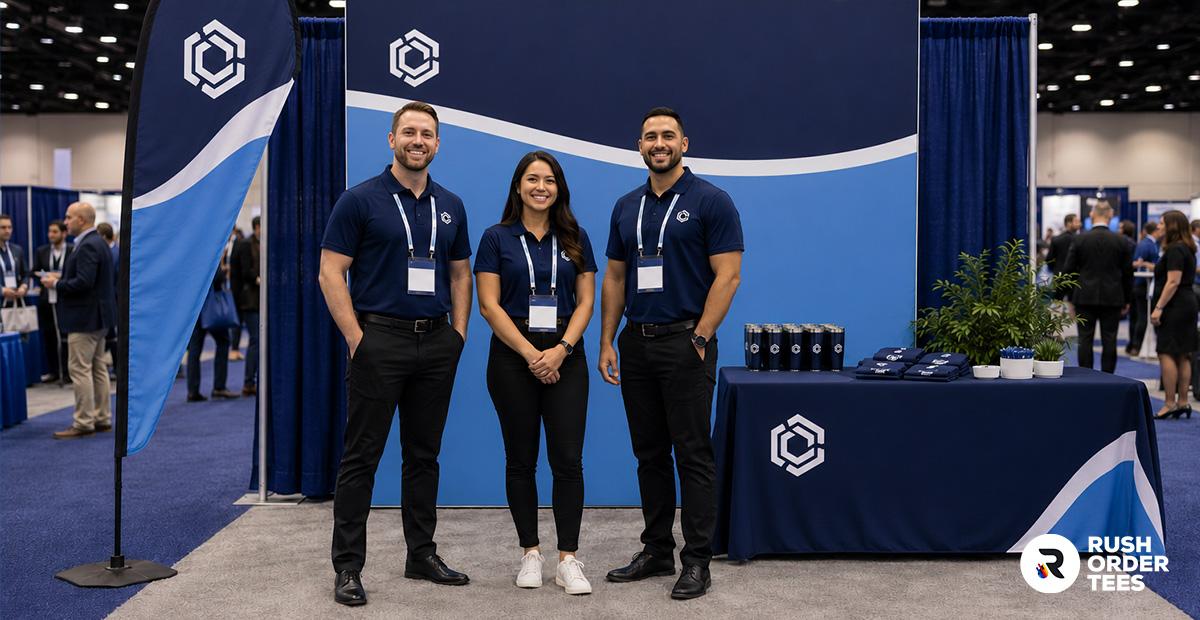
Walk any major trade show, and you'll see the same pattern: a booth twice the size of its neighbor, twice the budget poured into it, and somehow still being walked past. Meanwhile, a modest 10x10 a few aisles over has a small line of people waiting to talk. Square footage isn't what's pulling them in. Cohesion is. When every element in a booth–signage, table cover, banners, staff shirts–reinforces the same brand identity, the booth reads as intentional. That intentionality is what attendees register subconsciously when they decide whether to stop.
Booth size matters less than most exhibitors think. Big booths can look incoherent and chaotic; small booths can look polished and confident. What attendees respond to in those first few seconds is a short list of cues: signage they can read from across the aisle, color and branding that hang together, an open layout they can step into without feeling cornered, and a friendly team out front who looks ready to talk.
The two levers most exhibitors underuse are display products and staff presentation on the floor. Both reward attention, neither requires a huge budget, and together they do most of the work of pulling attendees in. Let's break down the elements that actually move the needle.
The 6 Elements of a High-Impact Trade Show Booth
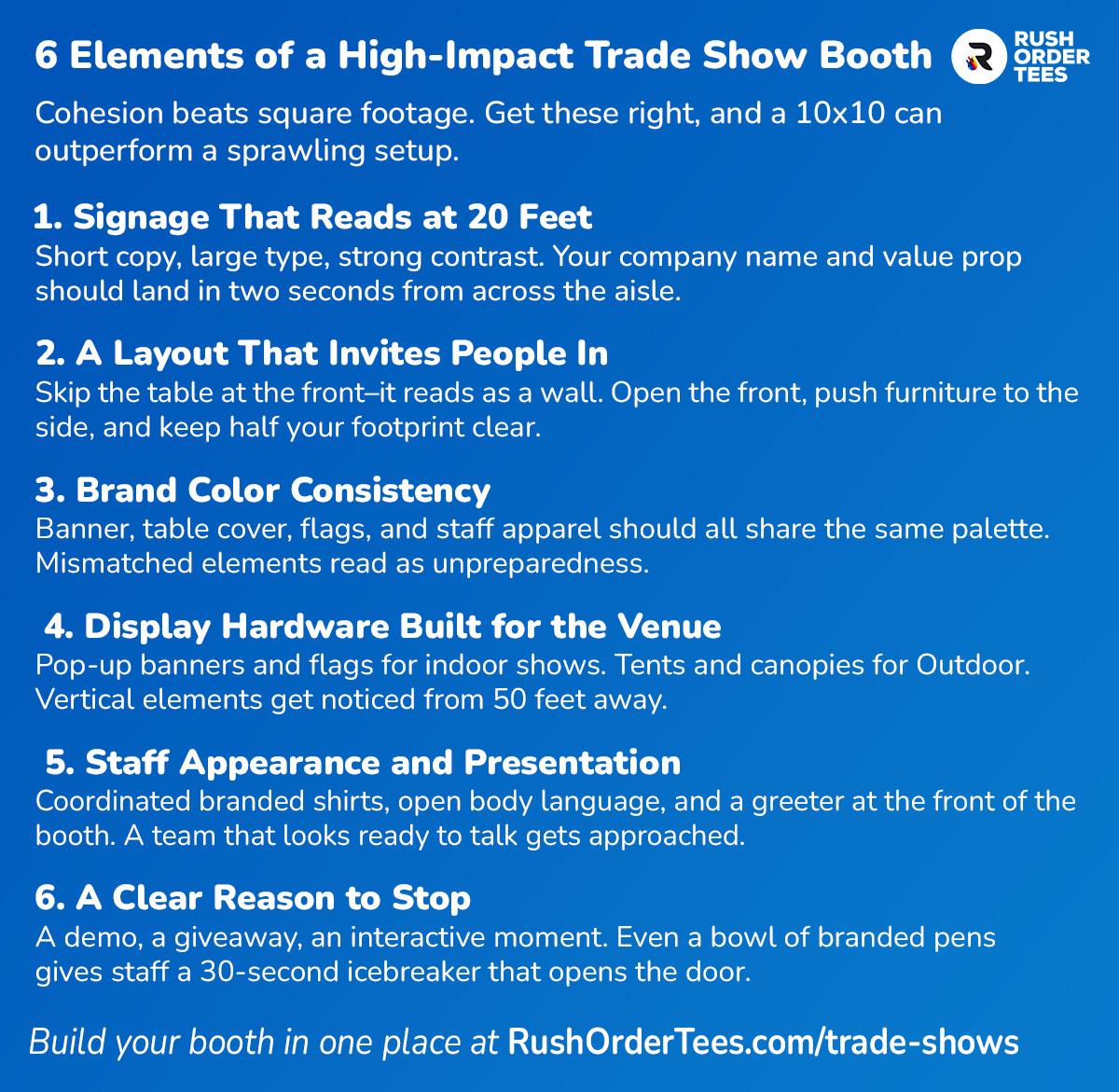
These are the design decisions that do the heavy lifting. Get most of them right, and a small footprint can outperform a sprawling one.
1. Signage that reads at 20 feet. Your headline has to land from across the aisle, in the second or two attendees give it. That means short copy, large type, strong contrast, and your logo positioned where it gets noticed. Skip the paragraph-length value props and the clever wordplay that requires a second read. Treat your signage in tiers: from 20 feet, your company name and one-line value prop should land instantly. From 10 feet, supporting graphics fill in the picture. Up close is where the details live. Retractable banner stands and pop-up banners are the workhorses here: easy to transport, fast to set up, and big enough to anchor a booth on their own. Larger trade show signs round out the visual hierarchy at eye level and overhead.
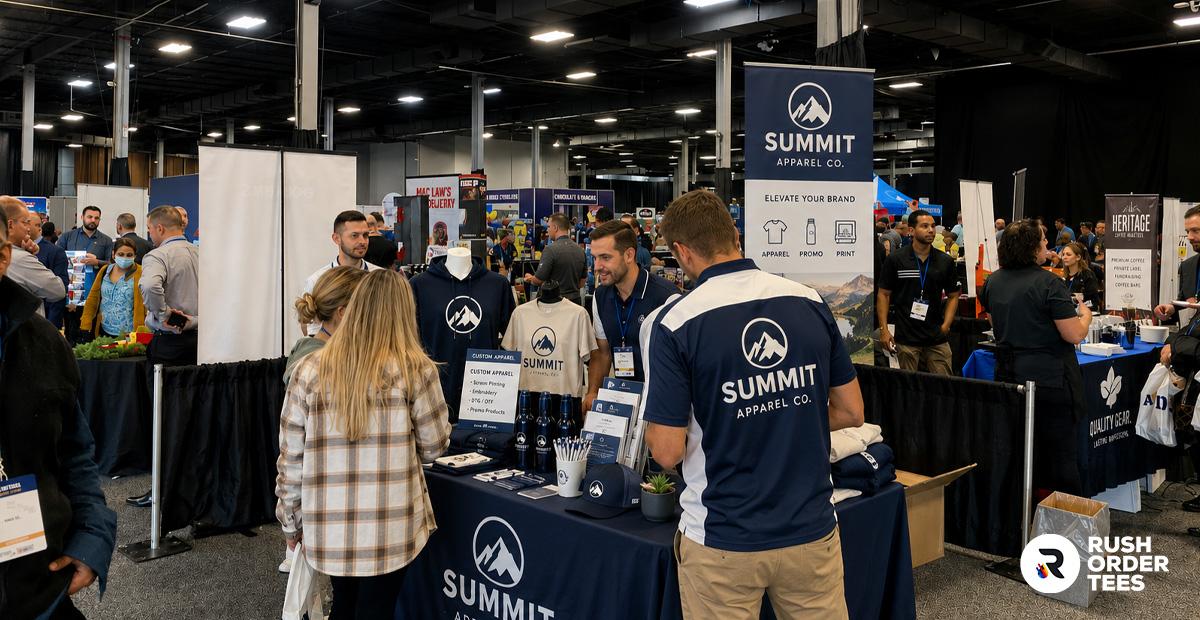
2. A booth layout that invites people in. The single most common mistake is putting a table directly across the front of the booth. It looks organized, but it functions as a wall: attendees read it as "commit before entering," and most won't. Pushing the table to the side or angling it toward the back opens the front and gives passersby a clear path in. Aim to keep roughly half your footprint open. And before the show starts, walk the aisle in both directions and check how your booth looks from 20 feet away on each approach. People aren't walking up to your booth head-on. They're seeing it from an angle, often through a moving crowd. Design for that.
3. Brand color consistency across every element. When your banner, table cover, flags, and staff apparel all share the same palette and logo placement, the booth reads as one unified brand. When they don't, attendees register the mismatch instantly–even if they can't articulate it. Inconsistency reads as unpreparedness, and unpreparedness reads as a company that might not be worth a conversation. This is where ordering display products and staff apparel together pays off: every piece is built around the same colors and artwork from the start.
4. Display hardware matched to the venue. Indoor shows reward pop-up banners, retractable stands, gonfalons, and flags. Anything that builds vertical presence in a sea of standing-height booths. Outdoor expos and event spaces call for tents and canopies that can handle weather and provide shade. Vertical elements punch above their footprint: tall banners and flags get noticed from 50 feet away, well before attendees ever reach your aisle. Lighting matters too. Most halls run flat overhead fluorescents that wash everything out. Adding even a small amount of your own lighting creates depth and makes your booth read as more polished than the muted setups around it.
5. Staff appearance and presentation. A team in coordinated branded shirts is easier to spot, easier to approach, and projects credibility before anyone says a word. Custom polo shirts are the default for most professional contexts; tees work for casual or consumer-facing shows. The visual upgrade is significant: a coordinated team looks like a company, while a mismatched team in personal clothes looks like four people who happen to be standing together. Presentation goes beyond the shirt, though. Open body language, eye contact, and a greeter positioned at the front of the booth do more than any graphic to pull people in. Crossed arms, phones out, and staff talking to each other instead of attendees is one of the fastest ways to send people walking past.
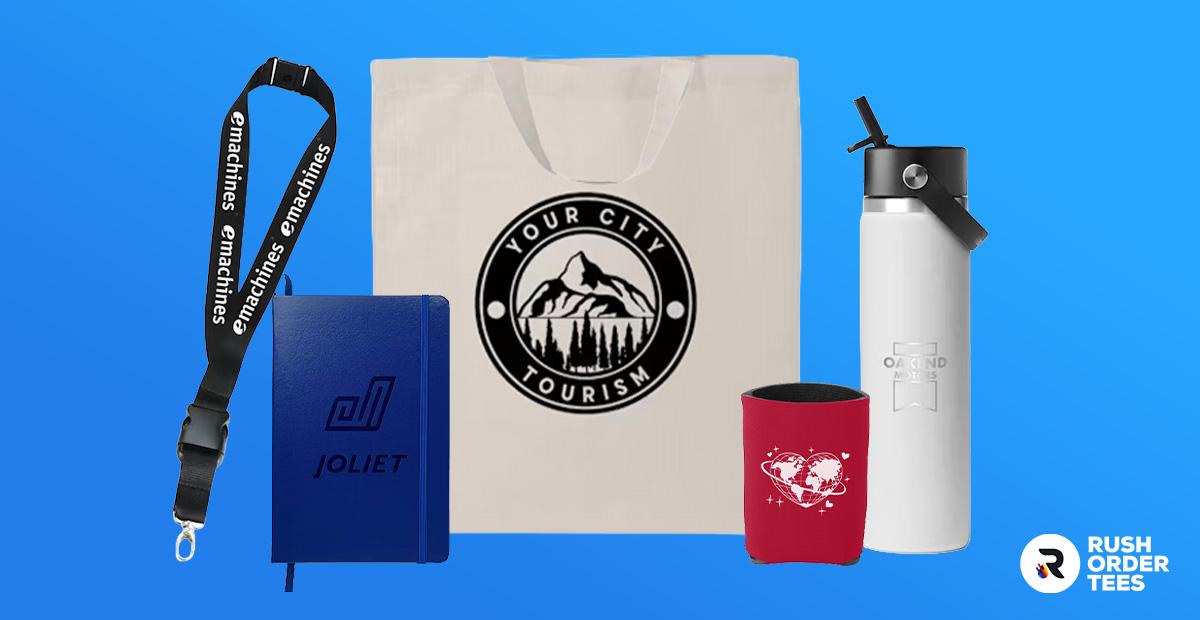
6. A clear reason to stop. Attendees need a specific reason to break stride, and "learn about our company" isn't one. A live demo, a giveaway, an interactive moment, a sign-up for something they actually want–these are what create the pause. Even small giveaways do real work. A bowl of branded pens, a stack of branded tote bags, or branded mints sitting at the front of the table gives a friendly staff member a natural icebreaker: "Want a pen?" is a low-friction yes that opens a 30-second conversation. From there, a good greeter can qualify interest and decide whether to invite the attendee further into the booth. The giveaway isn't the point–the conversation it starts is.
Budget-Friendly Booth Design for Smaller Teams
You don't need a big budget to look credible on the floor. You need to spend on the right things and skip the rest. For first-time exhibitors and small teams, the goal is a polished, cohesive setup that reuses well across multiple shows.
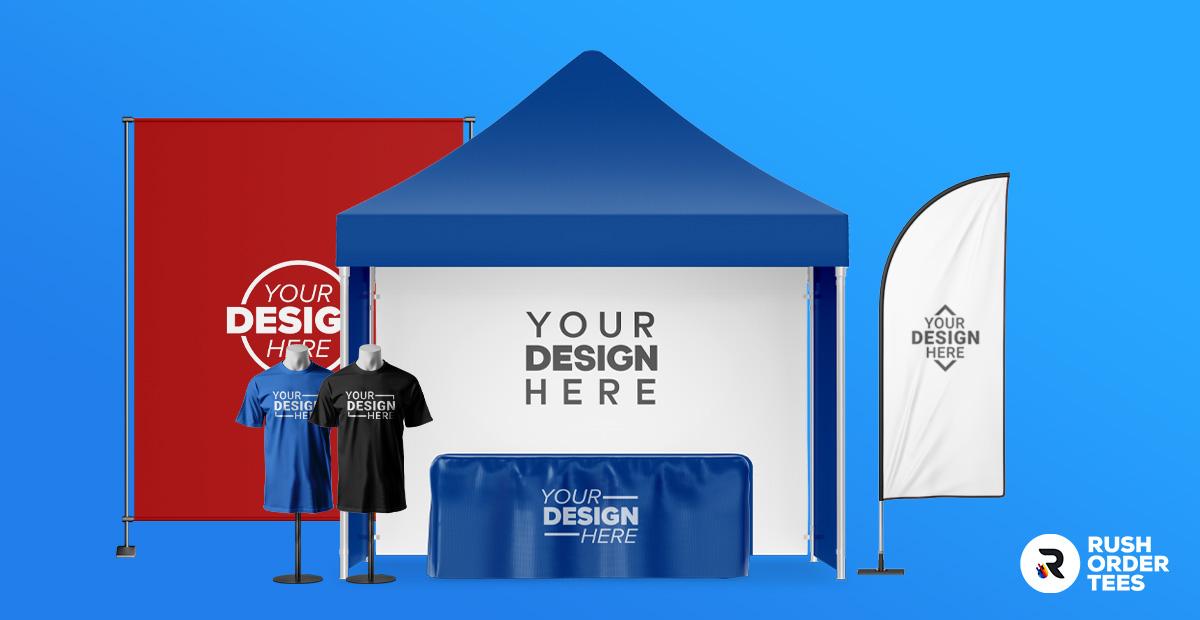
- Invest in reusable display products first. A retractable banner stand, a custom table cover, and a branded table runner are the foundation of most successful 10x10 booths. They're built to be packed up, transported, and reused across dozens of events. Treat them as multi-year purchases, not single-show expenses.
- Choose versatile pieces that work across venues. A retractable banner stand works indoors and outdoors, on a stage or behind a table. A solid-color table cover in your brand color works at every show you do, regardless of theme. The more flexible each piece is, the more events it pays you back across.
- Skip the custom furniture. A nice table runner over a standard show-provided table is virtually indistinguishable from custom furniture from across the aisle, at a fraction of the cost. The same goes for elaborate flooring, custom counters, and built-in lighting rigs: none of it is necessary for your first few shows, and possibly not ever.
- Coordinate staff apparel as part of the budget, not an afterthought. Matching shirts on a 2-3 person team is one of the highest-ROI upgrades available. It costs less than most single display pieces and dramatically changes how the booth reads to attendees. With no minimum orders, even a small team can show up looking like a unified brand without ordering more than they need.
- Keep giveaways simple and useful. Low-cost promotional products like branded pens, candy, stickers, or small tote bags create an icebreaker without eating your budget. Items in the $2-$5 range work as well as anything more expensive. What matters is that the giveaway gives your staff something to offer, not that it's an impressive object on its own.
- Pick one focal element and let it carry the booth. A single great retractable banner with a clear headline does more than three mediocre displays competing for attention. New exhibitors often try to fill every inch of the space and end up looking cluttered. Editing down is almost always the right call.
- Plan for re-orderability. When you order, keep your art files, color codes, and product specs organized so you can match them next year. Reordering a banner that matches the table cover you bought 18 months ago is much easier when you've documented what you ordered the first time.
What to Order, and When
Trade show timelines reward planning and punish procrastination. Here's a realistic schedule for getting everything on the floor without a last-minute scramble.
- 4+ weeks out: lock in the foundation. This is when the bulk of your ordering should happen. Finalize your booth design and brand artwork. Order your major trade show display products (banners, table covers, retractable stands, tents if you need them) and your branded staff apparel at the same time so everything ships together and stays color-matched. Order your giveaway items in this window too; they often have longer lead times than apparel. Standard shipping costs less than rush and gives you time to review proofs, catch artwork issues, and reorder if something arrives off-spec. If you're attending a recurring show, build the order list now for next year while it's fresh.
- 1-2 weeks out: handle the last-call items. Most products still ship in this window with rush or expedited turnaround. Use it for final signage updates, last-minute apparel for staff additions, supplemental giveaways if your initial order ran short, and any printed collateral like flyers or one-pagers. This is also the deadline for any signage with show-specific details: booth numbers, event-specific offers, or co-branded materials with partners.
- Under a week: rush options exist. Same-day and next-day production is available on select items. Avoid panic by knowing you can get last-minute needs like a staff addition, a printer mishap, or a forgotten item. But build it into your contingency plan rather than your primary plan.
Looking for giveaway ideas? Check out our guide to the best trade show giveaway ideas.
Pro Tips: Making Your Booth Work in Practice
Design gets you noticed. Execution gets you conversations. These are the in-the-moment details that separate the booths attendees stop at from the booths they remember.
- Design for the angle, not the front. Almost no one approaches your booth straight on. They see it from up the aisle, through a moving crowd, often while glancing at the booth across from yours. Walk the aisle in both directions before doors open, stand 30 feet back, and check what your booth communicates from each approach. Adjust signage and staff positioning based on what you actually see, not what your floor plan suggests.
- Place a greeter at the leading edge. A friendly person standing at the front of your booth–not behind a table, not chatting with coworkers–pulls in significantly more visitors than the same staff hanging back inside. Their job is the 30-second open: smile, eye contact, an easy question or offer. "What brought you to the show?" or "Want a pen?" is enough to start a conversation.
- Watch the body language defaults. Crossed arms, hands in pockets, leaning on the table, staring at phones, eating, or huddling with coworkers are the universal "do not approach" signals. Standing tall, hands visible, scanning the aisle, and smiling is what reads as approachable. Brief your team on this before every show; it slips fast when people get tired.
- Don't overstaff a small booth. The industry rule of thumb is roughly 50 square feet per person on the floor. In a 10x10, that's 2-3 people max. More than that creates a wall of staff that feels intimidating and leaves no room for attendees to actually step in.
- Pull people in with something at the back. Place an interesting element (a demo, a screen, a product display) toward the back of the booth rather than the front. Curiosity does the work of pulling attendees through the space, and a conversation that starts six feet inside your booth is much harder to walk away from than one happening at the edge of the aisle.
- Activity attracts activity. A booth with people already in it pulls more people in. A booth that looks empty gets walked past, even if it's staffed. A live demo running on a loop, an active conversation visible from the aisle, or a small group around a giveaway station all signal that something worth stopping for is happening here.
- Debrief the same day. Before you leave the show floor, spend 15 minutes with your team capturing what worked, what didn't, what you ran out of, and what you'd reorder differently next time. Notes taken at the show are dramatically more useful than notes taken a week later when the details have faded.
Your One-Stop Shop for Trade Show Success
Cohesion beats square footage. Intentionality beats spectacle. The booths that pull attendees in are the ones where signage, layout, display products, and staff appearance all work together as one unified brand, and where the team on the floor knows how to turn a glance into a conversation. That's the playbook, and none of it requires an enterprise budget.
RushOrderTees pulls all of it together in one place. Our custom trade show displays cover the full setup: banners, pop-up banners, tents and canopies, table covers and runners, flags, signs, and giveaways alongside coordinated staff apparel that matches your brand from the same artwork files. Free shipping and no minimum orders mean a 2-3 person team can outfit themselves without overordering, and rush turnaround is available across most of the catalog when timelines tighten. Our free Design Studio lets you mock up your artwork before you order, every order gets a design review before it prints, and a satisfaction guarantee covers the result.
When you're ready to put it all together, our trade show shop has everything from banners and table covers to branded staff shirts in one place: built to coordinate, easy to reorder, and ready to ship on your timeline.

About the Author
A graduate of the Multimedia program at the University of the Arts in Philadelphia, Imri Merritt is an industry veteran with over 20 years of graphic design and color separations experience in the screen printing industry.