
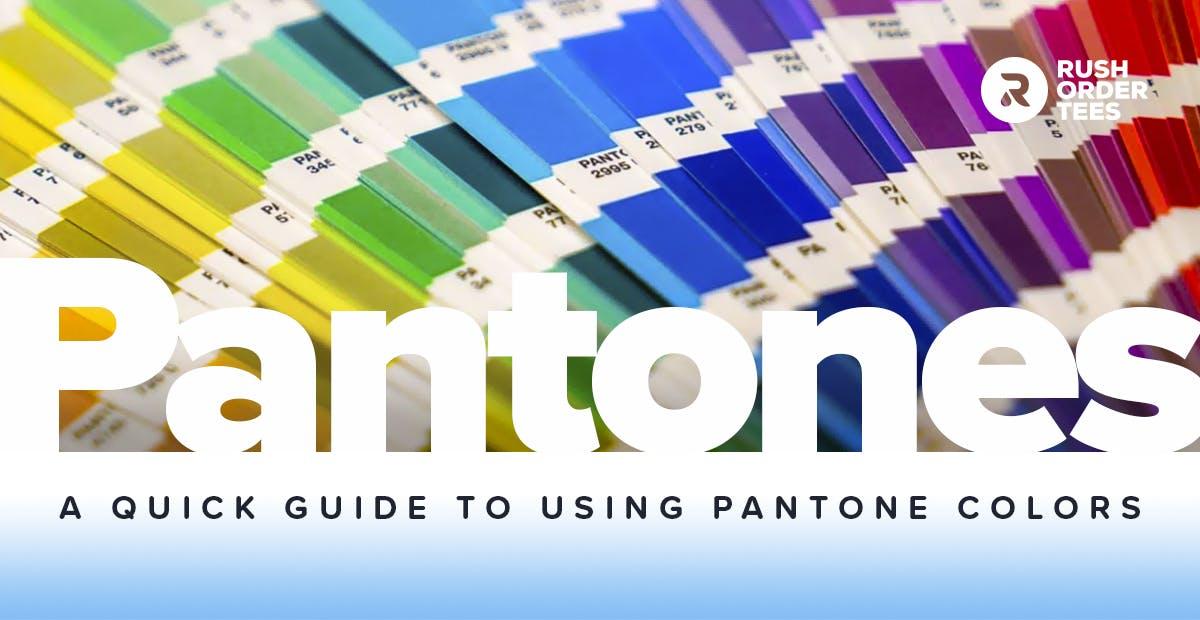
Choosing colors can be one of the most important decisions for your designs, brand, clothing, or home interiors. The problem is we all experience colors differently and imagine them differently. We don't even use the same names.
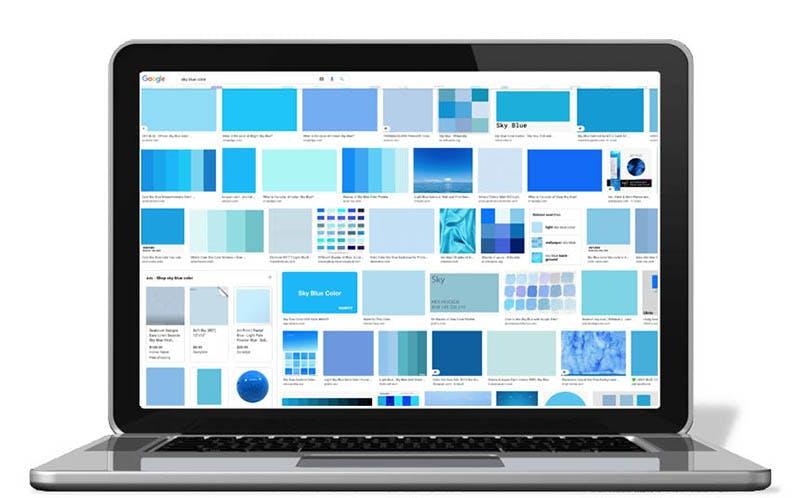
If you tell someone "sky blue," are you both thinking of the same color? Most likely not. How about periwinkle blue? Or is periwinkle more of a purple? Exactly.
The Pantone company's solution to this age-old problem is the gold standard of the creative industries: a universal color system that assigns a numeric code to each of thousands of spot colors, referenced across platforms and materials all around the world.
All day, every day.
Here's a quick guide to what the Pantone system is, how it works, how you can use it to color your latest project, and more. Plus links to tools available online that will help make sure the colors you want are the colors you get.
What is Pantone?
Pantone is the company best known for developing their proprietary Pantone Matching System (PMS), the widely used color space and management system used across industries like graphic design, fashion, product design, textiles, and commercial printing.
It started in the 1950s when two brothers in New Jersey who owned a company called M & J Levine Advertising hired a recent Hofstra University graduate named Lawrence Herbert. He brought his chemistry knowledge to the table, systemizing their ink production. By 1962, he had turned the ink and printing division profitable, bought out the technology assets, and renamed the company Pantone.
Today, the Pantone Matching System contains over 2,390 spot colors (after adding 229 new colors in 2023) and remains the world standard for color mixing and matching, along with color trend forecasting and consulting. The company is now part of Veralto Corporation, following a corporate spin-off from Danaher in 2023.
What are spot colors?
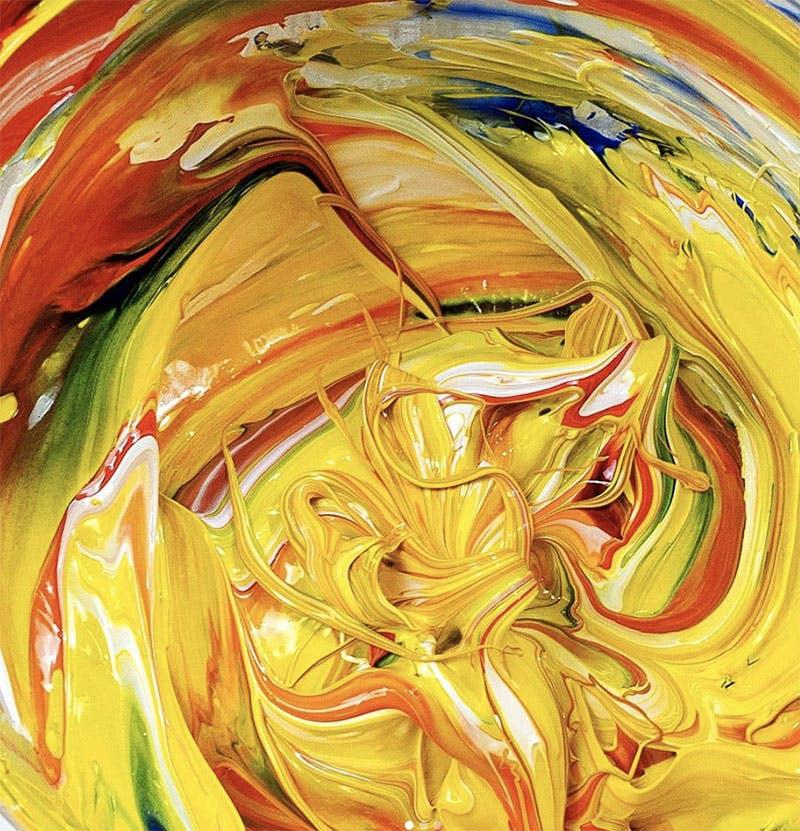
Spot color is a printing term meaning a single, solid color of ink, as opposed to process color (CMYK). Spot colors can be standard (sometimes called bucket or in-house colors), or they can be specially mixed into a formula using systems like the Pantone Matching System.
Since process printing has become so common, these days the term spot color typically refers to specialty inks such as metallic or neon, or a Pantone color.
What are the Pantone Color Systems?
The Pantone color systems provide a universal language of color, allowing designers, brands, and manufacturers to make color-critical decisions through every stage of the workflow. Over 10 million people around the world rely on the Pantone system and its products.
Being able to define, communicate, and control color from inspiration to realization and across various materials and finishes is crucial for all kinds of graphic, fashion, and product design. Pantone makes that possible.
Here at RushOrderTees, we use the Pantone Matching System (PMS) daily to accurately fulfill our customer's vision and brand requirements. We can mix any Pantone color your heart desires. We know our Pantones.
Pantone offers two distinct color systems
- The Pantone Matching System (PMS): More accessible, used for branding and marketing. Wide selections of colors designed to pop. Available in color book and swatch formats, as well as extensive online tools including Pantone Connect (their digital platform with extensions, add-ons, and apps). Good for print, packaging, digital, and screen printing.
- The Pantone Fashion, Home + Interiors (FHI) System: More advanced, expensive, and targeted at manufacturing professionals. Uses unique coding: TCX for textiles and TPG for pigments and coatings. Features more whites, blacks, and neutrals in their palette. Available in color book and swatch formats as well as fabric swatches. Good for paints, cosmetics, and accessories as well as apparel fabrics and soft goods.
This post focuses on the Pantone Matching System. Learn more about the FHI system on Pantone's website.
Pro tip: Pantone Connect is their digital design platform that integrates with Adobe Creative Cloud and other design tools. It's worth noting that as of 2022, most Pantone color libraries are no longer pre-loaded in Adobe apps. You'll need a Pantone Connect subscription to access the full library within Photoshop, Illustrator, and InDesign. More on that below.
How does the Pantone Matching System work?
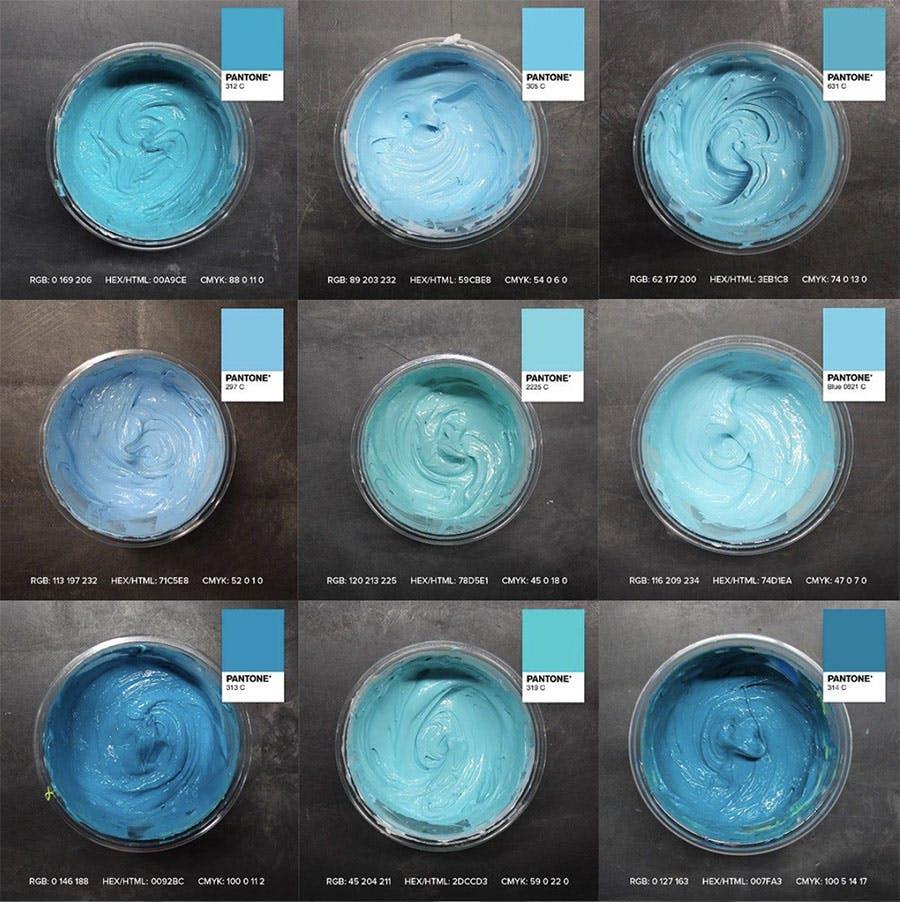
The Pantone Matching System is an accurate, reliable, and standardized way to reproduce color. Each of over 2,390 spot colors has an assigned number and code, along with a formula to mix it using base pigments in a specified ratio based on weight.
Every ink company, commercial printer, paint, textile, or product manufacturer can then calibrate to this formula using their own set of base pigments. Each PMS color corresponds to a matching HTML color (Hex), process printing (CMYK), or screen-based (RGB) formula to allow for consistency across platforms and materials.
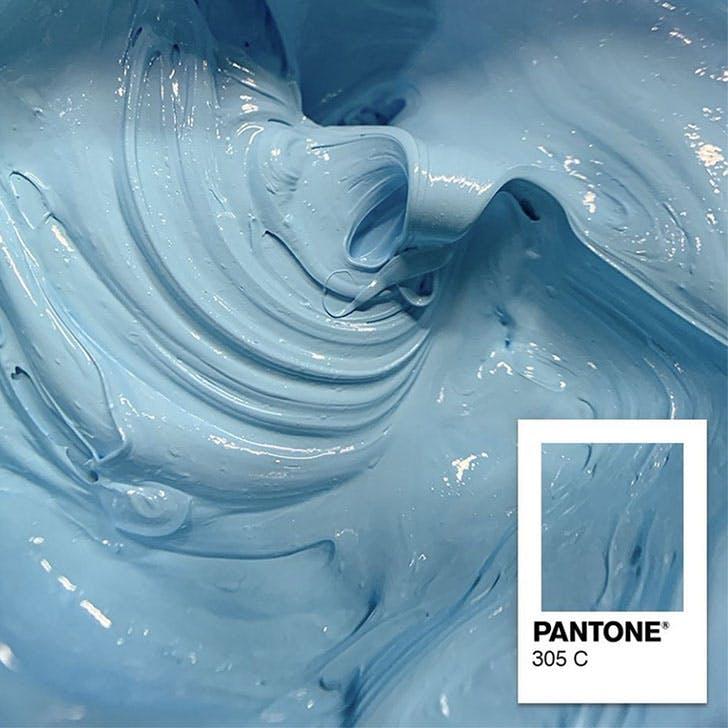
An example Pantone number referenced is PMS 312 C. Also known as Sky Blue. Or is it...?
PMS colors are commonly used in branding and have found their way into government legislation and military standards to describe the colors of flags and seals. Countries such as Scotland, Canada, and South Korea, many organizations, and some US states have chosen specific Pantone colors for their flags.
Nowadays your favorite color doesn't have to be just purple. It can be Purple 265 C.
What are Pantone color books?
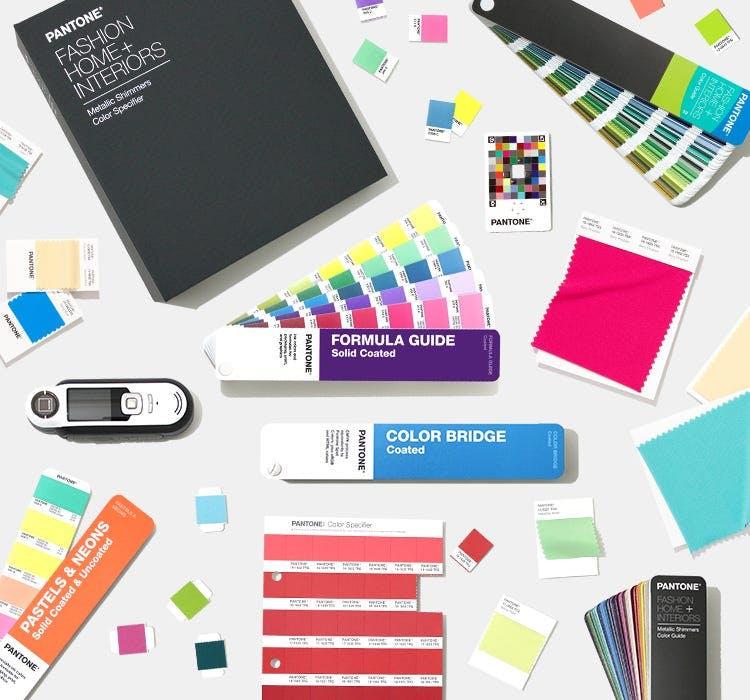
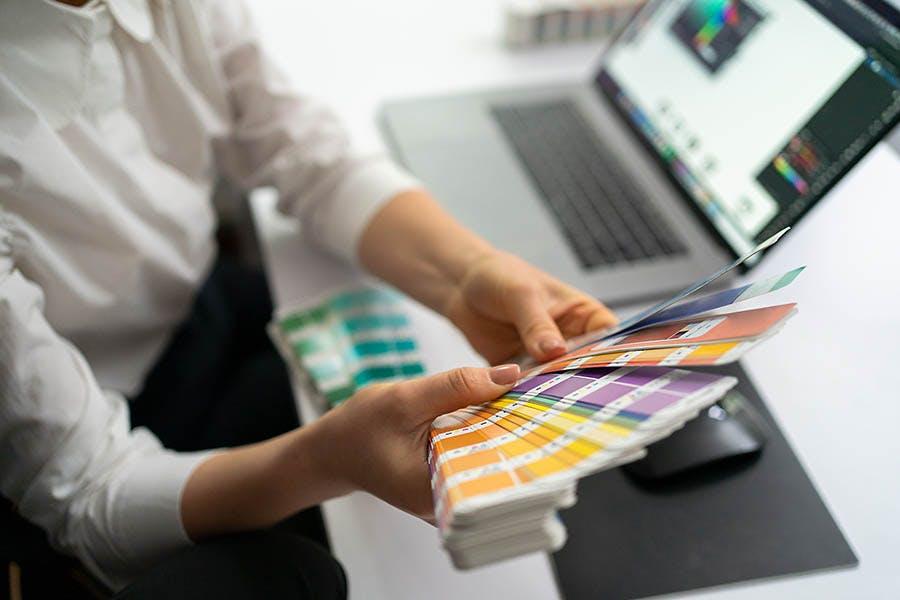
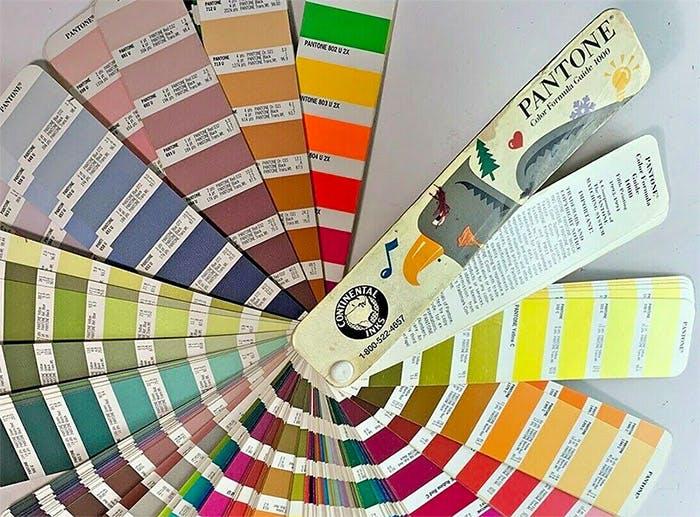
Pantone color books are portable, hand-held fan decks featuring a library of colors labeled with their corresponding numbers and formulas. They're handy sets of swatches. The more advanced books allow you to compare colors across multiple color systems as well as materials.
What is the standard Pantone color book?
Coated and Uncoated Formula Guide. These two books also provide matches to the Pantone Fashion, Home + Interiors System for greater color consistency across various materials.
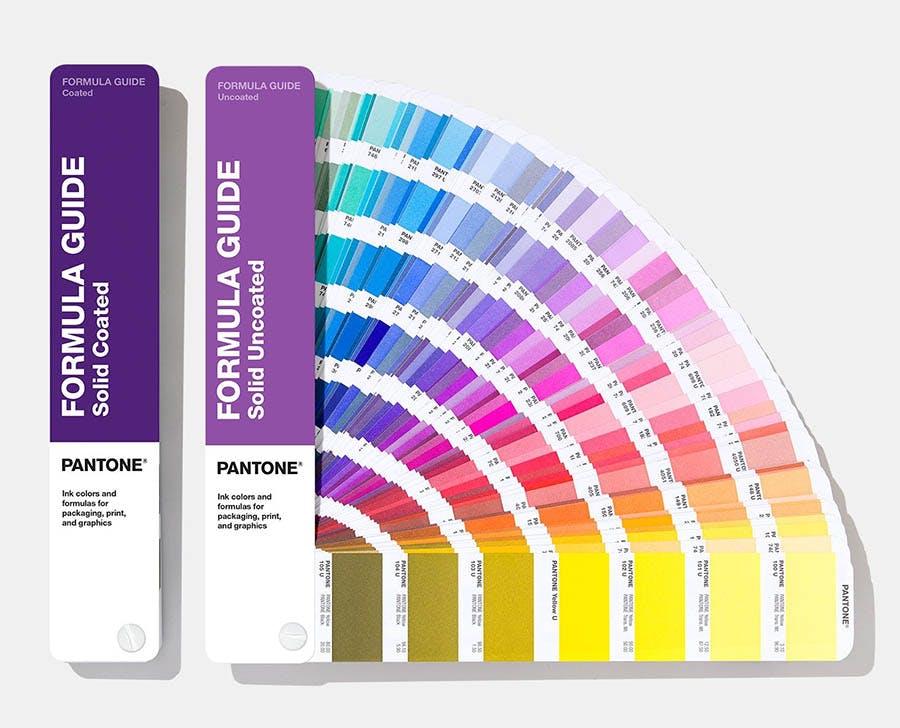
For custom t-shirts, the standard book is the coated library (C), since plastisol ink is inherently glossy. But if you only have U numbers, no worries. Your printing company will be able to find the corresponding C number to achieve a visual match.
For more about inks, check out this post comparing plastisol vs. water-based inks.
Ordering through us? To request Pantones as your spot colors, choose among our standard spot colors in the Design Studio as placeholders, then specify your desired Pantones in the Design Notes section. Feel free to call or chat.
What is the best Pantone color book?
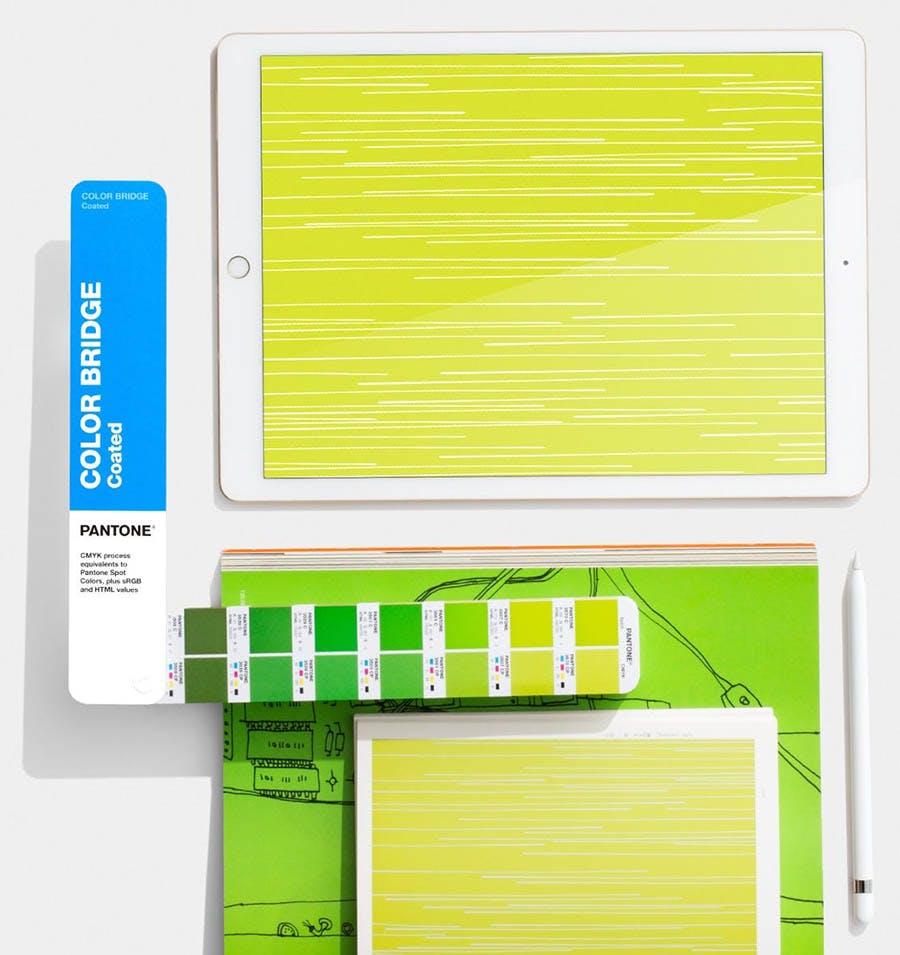
The ultimate books are the Coated and Uncoated Color Bridge Guide Set. These do everything the standard set does, plus they translate every Pantone color into its CMYK, HTML (HEX), and RGB counterparts. An essential tool for designers working across a variety of materials, and for companies to keep their brand consistent.
What’s the difference between C and U?
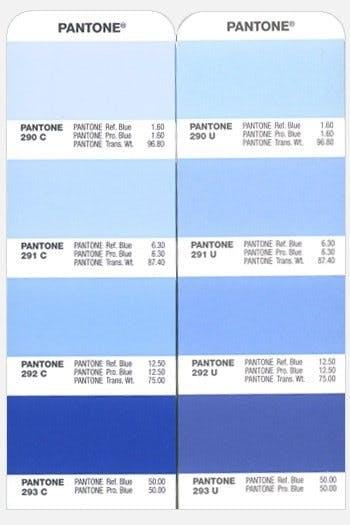
C is printed on coated (glossy) stock and U is for uncoated (matte) stock. Since the same ink color can appear differently on these two types of surfaces, using two libraries allows you to achieve a visual match by choosing a different Pantone number.
For example, you'd choose a U number for printing on matte cardboard packaging, and a C number for a glossy brochure.
The glossy surface of coated paper doesn't allow the ink to permeate, so the color is more saturated, while uncoated paper absorbs the ink, which can diffuse the color. A pale imitation of its former self.
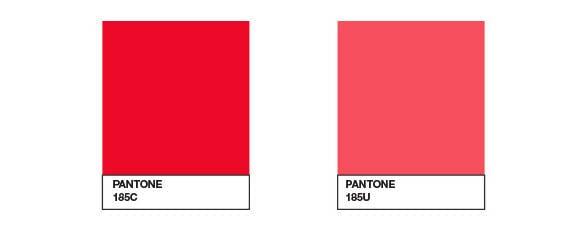
In the example of Red 185, the same ink looks noticeably different printed on coated vs. uncoated paper. So you'd want to pick a different C number and U number for them to visually match. Do you want fire-engine-red or salmon-red?
Inks on the lighter side have more chance of matching using the same Pantone number, but darker inks tend to show a bigger difference because there is more density of pigment.
How long do Pantone books last?
Pantone recommends replacing books annually, since the printed colors can start to shift over time. In practice, they stay accurate for at least a couple of years, especially if you keep them stored away from light when not in use. So get yourself a set with the latest colors and updates.
Are Pantone books expensive?
The standard Formula Guide set (Coated and Uncoated) runs about $226, while the Color Bridge Guide Set is around $265. Pastels and Neons sets are about $134. On the FHI side, the PANTONEVIEW home + interiors book is around $295, and the full FHI Color Guide ranges from roughly $322 to $495 depending on the format. Pantone also releases limited edition Color of the Year sets each year, which for 2026 run $226 to $296.
Pro tip: You may see used Pantone books for sale online, but we don't recommend buying used ones. Older books can be faded, which throws all the colors off. Or they could have pages missing, dirt, and other issues that compromise accuracy.
The Pantone and Adobe dispute: what changed
If you're a designer who works in Adobe Creative Cloud, you've probably run into this already. In late 2022, Adobe removed most pre-loaded Pantone color libraries from Photoshop, Illustrator, and InDesign following a licensing dispute between the two companies.
What that means in practice: if you open an older file that references Pantone spot colors, those colors may display as black unless you have the Pantone Connect plug-in installed. Only three libraries remain built-in (Pantone + CMYK Coated, Pantone + CMYK Uncoated, and Pantone + Metallic Coated).
To access the full Pantone library inside Adobe apps, you'll need a Pantone Connect subscription, which runs about $8 to $15 per month depending on the plan. It's an extra cost, but for designers who rely on exact PMS matching for client work, it's become a necessary part of the toolkit.
For screen printing orders with us, this doesn't change anything. Just specify your PMS number in the Design Notes when you order through our t-shirt designer, and our team handles the ink mixing from there.
Why use PMS matching for your brand?
Research has shown that humans are highly responsive to colors, with studies indicating that certain colors can influence decision-making and affect mood. Marketers have understood this for decades, and artists long before that. PMS matching puts this power in your hands:
- Psychology: Inspire the mood, feeling, and character you want associated with your brand.
- Originality: Hand-pick specific and unique colors that are meaningful or especially powerful.
- Accuracy: Your final printed product and any reproductions will have the exact same colors that were chosen.
- Recognition: Specific colors establish brand awareness, differentiation from competition, and credibility.
- Consistency: Brand colors will match across any and all platforms, products, and printed materials.
- Loyalty: Consistency over time builds familiarity, authority, and trust.
Why are color standards important?
Pantone's color libraries are backed by scientific achievability to meet market and manufacturing needs. Since the system is globally available, when a designer in Los Angeles specifies a certain Pantone color number, a manufacturer in South Korea immediately knows exactly which color they want and how to achieve it. Even if they don't speak the same language, they both speak Pantone.
That's great for business-to-business coordination. But what about customers placing custom apparel orders?
Absolutely. Specifying a Pantone color sets a particular expectation to be met by the printer, avoiding boring standard colors, disappointment with results, and any debate over whether the red is actually more of a red-orange. With Pantone matching, it's either 185 C or it's not.
Is Pantone free to use?
The system itself is free to use in the sense that a language is free to use. If you have a computer or a smartphone, you can use the Pantone website and free online tools like their Color Finder. Beyond that, color books, Pantone Connect subscriptions, and other products must be purchased.
Keep in mind: if you're not purchasing the Pantone books, you'll be relying on the accuracy of your monitor for color matching, and monitors display colors differently. You can generally trust Apple devices for color accuracy, but beyond that, it's important to calibrate your monitor correctly. Online resources from sites like CNET offer step-by-step calibration guides.
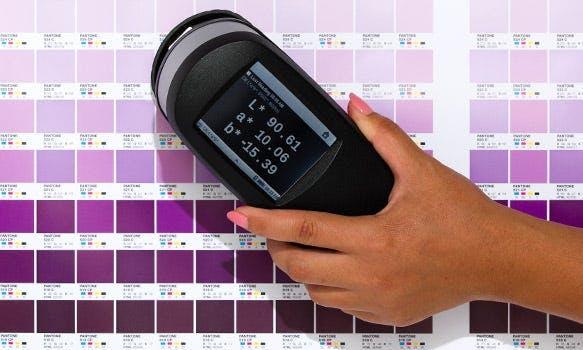
Is printing with Pantone colors more expensive?
Printing with Pantone colors will typically add a single additional cost per color to cover the cost of making a custom mix, and it will vary from printer to printer. Certain specialty inks may have an additional cost (such as puff), while others don't (such as metallic).
Want a specialty ink to glow crazy for? Check out this post about printing glow-in-the-dark ink.
When to use a Pantone spot color
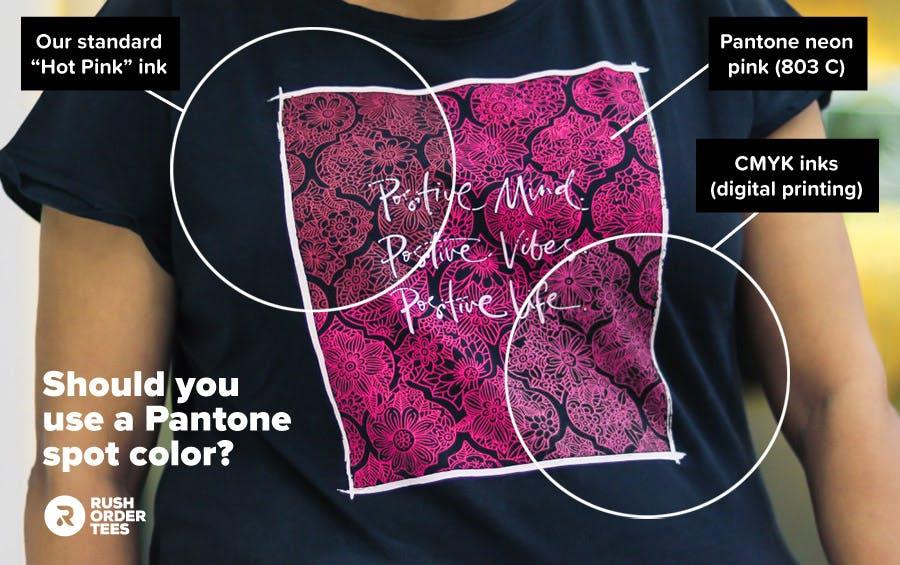
Pantone spot colors aren't necessary if you're not particular about your color choices and standard in-house colors would work fine. Use Pantone spot colors when:
- You need exact color matches for branding consistency.
- You have a specific color choice that isn't available in standard in-house colors.
- You want the colors to be as bright and vibrant as possible.
- You need a specialty ink such as metallic or neon.
How Pantone colors are mixed
Pantone formulas are based on ratios, and inks are measured by weight. Companies in the printing business use software that translates Pantone formulas into measurements based on a particular brand of base pigments. Input the Pantone code of the color to be mixed, and the software provides the ratio.
What are hex colors?
Hex colors are used in HTML (web pages), CSS (style sheets), SVG (vector files), apps, and other computing applications to represent color. The six-digit, three-byte combination represents the red, green, and blue (RGB) components of the color. Hex colors can be converted to Pantones and vice versa.
For more about color modes, check out this post about the difference between RGB, CMYK, and more.
How to convert Pantone to hex colors (and vice versa)
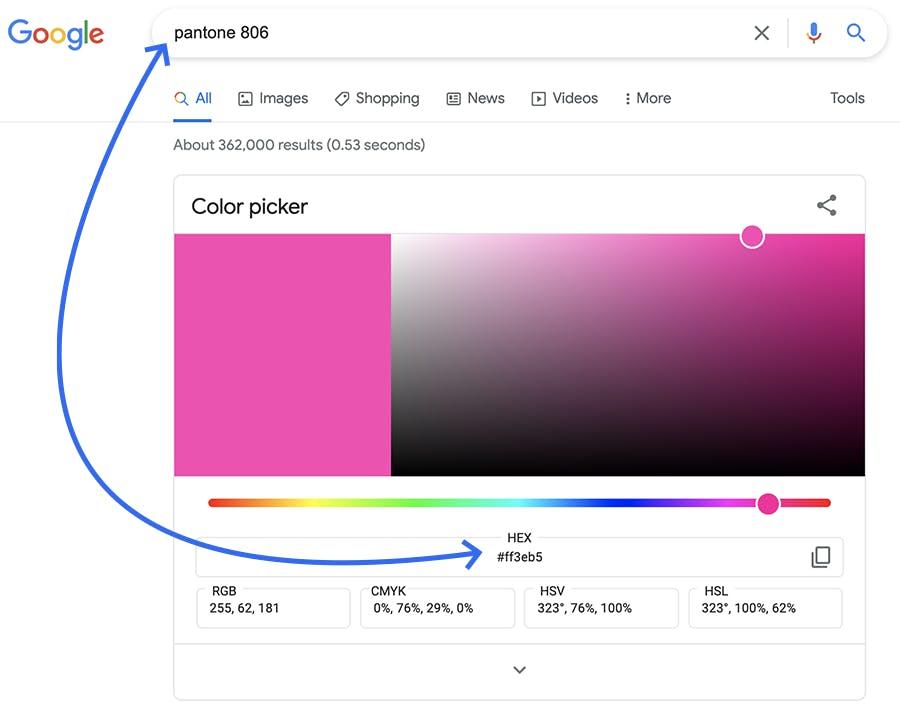
Converting between Pantone and hex code has never been easier. Google the Pantone number and the Google Color Picker will typically appear as a top result, giving you the hex code along with RGB, HSB, and more. You can also use Pantone's free online Color Finder or their Pantone Connect platform for more precise conversions.
Pantone color of the year
Pantone has positioned themselves as cultural influencers, with annual Fashion Trend Reports, regularly publishing books and articles, and forecasting global color trends through their Pantone Color Institute.
Most notably, they announce the Pantone Color of the Year every December, setting the tone (literally) for the coming year, always to much discussion and debate.
Recent Colors of the Year
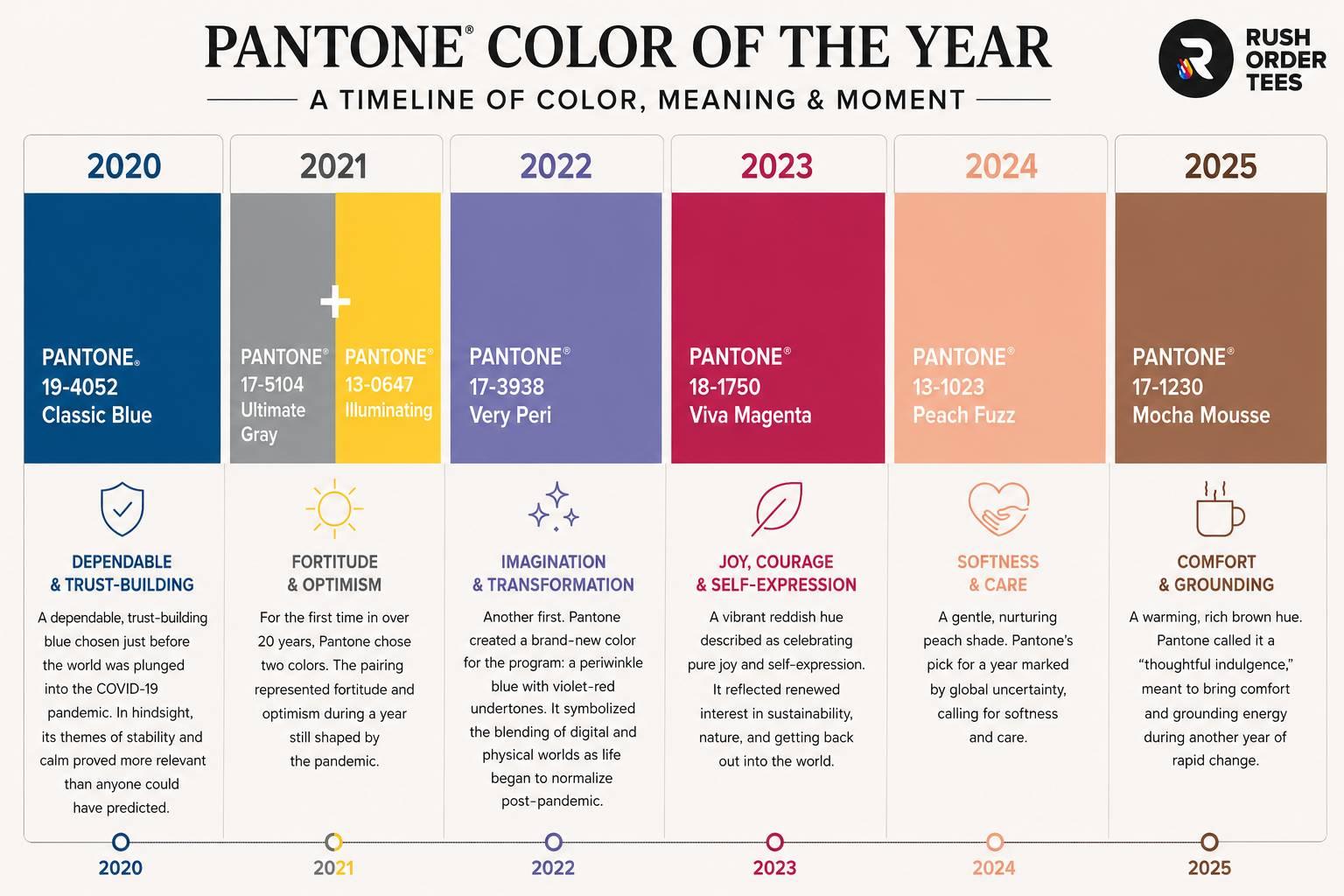
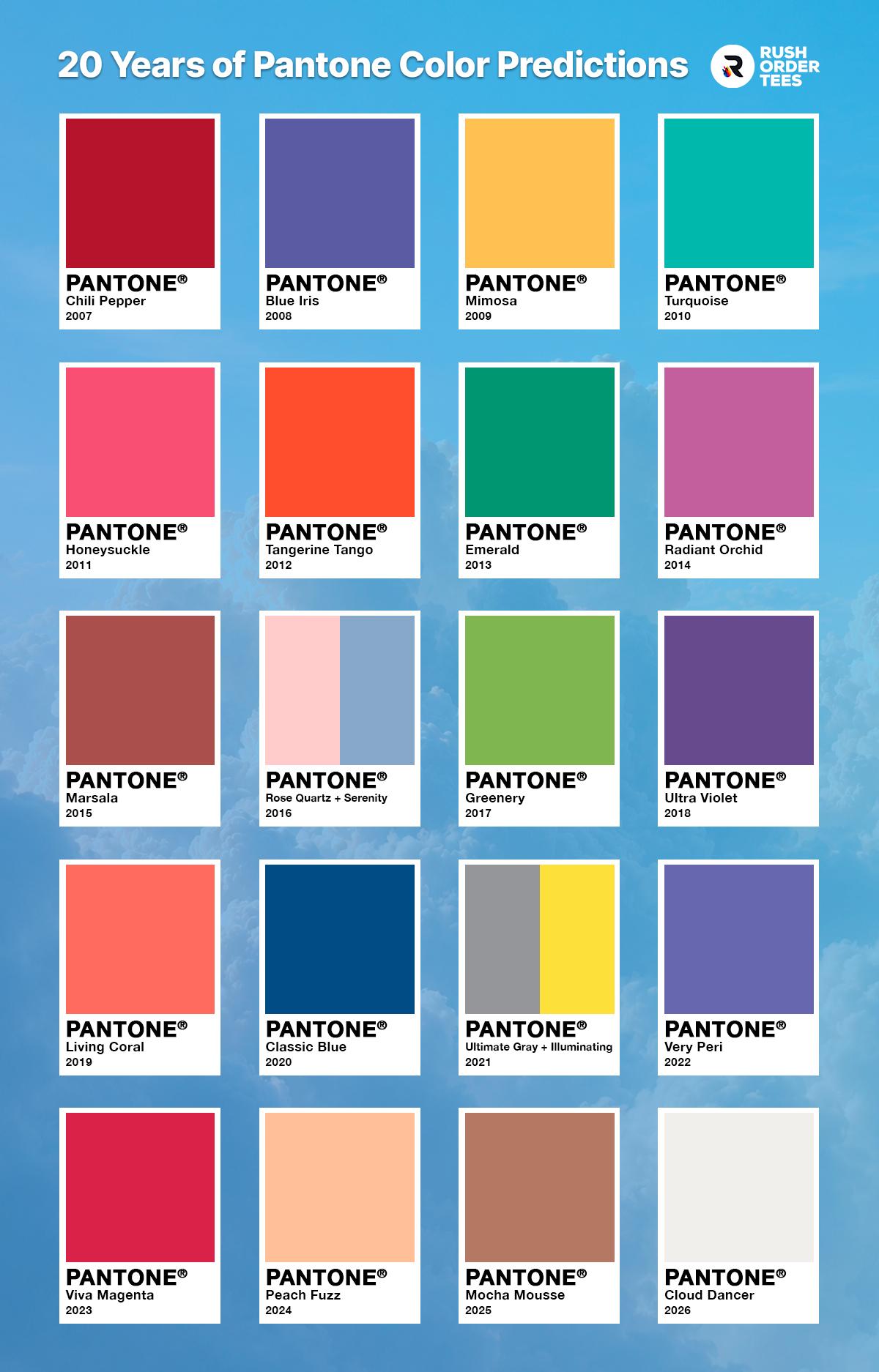
Here's a look at Pantone's picks since 2020:
- 2020: Classic Blue (19-4052): A dependable, trust-building blue chosen just before the world was plunged into the COVID-19 pandemic. In hindsight, its themes of stability and calm proved more relevant than anyone could have predicted.
- 2021: Ultimate Gray (17-5104) + Illuminating (13-0647): For the first time in over 20 years, Pantone chose two colors. The pairing represented fortitude and optimism during a year still shaped by the pandemic.
- 2022: Very Peri (17-3938): Another first. Pantone created a brand-new color for the program: a periwinkle blue with violet-red undertones. It symbolized the blending of digital and physical worlds as life began to normalize post-pandemic.
- 2023: Viva Magenta (18-1750): A vibrant reddish hue described as celebrating pure joy and self-expression. It reflected renewed interest in sustainability, nature, and getting back out into the world.
- 2024: Peach Fuzz (13-1023): A gentle, nurturing peach shade. Pantone's pick for a year marked by global uncertainty, calling for softness and care.
- 2025: Mocha Mousse (17-1230): A warming, rich brown hue. Pantone called it a "thoughtful indulgence," meant to bring comfort and grounding energy during another year of rapid change.
2026: Cloud Dancer (PANTONE 11-4201)
The 2026 pick surprised a lot of people. For the first time in the program's history, Pantone chose a shade of white.
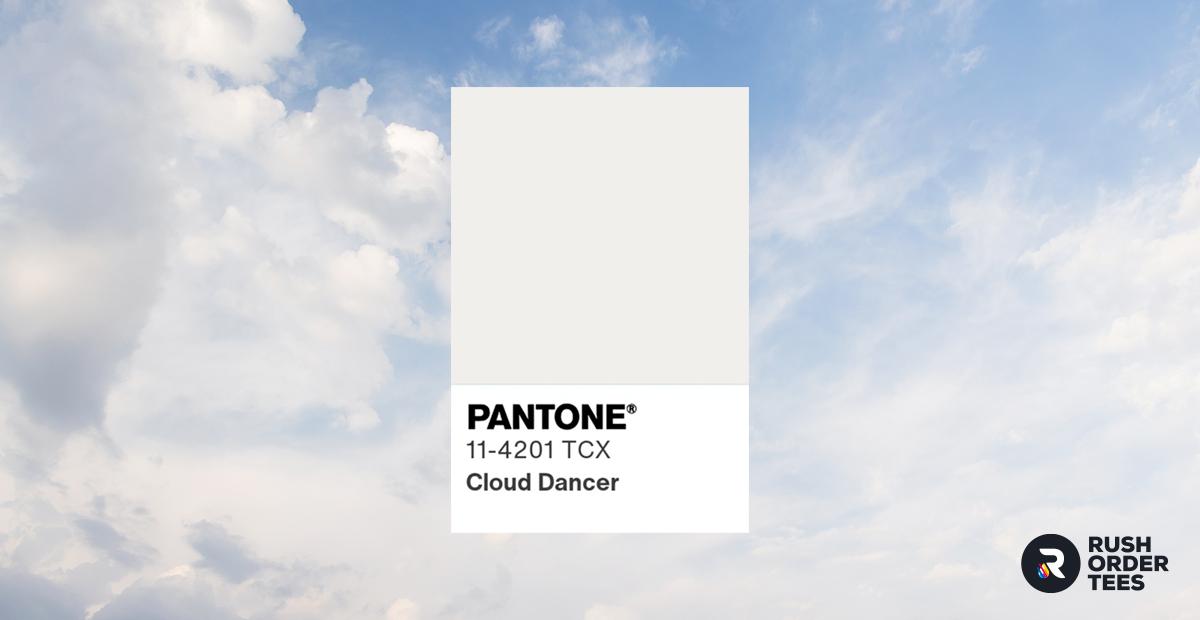
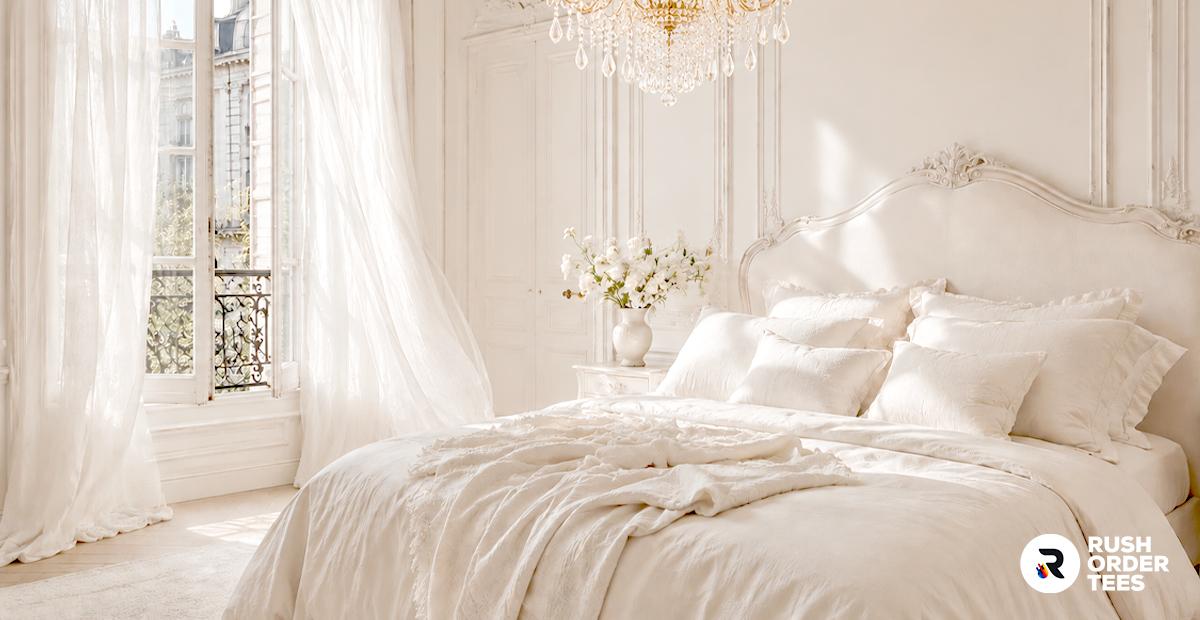
Cloud Dancer is described as "a lofty white that serves as a symbol of calming influence in a society rediscovering the value of quiet reflection." It's not a stark, clinical white. Think of it as a sophisticated off-white: billowy, balanced, and meant to serve as a blank canvas.
Leatrice Eiseman, Executive Director of the Pantone Color Institute, called it "a whisper of serenity" and "a calming influence." The idea is simplification. Stripping away the noise. In a year when the average person logs nearly seven hours of screen time daily, Cloud Dancer represents a reset.
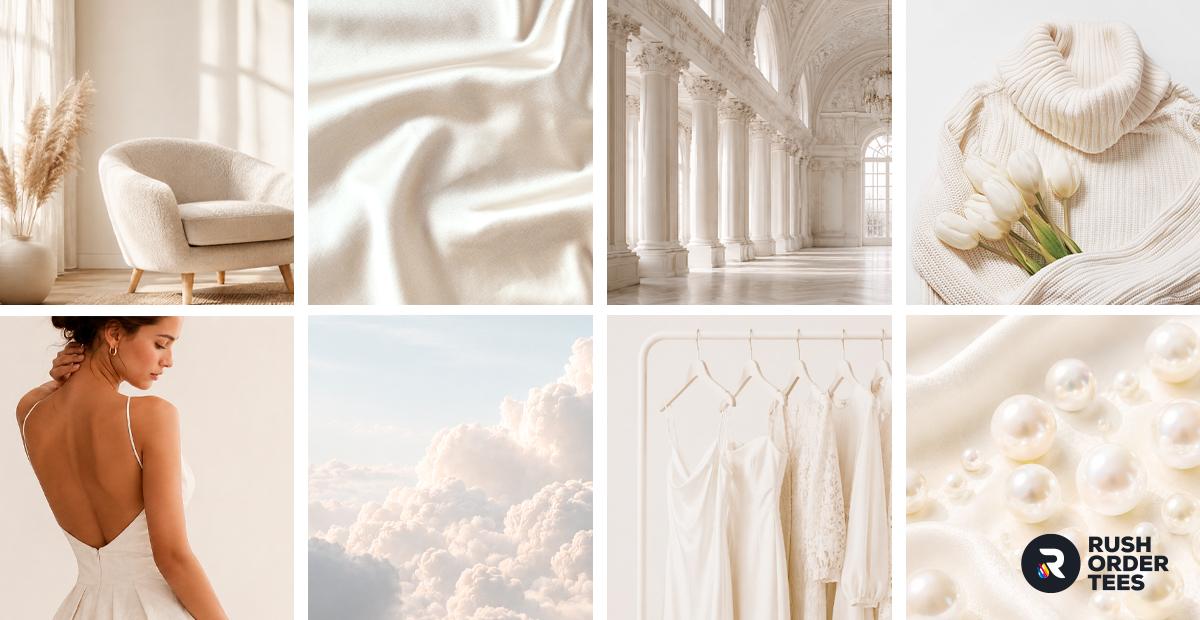
Reactions have been mixed. Some designers see it as a bold statement about restraint and intentionality. Others feel it's underwhelming compared to the vibrancy of recent picks like Viva Magenta or Very Peri. Either way, it's generating conversation, which is exactly what the Color of the Year is designed to do.
Pantone has partnered with Motorola, Mandarin Oriental, Play-Doh, Post-it, Command, Pura, and Joybird for Cloud Dancer collaborations across smartphones, hospitality experiences, and home furnishings.
The bigger pattern
Looking across the last several years, there's a clear arc. The pandemic era brought dependable blues and hopeful yellows. As the world reopened, colors got bolder and more expressive. Then a gradual retreat into warmth, comfort, and now, a shade of white that says "less." Whether that reflects genuine cultural desire for simplicity or just effective marketing, the Color of the Year remains Pantone's most visible exercise in channeling their authority into brand partnerships, media attention, and product collaborations.
Using Pantone colors for your custom apparel
Whether you're ordering custom t-shirts, hoodies, or hats, Pantone matching ensures your brand colors come out exactly right. Our team mixes ink to your exact PMS specification, so what you see in your brand guide is what you get on the finished product.
To get started, open the Design Studio, upload your artwork, and note your Pantone numbers in the Design Notes. If you're not sure which PMS color matches your brand, our team can help you find the right match. Call us at (800) 620-1233 or chat with us anytime.
Frequently Asked Questions
- How many Pantone colors are there? As of 2023, the Pantone Matching System includes over 2,390 spot colors. Pantone added 229 new colors (224 mixed colors and 5 base inks) in early 2023, expanding the library to better serve current design trends.
- Do I need Pantone Connect to use Pantone colors? Not necessarily. The Pantone system itself is open to reference. But if you work in Adobe Creative Cloud, you'll need a Pantone Connect subscription to access the full color libraries inside Photoshop, Illustrator, and InDesign. The free tier of Pantone Connect gives you limited access, while paid plans start around $8 per month.
- Can I specify Pantone colors when ordering custom shirts? Yes. When you place an order through our t-shirt designer, select standard spot colors as placeholders and then list your exact PMS numbers in the Design Notes section. Our ink team will mix to your exact specification.
- What's the difference between Pantone and CMYK? Pantone colors are pre-mixed as a single ink, giving you consistent, vibrant results. CMYK (process printing) builds colors by layering four inks: cyan, magenta, yellow, and black. Pantone is more accurate for brand colors and bold solids. CMYK is better for full-color photographs and complex gradients.
- What Pantone book should I buy for screen printing? The Coated Formula Guide (C library) is the go-to for screen printing, since plastisol ink has a glossy finish that most closely matches coated stock. If you want cross-platform color matching, upgrade to the Color Bridge Set.
The true value of the Pantone company is their standardized color system, relied on by millions of individuals and companies across the world. Now if you'll excuse us, we have some ink to mix.

About the Author
A graduate of the Multimedia program at the University of the Arts in Philadelphia, Imri Merritt is an industry veteran with over 20 years of graphic design and color separations experience in the screen printing industry.