
Every parent wants their kid to be comfortable, and every kid has opinions about what they'll actually wear. Some children happily throw on whatever's clean; others stage full protests over scratchy tags or "weird feeling" shirts. When you're ordering custom apparel for kids—whether it's team uniforms, family reunion tees, or merchandise for your children's brand—fabric choice matters more than you might think. The wrong material can mean unworn shirts stuffed in the back of a drawer, while the right one becomes a favorite that survives countless washes and playground adventures.
This guide breaks down everything you need to know about choosing kid-friendly fabrics, from comfort and safety basics to which materials work best with different printing methods. Let's be the adults in the room and make sure we get this right for the little ones.
What's the Best Fabric for Kids? (The Short Answer)
If you want the safest, most reliable choice for kids' custom apparel, go with 100% cotton. It's soft, breathable, naturally hypoallergenic, and prints beautifully. Cotton has been the go-to for children's clothing forever because it just works. It's gentle on sensitive skin, doesn't trap heat, and feels comfortable from the first wear. For parents who want extra peace of mind, organic cotton takes it a step further with chemical-free growing processes and certifications like GOTS or OEKO-TEX.
Note: Most kids do perfectly fine with polyester blends and synthetic materials. These become the better choice when you need moisture-wicking performance for sports, lightweight durability for active play, or wrinkle resistance for uniforms that need to look sharp. There's a reason most fleece hoodies, sweatpants, and athletic wear use blends: they're engineered for how kids actually live.
What Matters When Choosing Kids' Apparel Fabrics
Whether you're a parent ordering custom tees for a birthday party or a retailer building a kids' apparel line, these are the factors that should guide your fabric decisions:
- Softness & Comfort: Kids won't wear clothes that bother them. It's that simple. Look for smooth textures without scratchy fibers, and pay attention to how the fabric feels against skin. Combed and ringspun cotton tends to be softer than standard cotton, while tri-blends offer that buttery-soft feel kids love.
- Breathability: Active kids generate a lot of heat, and fabrics that trap warmth lead to sweaty, uncomfortable children. Cotton and cotton-rich blends allow air to circulate, making them ideal for everyday wear. For high-energy activities, moisture-wicking performance fabrics help pull sweat away from the skin.
- Durability: Kids are rough on clothes. Playground slides, grass stains, food spills, and weekly (or daily) washing cycles take their toll. Cotton/poly blends tend to hold up better over time than pure cotton, resisting shrinkage and maintaining their shape. Fleece and French terry are particularly resilient for hoodies and sweatpants that see heavy rotation.
- Safety & Certifications: Children's skin is more sensitive than adults', making them more susceptible to irritation from harsh dyes and chemical finishes. Look for OEKO-TEX Standard 100 certification, which verifies the fabric has been tested for harmful substances. Organic certifications like GOTS provide additional assurance for parents prioritizing chemical-free materials.
- Stretch & Flexibility: Kids need to move freely; running, climbing, bending, and sprawling on the floor are non-negotiable activities. Fabrics with a bit of spandex or elastane allow unrestricted movement, which is especially important for toddlers and activewear. Even without stretch fibers, relaxed-fit garments in softer knits give kids the flexibility they need.
- Print Compatibility: The fabric needs to accept your chosen decoration method while maintaining a comfortable hand feel after printing. Heavy ink deposits can make shirts stiff and uncomfortable, so consider how your design and print method will affect wearability. DTF transfers and water-based screen printing inks tend to produce softer results on kids' apparel.
Top Kid-Friendly Fabrics for Custom Apparel
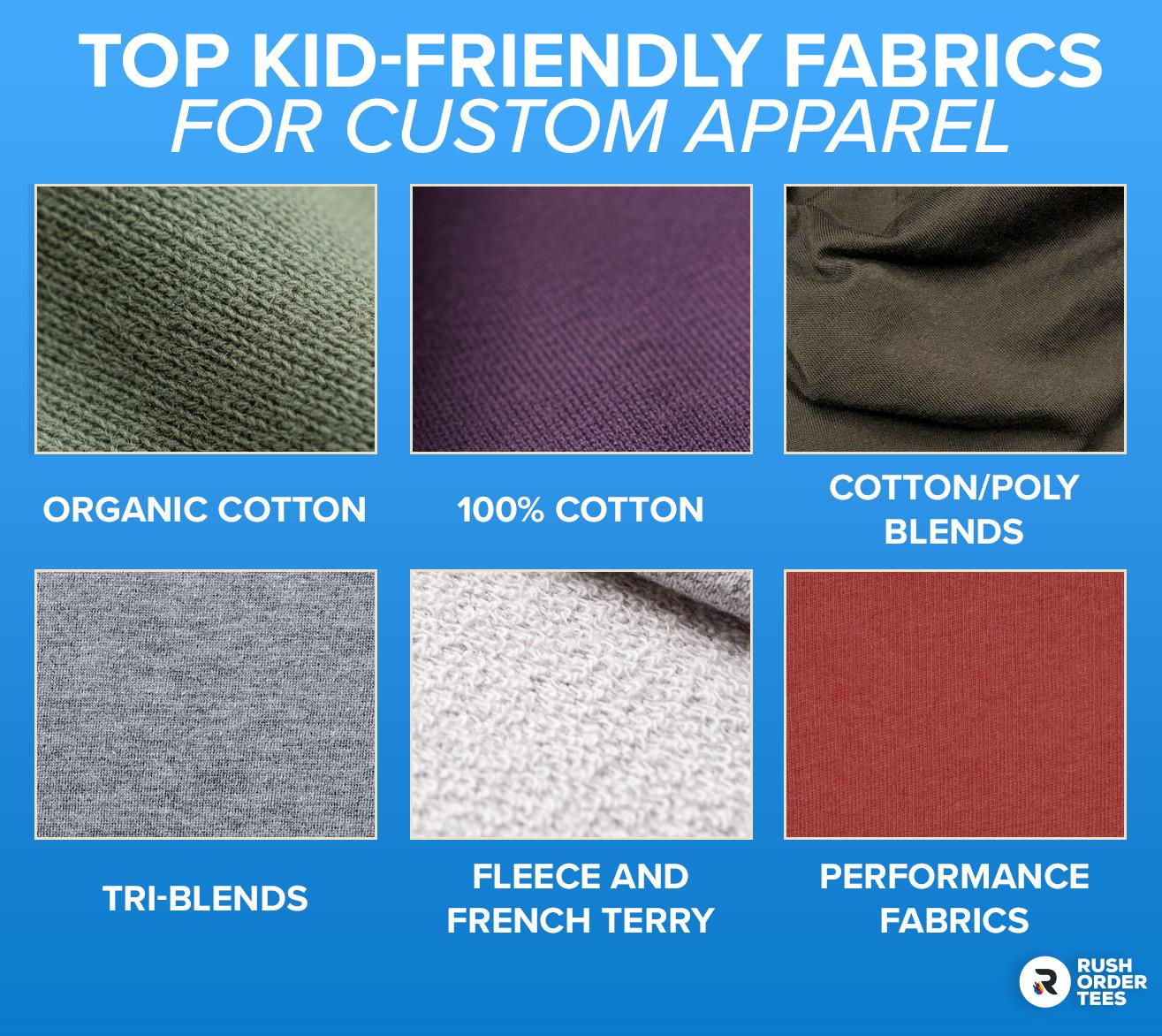
Here's a ranked breakdown of the best fabric options for children's custom apparel, from safest choice to more specialized applications:
1. Organic Cotton
- Grown without synthetic pesticides or fertilizers, making it the gentlest option for sensitive skin.
- Often certified OEKO-TEX or GOTS, giving parents verified assurance of safety standards.
- Provides an excellent printing surface for screen printing and DTF transfers.
- Cons: Higher price point than conventional cotton (expect to pay 20-30% more).
- Best for: Onesies, baby wear, pajamas, and everyday tees for kids with skin sensitivities.
2. 100% Cotton (Conventional)
- The reliable workhorse of kids' apparel: soft, breathable, and naturally hypoallergenic.
- Combed and ringspun varieties offer noticeably smoother, softer hand feel than standard cotton.
- Works beautifully with screen printing and DTF, producing vibrant, long-lasting graphics.
- Cons: Can shrink (if not preshrunk), and tends to wear out faster than blends.
- Best for: Everyday tees, pajamas, and casual wear at an affordable price point.
3. Cotton/Poly Blends
- Combines cotton's softness with polyester's durability and wrinkle resistance.
- Higher cotton ratios (60/40 or 80/20) maintain a soft hand feel while improving longevity.
- Holds up exceptionally well to the frequent washing that kids' clothes demand.
- Cons: Lower-quality blends with high polyester content can feel less breathable, more synthetic.
- Best for: Activewear, school uniforms, and play clothes that need to survive rough treatment.
4. Tri-Blends (Cotton/Poly/Rayon)
- The rayon content creates an ultra-soft, lightweight fabric with a premium drape.
- A favorite for fashion-forward kids' apparel and retail-quality merchandise.
- Takes DTF transfers and soft-hand screen prints exceptionally well.
- Cons: Slightly less durable for heavy everyday use, and comes with a slightly higher price tag.
- Best for: Premium kids' tees, branded merchandise, and special occasion wear.
5. Fleece & French Terry
- Soft, cozy interior makes these fabrics perfect for cooler weather layering.
- French terry is lighter weight and more breathable; fleece provides more warmth and insulation.
- Both work well with screen printing and embroidery for hoodies and sweatpants.
- Cons: Can be too warm for indoor wear or active play in heated environments.
- Best for: Hoodies, joggers, sweatshirts, and cold-weather staples.
6. Performance Fabrics (Poly/Spandex Blends)
- Engineered for moisture-wicking, stretch, and quick-drying properties.
- Ideal for sports, PE uniforms, dance wear, and any high-activity application.
- Screen printing and DTF both work well, especially on lighter colors.
- Cons: Lower-quality versions can trap heat and feel plasticky; prioritize reputable brands.
- Best for: Polos, athletic wear, sports uniforms, leggings, and competitive team gear.
Fabrics to Avoid for Kids' Apparel
Not every fabric belongs in a child's wardrobe. Here's what to skip or approach with caution:
- Rough Wool or Acrylic: These fibers can feel scratchy and irritating against sensitive skin, leading to complaints and unworn sweaters. If you need warmth, opt for fleece or soft cotton blends instead.
- Cheap Polyester: Low-quality polyester traps heat, doesn't breathe, and can feel plasticky against skin. Kids overheat quickly during play, making poor-quality synthetics a recipe for discomfort.
- 100% Nylon: While durable, nylon offers minimal breathability and tends to cause sweating during any activity. Save it for outerwear shells where it won't contact skin directly.
- Heavy Denim or Stiff Fabrics: Thick, rigid materials restrict the constant movement that kids require. Toddlers especially need flexibility for crawling, climbing, and the general chaos of being small.
- Untested Dyes and Chemical Finishes: Fabrics without safety certifications may contain harsh chemicals that irritate children's skin. Always look for OEKO-TEX or similar certifications when sourcing kids' apparel blanks.
- Heathered Colors on "Cotton" Tees: Here's a sneaky one: those heathered or sport gray versions of cotton tees are actually blends, even when the solid colors are 100% cotton. If you're specifically trying to avoid polyester, check the fabric content on each color variant.
- White Fabric: Kids and white clothing exist in a state of constant war. That pristine white tee has about a 15-minute life expectancy before juice, grass, or mystery stains claim victory.
Matching Fabrics to Decoration Methods
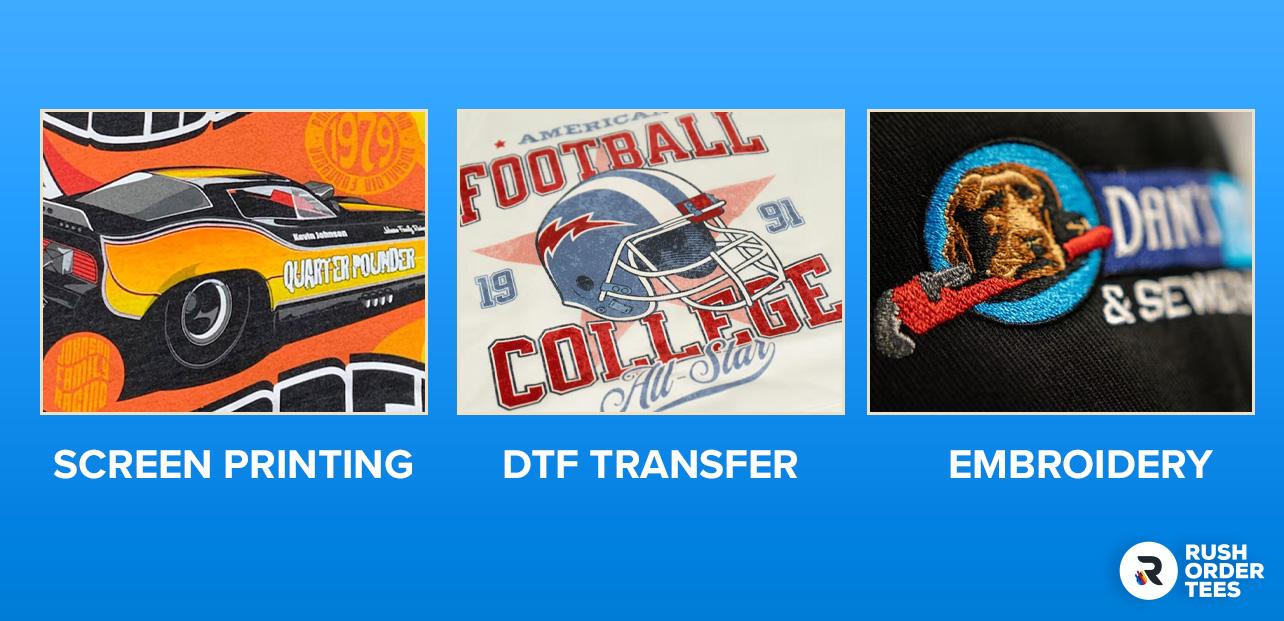
With over two decades of custom printing experience, we've learned which decoration methods work best for different applications, and kids' apparel has its own considerations. Here's how the main methods perform on children's clothing:
Screen Printing: The industry standard for kids' apparel, screen printing produces vibrant, durable graphics that hold up to countless wash cycles. It's most cost-effective for larger orders with limited colors. Keep in mind that heavy ink deposits can feel stiff on smaller garments, so consider design size carefully for little ones.
DTF Transfers: Our recommended method for most kids' custom apparel. DTF produces soft, flexible prints with unlimited colors that move naturally with the fabric; perfect for active children. It works on virtually any material including blends and performance fabrics, and there's no minimum order size. The only consideration is that very large solid designs can slightly affect breathability and drape.
Embroidery: Creates a polished, professional look that's incredibly durable. However, the backing material required for embroidery can feel scratchy against sensitive skin, making placement critical. Best reserved for jackets, hats, and heavier hoodies rather than tees or lightweight fabrics.
Decoration Tips for Kids' Apparel
- Prioritize soft hand feel over visual impact. Uncomfortable prints won't get worn no matter how cool they look.
- Keep designs appropriately sized for smaller bodies; an adult-scale chest print can feel like armor on a five-year-old.
- For thin fabrics, water-based screen printing inks or DTF transfers produce much softer results than standard plastisol.
- Avoid placing embroidery on areas where the backing will contact skin directly, like the chest area on lightweight tees.
- Test your fabric and decoration combination on a sample before committing to bulk orders.
- DTF transfers flex with the fabric, making them particularly well-suited for activewear and garments that need to stretch.
Quick Reference: Best Fabric by Garment Type
Need a fast answer? Here's what works best for each type of kids' apparel:
- Everyday tees: 100% cotton or cotton/poly blends
- Playwear & activewear: Cotton/poly blends or poly/spandex performance fabrics
- Pajamas & sleepwear: Organic cotton or soft combed cotton
- Hoodies & sweatshirts: Cotton blend w/ fleece or French terry
- Sweatpants & joggers: Fleece or French terry with ribbed cuffs
- Onesies & baby wear: Organic cotton or soft combed cotton
- Sports uniforms: Moisture-wicking poly/spandex blends
- School uniforms: Durable cotton/poly blends
- Toddler apparel: Soft cotton with stretch for flexibility
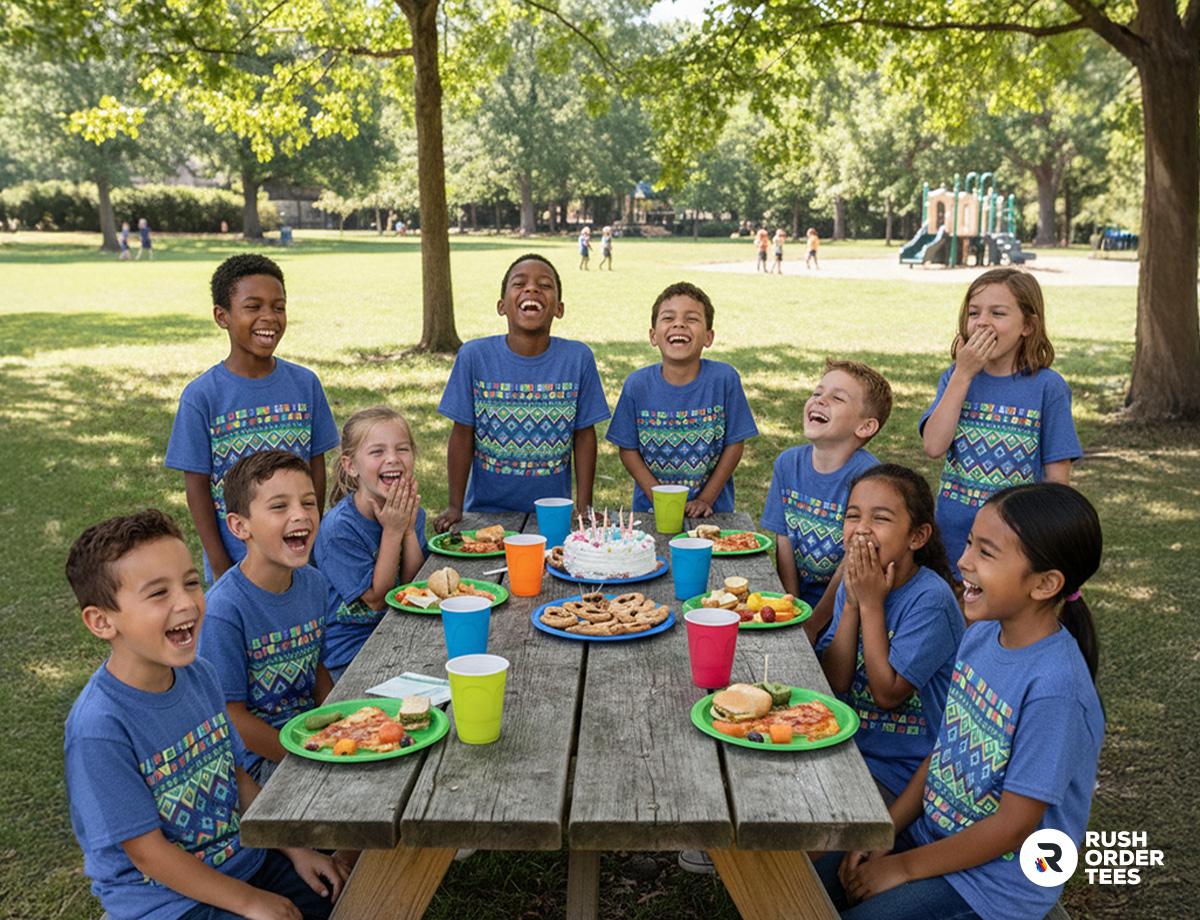
Making the Right Choice for Kids
Cotton remains the safest default for custom youth apparel; it's soft, breathable, hypoallergenic, and prints beautifully. Consider organic cotton for infant wear or children with sensitivities, and don't hesitate to use blends and performance fabrics when durability or moisture-wicking matters more. Whatever you choose, prioritize comfort above all else. Kids won't wear scratchy or stiff clothing, no matter how great the design looks. And when sourcing blanks, look for OEKO-TEX or similar certifications to ensure the fabric meets safety standards.
At RushOrderTees, we've been helping customers navigate these decisions for over two decades. Our team knows which fabrics work best with each decoration method and can guide you toward the right blanks for your specific project. Browse our kids' apparel catalog to explore your options, or reach out if you need help choosing the perfect combination of fabric, fit, and print method for the little ones in your life.

About the Author
A graduate of the Multimedia program at the University of the Arts in Philadelphia, Imri Merritt is an industry veteran with over 20 years of graphic design and color separations experience in the screen printing industry.
 2727 Commerce Way
Philadelphia PA 19154
2727 Commerce Way
Philadelphia PA 19154 Call (800) 620-1233
 Email Us