
Shopping for custom towels isn't like picking out bath towels at a department store. When you're ordering towels for your brand, team, event, or business, the fabric you choose affects more than just how it feels; it determines how well your logo prints, how the towel performs in real-world use, and how it holds up after dozens of washes.
Different towel fabrics bring different strengths to the table. Cotton terry absorbs like nothing else, microfiber dries in a flash, and blends try to split the difference. Then there's the texture of the fabric, its weight, and how all of that interacts with your chosen print or embroidery method. This guide breaks down the major towel materials, what GSM actually means, and how to match the right fabric to your project.
What to Look For Before Choosing a Towel Fabric
Before diving into specific materials, here's a quick checklist of factors to weigh when choosing a custom towel from the catalog.
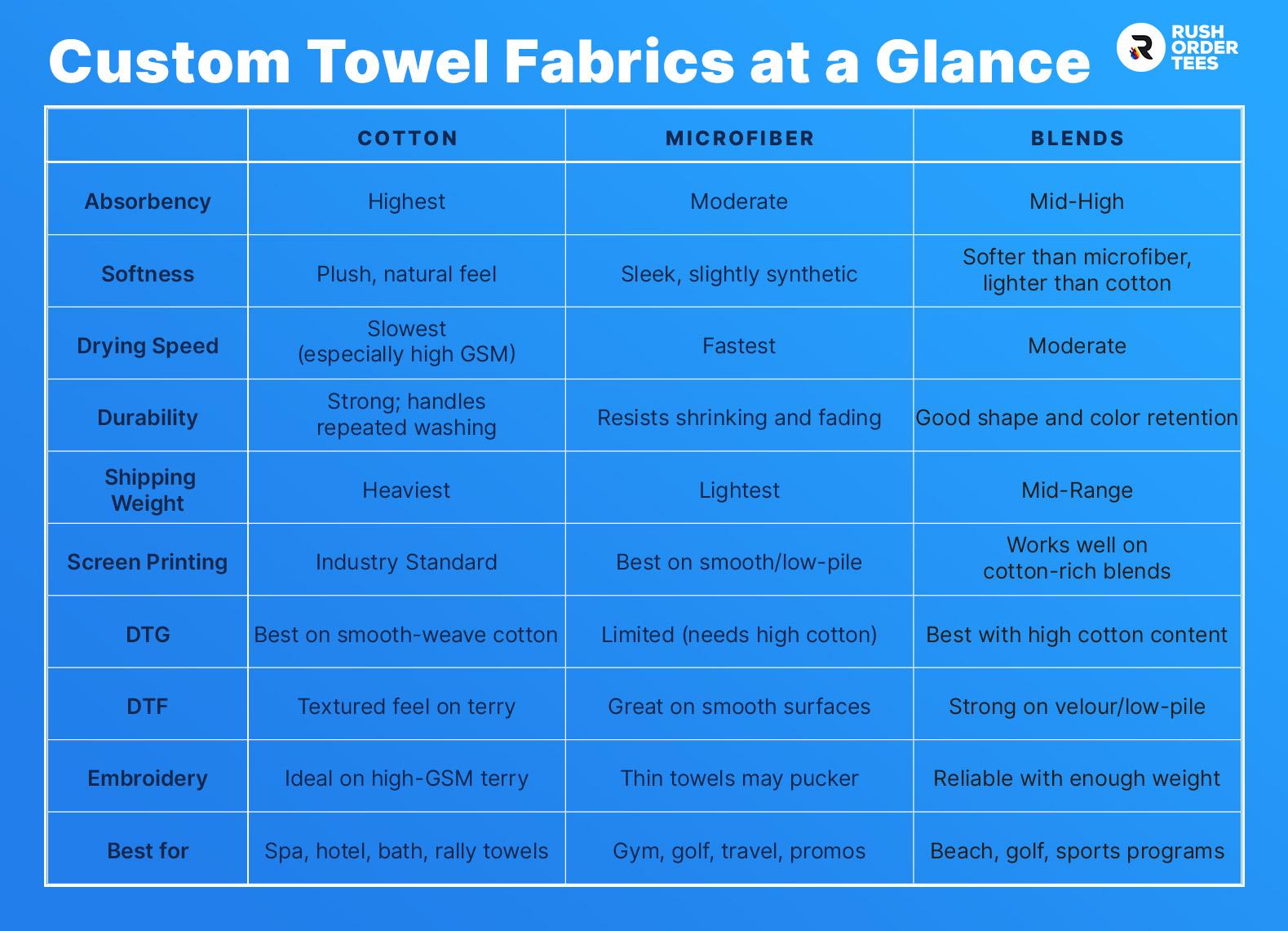
- Absorbency: Cotton terry and high-GSM towels soak up the most moisture, while microfiber and blends absorb quickly but feel less "thirsty" on first contact.
- Softness: Premium cotton types like Egyptian and Turkish cotton, along with velour finishes, deliver the most luxurious hand feel. Microfiber can feel sleek but leans slightly synthetic depending on the blend.
- Durability & wash resistance: Cotton holds up well through repeated laundering, while microfiber and poly blends resist shrinking and color fading—a big plus for team and promo towels that take a beating.
- Drying speed: Microfiber and lightweight blends dry the fastest. Heavy cotton spa towels take longer but reward you with that plush, thick feel.
- Thickness (GSM): GSM (grams per square meter) is your shorthand for weight and density. Higher GSM means thicker and more absorbent, but also heavier to ship and slower to dry.
- Print compatibility: Cotton is the default for screen printing, DTG, and embroidery. Smoother surfaces like microfiber or velour pair best with DTF and other transfer-style methods.
- Intended use: A beach towel, a gym towel, and a hotel bath towel all have very different demands. Nail down the use case first, then work backward to the fabric and print method.
Types of Towel Materials
Each towel material brings a different balance of absorbency, weight, durability, and print performance. Here's how the three main categories stack up.
Cotton Towels: The Classic Choice
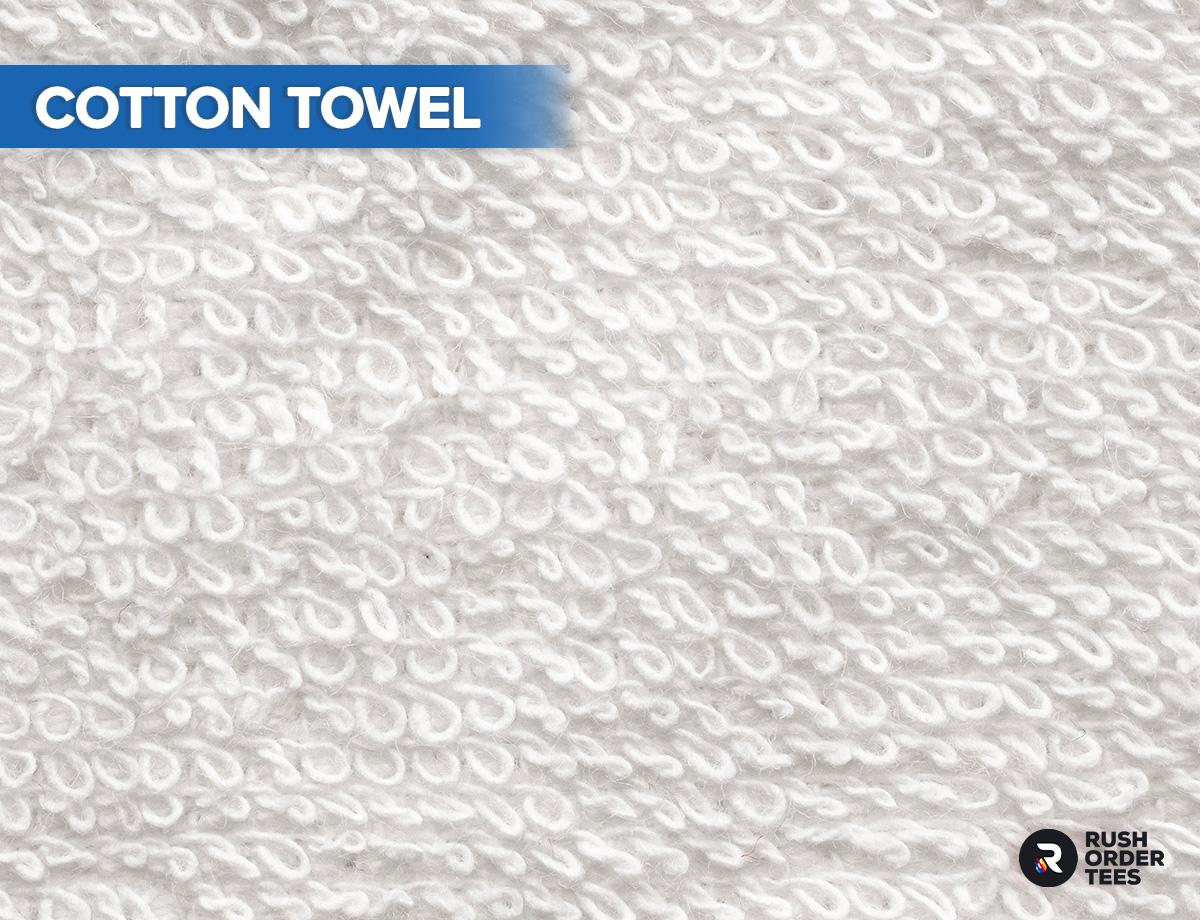
Cotton is the standard for a reason. It's naturally soft, ultra-absorbent, and skin-friendly, which is why it dominates bath, spa, hotel, and everyday towel programs. Higher GSM weights and premium cotton types feel noticeably more luxurious, and cotton's natural fibers make it a comfortable, familiar choice for just about any end user.
Not all cotton is created equal, though. Combed cotton has smoother, more uniform fibers that create a cleaner surface. Ringspun cotton is soft yet strong, making it a go-to for sports and rally towels that need to survive heavy wash cycles. Turkish cotton is plush and quick-absorbing, ideal for spa and resort programs. And Egyptian cotton, with its long-staple fibers, sits at the top of the pile for ultra-soft, high-end hotel and bath towels.
Cotton works well with most decoration methods. It's the industry standard for screen printing, which pairs naturally with rally and sports towels for bold logos. DTG performs best on smoother, tighter-weave cotton where the surface is less textured. DTF sits on top of the fibers, so on high-pile terry you'll get a more textured feel under the hand. And embroidery looks right at home on high-GSM cotton terry, Turkish, and Egyptian cotton, delivering a premium, long-lasting logo.
The trade-offs are worth knowing. Cotton towels (especially thick, spa-weight ones) take longer to dry and are heavier to ship in bulk, which matters for large merch or event orders. Printed areas on thick terry can also feel less crisp than on smoother fabrics, since ink settles into the loops rather than sitting cleanly on a flat surface.
Microfiber Towels: Lightweight and Fast-Drying
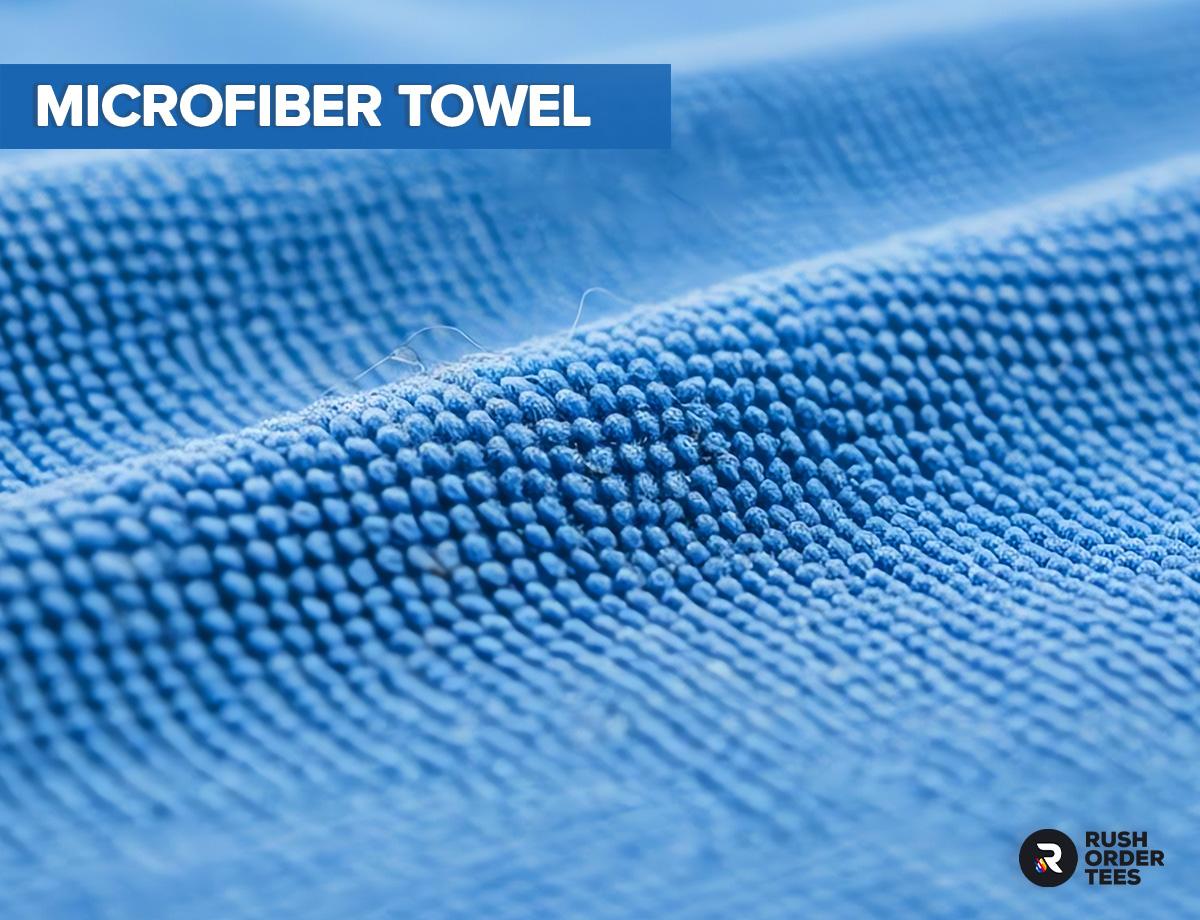
Microfiber towels are built for performance. Made from polyester or nylon/poly blends, they're quick-drying, super lightweight, and resistant to shrinking; all qualities that make them popular for gyms, sports teams, travel, golf courses, and promotional giveaways where portability and drying speed matter more than plush softness.
From a practical standpoint, microfiber's compact size and low bulk make it easy to pack into event kits, ship in large quantities, and toss into a gym bag without adding weight. Cooling towels, golf towels, and branded travel towels all lean heavily on microfiber for these reasons.
Print method compatibility depends on the surface. Screen printing works on low-pile or smooth microfiber, but the ink tends to sit more "on top" than it does on cotton. DTF is a strong option here, especially on smooth microfiber or microfiber velour fronts, producing bright, full-color logos with consistent edges. DTG is generally more limited since it performs best on high-cotton content fabrics. Embroidery works on thicker microfiber golf towels, but thin cooling towels can pucker or show the backing more easily.
The downsides mirror what you'd expect from a synthetic fabric. Microfiber doesn't have the plush, luxurious feel of high-GSM cotton, and lower-end blends can feel noticeably synthetic against the skin. It's also not always as absorbent in a single pass as thick cotton terry. Users may need a couple of wipes to get the same job done.
Blended Towels: Splitting the Difference
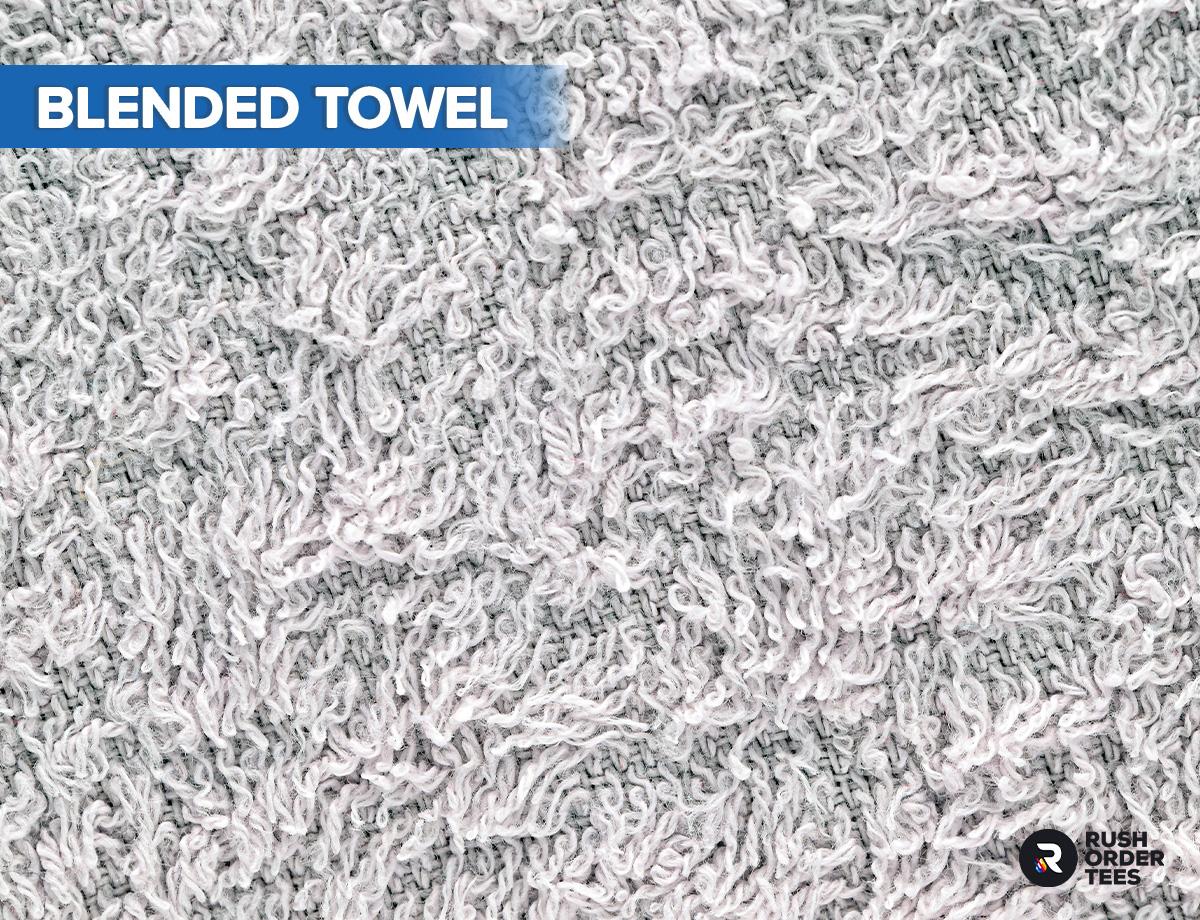
Blended towels (typically poly-cotton or microfiber/poly combinations) aim to give you a bit of everything. They're softer and more familiar-feeling than pure microfiber, while drying faster and holding their shape better than 100% cotton. For many beach, golf, and sports towel programs, that middle ground is exactly the right fit.
The practical benefits add up quickly for branded programs. Blends resist shrinking, hold color well through frequent washing, and often provide smoother print areas that support bright, durable graphics. That combination of performance and printability is why so many custom beach and golf towels use blended fabrics.
On the decoration side, blends are flexible. Screen printing works well on cotton-rich blends and blended beach or rally towels. DTF is a strong choice on smoother blended surfaces, especially velour fronts or low-pile blends, making it viable for full-color logos at lower quantities. DTG performs best when the cotton content is high, though print vibrancy may differ slightly from 100% cotton. Embroidery holds up reliably on blends with enough weight and pile to support dense stitching without puckering.
The compromise: Blends won't feel quite as luxurious as high-end Egyptian or Turkish cotton for spa and fine hotel settings, and they're not as featherlight or fast-drying as pure microfiber for hardcore performance use. But for most custom towel projects that need a balance of comfort, durability, and print quality, blends hit a practical sweet spot.
Understanding Towel Textures
Beyond the base material, a towel's surface texture plays a major role in both how it feels and how your design comes out.
Terry Cloth
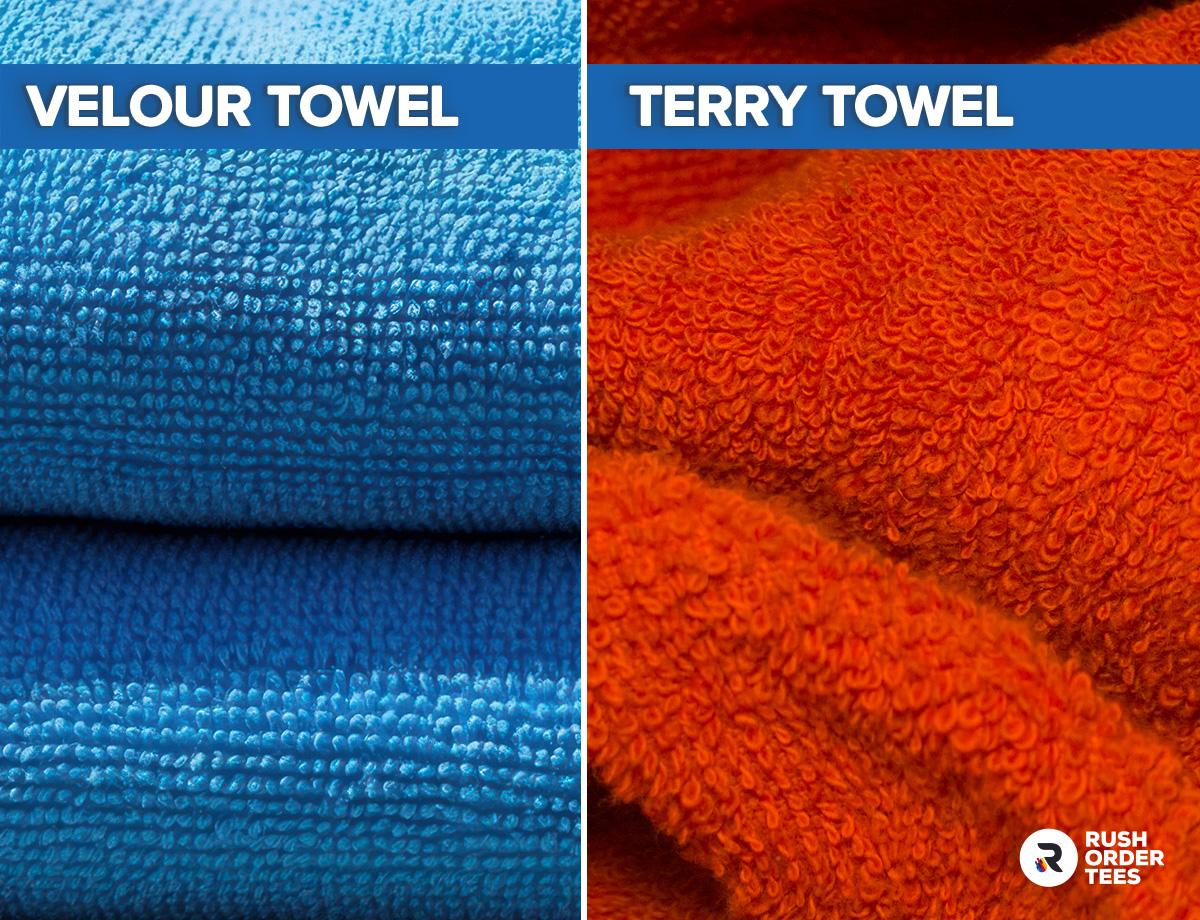
Terry cloth is the texture most people picture when they think "towel." Its signature looped fibers create a high-pile surface that traps moisture efficiently, giving it that classic absorbent, cozy feel. You'll find Terry on the vast majority of baths, spa, hotel, gym, rally, and sports towels. Anywhere absorbency and comfort are the priority.
Terry's looped surface works well with screen printing and embroidery, but it does affect how designs look and feel. Screen-printed ink sinks slightly into the loops, which produces durable prints with slightly softer edges rather than razor-sharp lines. Embroidery, on the other hand, stands proud of the terry surface and holds up beautifully through heavy use, which is why it's the go-to for premium hotel and golf towel logos.
Velour Towels
Velour towels start as terry cloth, but the surface loops are sheared down to create a smooth, plush face; usually with the standard terry loops left intact on the back for absorbency. The result is a towel that feels velvety on one side and functional on the other, which is why velour is a popular choice for beach and lounge towels where looks and comfort both matter.
That smooth face is a major advantage for printing. Screen printing and DTF both benefit from the flat, even surface, producing sharper edges and more consistent ink coverage than you'd get on a looped terry face. If you're going for detailed graphics or full-color branding on a beach or promotional towel, velour gives you a cleaner canvas to work with. Embroidery also works on velour, though it's best placed away from extremely thin sheared areas where puckering can be an issue.
What GSM Means (And How to Choose the Right Weight)
GSM stands for grams per square meter, and it's the standard measurement for towel weight and density. Higher GSM means a thicker, heavier, more absorbent towel. But it also means longer drying times and higher shipping costs. Here's how the ranges break down:
- 300–400 GSM: Lightweight and fast-drying. This is the typical range for rally towels, sports towels, and promo/event towels, where you're ordering in bulk and shipping weight matters. They get the job done without the plush factor.
- 400–500 GSM: The versatile middle ground. These work well for everyday bath towels, gym towels, and mid-range beach towels, offering a solid balance of softness, absorbency, and reasonable drying time.
- 500–700 GSM: Premium, spa-level thickness—often Turkish or Egyptian cotton—built for hotels, resorts, and high-end programs. They feel luxurious in hand but take noticeably longer to dry and cost more to ship.
Keep in mind that GSM tells you about weight and density, but it's not the whole picture. You'll want to balance it against drying speed, shipping logistics, and how the print or embroidery will feel against skin—especially for towels that are going into heavy rotation.
How Fabric Choices Affect Customization
Every print and decoration method interacts differently with towel fabrics, so matching the right method to your material is just as important as choosing the towel itself.
- Screen printing: Ink is pushed through a mesh screen onto the fabric, making it the industry standard for cotton terry and cotton-rich blends (especially rally, sports, and beach towels in larger runs). It handles bold logos and solid color areas well, though ink sinks into terry loops slightly, giving prints softer edges than you'd see on a flat garment. For the sharpest results, go with a velour or low-pile surface.
- DTG (direct-to-garment): A digital printer applies ink directly onto the fabric surface, performing best on 100% cotton or high-cotton towels with a smoother, less textured weave. High-pile terry can limit detail because the print head needs clearance and the fiber texture breaks up fine lines. If your towel has a cotton panel or tighter-weave section, that's your best DTG target area.
- DTF (direct-to-film): Designs are printed onto transfer film and then heat-pressed onto the towel, making DTF a strong choice for smooth velour, microfiber, and blended surfaces where the transfer can sit evenly. It's ideal for smaller runs, multi-color artwork, and fabrics where DTG isn't an option due to fiber content. On thick cotton terry, expect a slightly more textured feel under the hand as the transfer bridges the loops.
- Embroidery: Thread is stitched directly into the fabric, creating a dimensional, tactile logo that outlasts virtually any print method. It's the go-to for premium hotel, spa, and golf towels in terry cotton, Turkish cotton, and high-GSM blends where perceived value and longevity matter most. Avoid heavy embroidery on very thin microfiber or cooling towels, where dense stitching can pucker the fabric or make the backing visible.
Choosing the Right Fabric for Your Project
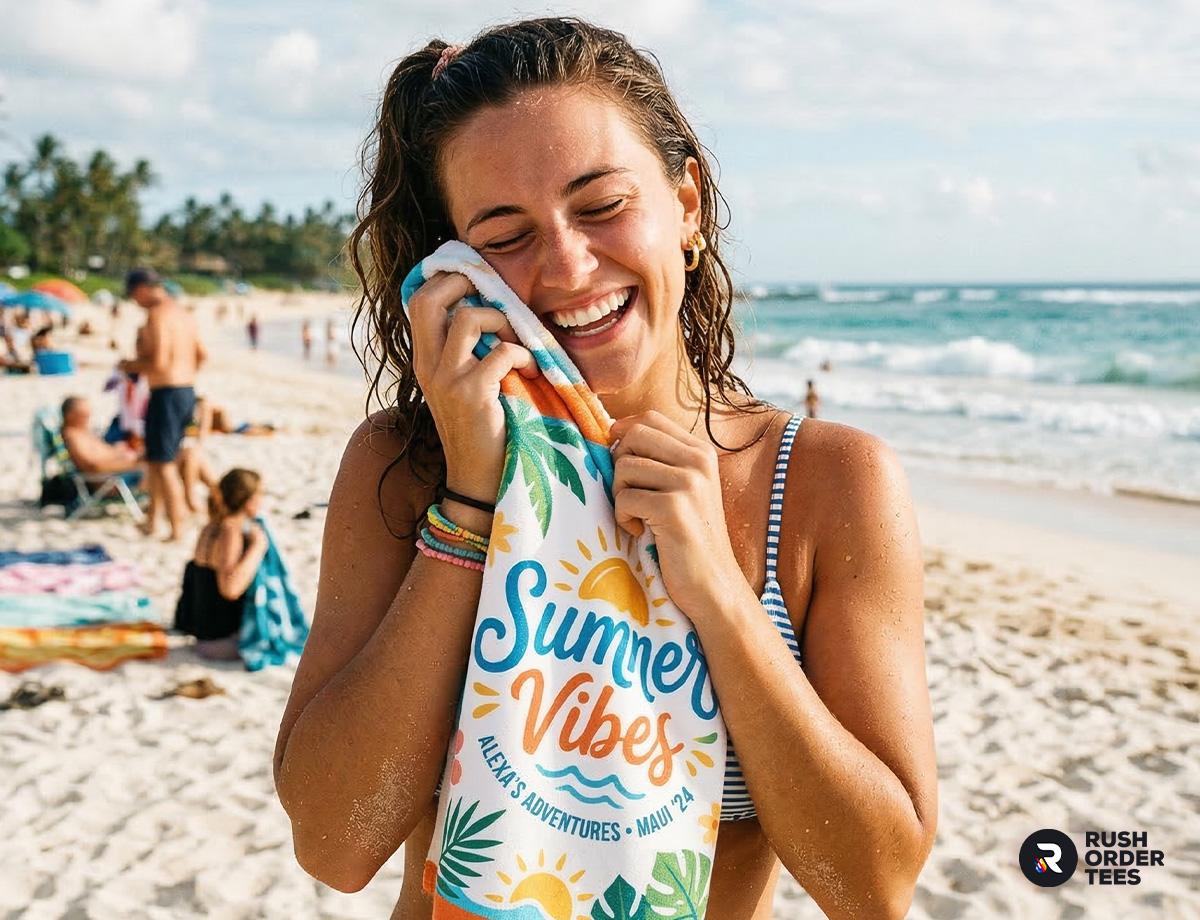
The right towel starts with the right use case. If absorbency and a premium feel are the priority (think spa, hotel, or bath programs), high-GSM cotton in Turkish or Egyptian varieties is hard to beat. For gyms, sports teams, travel, and promotional giveaways where drying speed and shipping weight matter more, microfiber and lightweight blends make more practical sense. And for programs that need a balance of comfort, durability, and a clean print surface, blended fabrics cover a lot of ground. From there, match your fabric to the decoration method that suits your design: screen printing for bold logos on cotton terry, DTF for detailed graphics on smooth surfaces, and embroidery for that long-lasting, upscale look on heavier towels.
RushOrderTees has been helping customers navigate these kinds of decisions for over two decades, across millions of orders. Whether you're putting together branded beach towels for a resort, rally towels for a stadium giveaway, or embroidered golf towels for a corporate outing, our team can help you find the right fabric and print method combination for your project. Browse our custom printed towel options to compare materials side by side, or reach out to our team if you want guidance on what works best for your specific use case.

About the Author
A graduate of the Multimedia program at the University of the Arts in Philadelphia, Imri Merritt is an industry veteran with over 20 years of graphic design and color separations experience in the screen printing industry.