

Picking the right shirt is only half the equation. Once you've nailed down the garment, the fabric, the fit, the brand, you still need to figure out what goes on it and how it gets there. With kids' apparel, those decisions carry extra weight. The wrong decoration method can leave a scratchy print against sensitive skin. An oversized design can overwhelm a tiny 3T frame. And artwork that doesn't hold up after a dozen washes defeats the purpose of ordering custom gear in the first place.
This guide covers the practical side of creating custom kids' apparel that actually works: from choosing the right print method for each garment type to designing age-appropriate graphics and scaling artwork properly for smaller bodies. Whether you're producing spirit wear for a youth sports league, matching sets for a family reunion, or milestone onesies for a baby shower, these tips will help you make smarter design and decoration decisions.

Print Methods for Kids' Clothing
Not every decoration method works equally well on kids' apparel. Comfort, durability, and fabric compatibility all factor into which technique delivers the best results for young wearers. Here's how the three main methods stack up for children's clothing, and when each one makes the most sense.
DTF Transfers: The Go-To for Kids' Apparel
- Soft, flexible prints on any fabric. DTF (direct-to-film) transfers produce prints that move naturally with the garment, making them particularly well-suited for active kids. The finished result feels smooth and flexible rather than heavy or plasticky, and DTF works on cotton, blends, and performance fabrics alike, with no fabric restrictions.
- Full-color capability without setup costs. Unlike screen printing, DTF handles unlimited colors in a single application with no additional per-color charges. That means photographic details, complex gradients, and multicolor designs are all fair game, even on small infant onesie orders.
- Strong wash durability. DTF prints bond firmly to the fabric and hold up through repeated laundering; a non-negotiable for kids' clothes that cycle through the washing machine weekly (or more). Colors stay vibrant and edges stay crisp over time.
- Ideal for small quantities and mixed sizes. Because there's no screen setup involved, DTF is cost-effective at any order size. You can print the same design across a full size run from baby onesies to youth XL without extra charges, making it practical for families, small teams, or boutique runs.
- One thing to watch: Large solid designs can reduce breathability slightly, since the transfer creates a thin layer over the fabric. Keep coverage moderate on lightweight garments: use negative space, outlines, or broken designs to let the fabric breathe.
Screen Printing: Best for Bulk Orders
- Cost-effective at volume. Screen printing becomes the most economical choice for larger orders with one to three colors. If you're producing 50+ matching tees for a school field day or a youth sports league, screen printing typically delivers the best per-unit price.
- Exact color matching. Screen printing offers precise Pantone color matching, which matters for organizations with specific brand standards: school colors, team palettes, or corporate logos that need to be spot-on every time.
- Soft-hand inks make a difference for kids. Standard plastisol inks can feel thick and stiff on smaller garments. Water-based inks absorb into the fabric for a much softer hand feel, and discharge printing takes it a step further by replacing the garment dye with ink color, leaving virtually no texture on the surface. For kids' apparel, these options are worth the slight upcharge.
- One thing to watch: Heavy ink deposits on lightweight tees can feel rigid and uncomfortable, especially on smaller bodies. Avoid large solid fills on thin fabrics, and ask about soft-hand or water-based options when ordering for children.
Embroidery: Strategic Use Only
- Professional look on the right garments. Embroidery adds a polished, dimensional quality that printed methods can't replicate. On structured garments like custom youth jackets, hats, and heavier hoodies, it creates a premium feel that holds up indefinitely.
- Best for small designs. Logos, names, initials, and monograms are embroidery's sweet spot. It excels at small-scale branding on chest placements, hat fronts, and jacket sleeves where a clean, professional look matters.
- Extremely durable. Embroidered designs won't crack, peel, or fade. The thread is part of the garment. For outerwear and accessories that see heavy use, embroidery outlasts every other decoration method.
- One thing to watch: The backing material required for embroidery can feel scratchy against sensitive skin, making placement critical on kids' clothing. Avoid embroidering areas where the backing will sit directly against the body on lightweight garments like tees or onesies. Stick to structured pieces where the garment's weight masks the backing, or use it on hats and outerwear where skin contact isn't an issue.

Quick Reference: Best Method by Garment Type
- Onesies and baby tees - DTF or soft-hand screen printing
- Toddler tees and joggers - DTF or soft-hand screen printing
- Kids' hoodies and sweatshirts - Screen printing or DTF
- Performance and activewear - DTF (handles stretch fabrics)
- Hats and jackets - Embroidery
General Design Tips for Kids' Apparel
Designing for kids isn't just scaling down adult artwork and calling it done. Smaller canvases, comfort considerations, and the realities of how kids actually wear (and destroy) their clothes all shape what works. These tips apply regardless of age group or decoration method.
Keep Print Coverage Modest
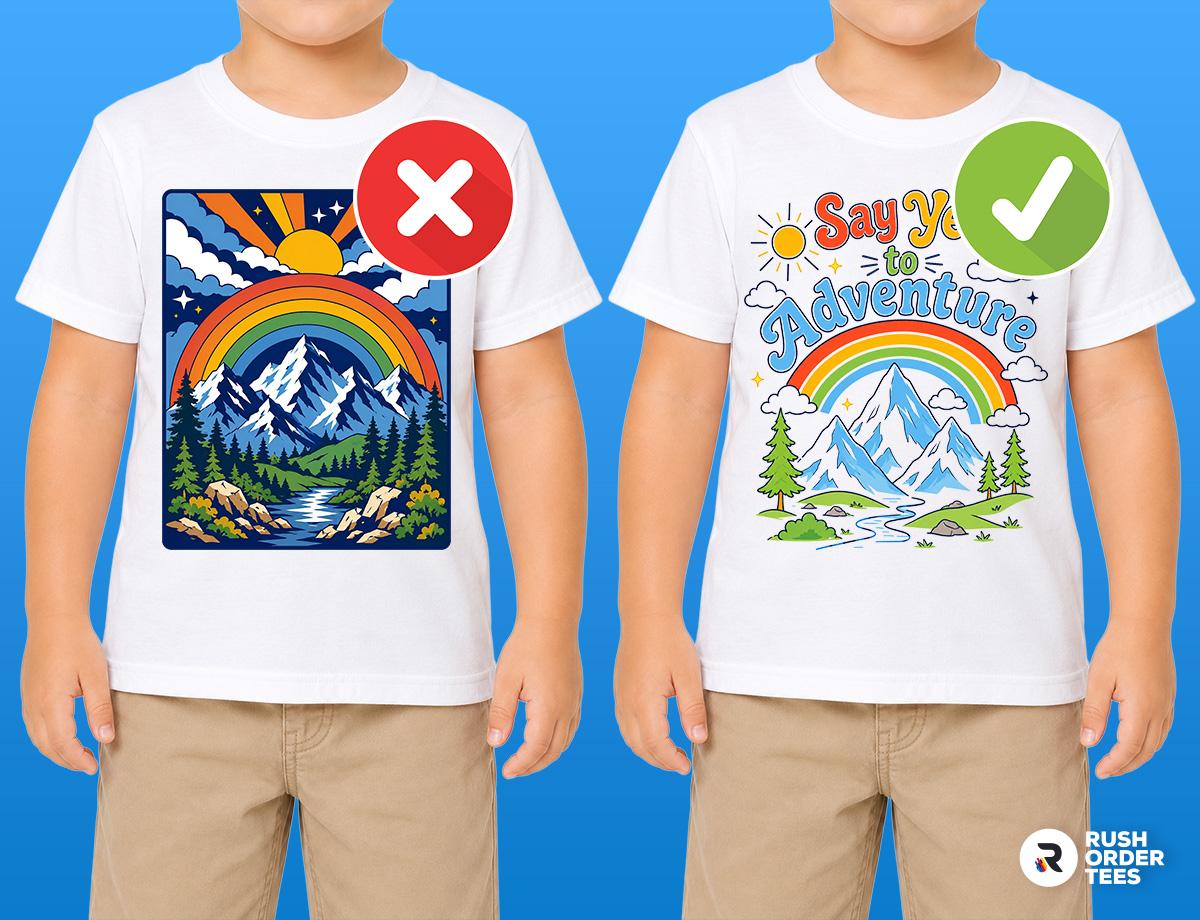
- Large solid prints don't play well on small bodies. A big, ink-heavy design that looks great on an adult XL can feel stiff, heavy, and uncomfortably warm on a toddler tee. The more ink coverage on a garment, the less the fabric can breathe (and kids run hot as it is).
- Use negative space strategically. Outlines, open lettering, and designs that incorporate the shirt color reduce ink coverage without sacrificing visual impact. An "inverted" design approach–where the garment color does some of the work–keeps prints lighter and more comfortable.
- Avoid the "sweat patch" problem. Solid rectangular prints on chest or back placements can trap heat and moisture underneath, creating a visible sweat outline around the design. Breaking up solid areas with open elements or textured fills helps air circulate and prevents that clammy, stuck-to-the-skin feeling.

Scale Designs for Smaller Bodies
- Standard adult print sizes don't translate directly. A 12-inch wide chest print that looks proportional on an adult large will overwhelm a youth small or swallow a 3T entirely. Every design needs to be scaled intentionally for the garment size it's going on, not just shrunk down as an afterthought.
- Think proportionally, not just dimensionally. It's not enough to reduce a design by a fixed percentage. A graphic that sits comfortably between the chest seams on an adult tee might extend past the shoulders on a toddler garment at the same relative scale. Check placement against the actual garment dimensions for each size in your order.
- Plan for size runs upfront. If you're ordering across multiple age groups (say, baby through youth XL for a family reunion) create two or three scaled versions of the design rather than using one size across the board. DTF transfers make this especially practical, since you can produce multiple sizes of the same artwork without additional setup costs.
Prioritize Comfort Over Complexity
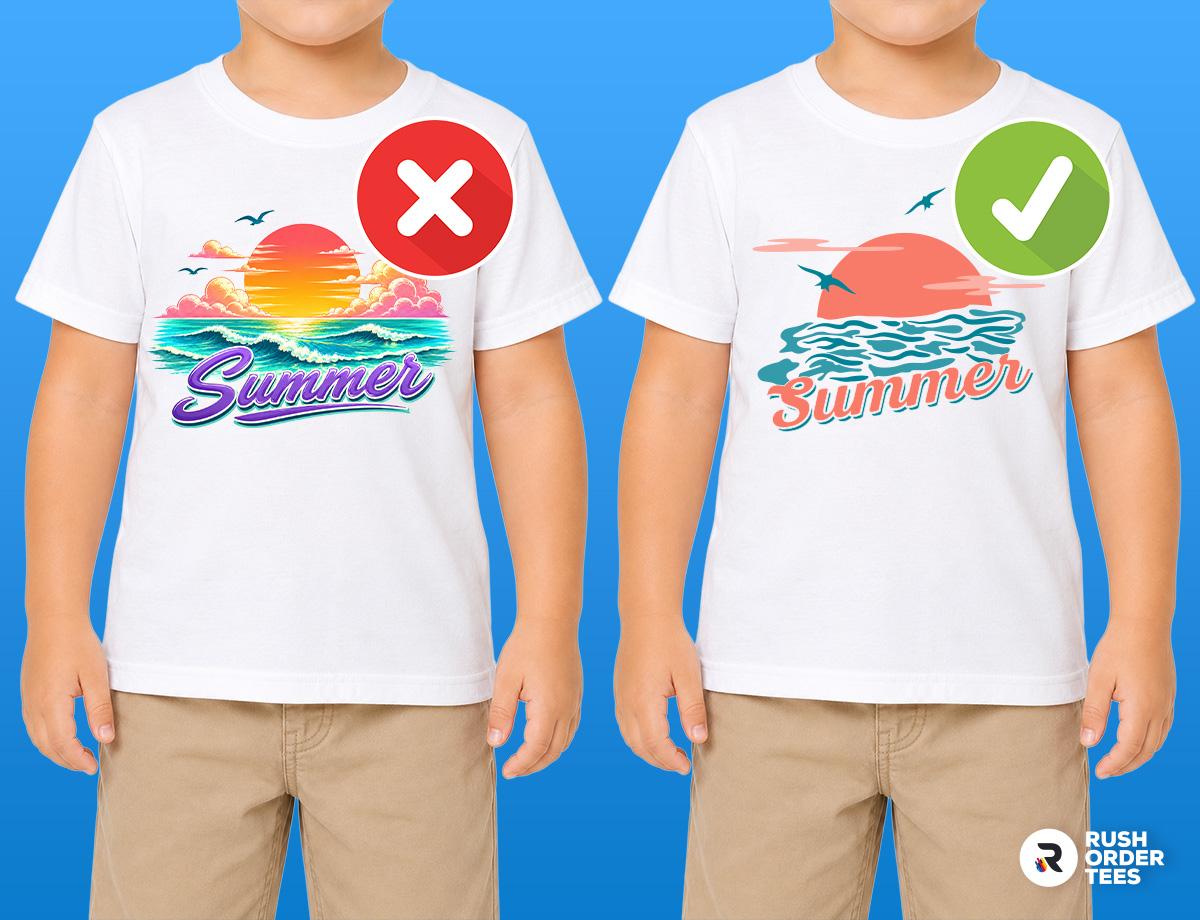
- Soft hand feel trumps visual impact every time. A design can look incredible on screen and still get rejected by a five-year-old who doesn't like how it feels. Fewer ink layers mean a softer, more breathable print. And for kids, wearability always wins over wow factor.
- Simplify when possible. Detailed designs with many color layers build up more ink on the fabric surface. If you can communicate the same idea with three colors instead of seven, the print will feel lighter and more comfortable against skin. This is especially important for baby and toddler garments where fabric softness is the top priority.
- Sample before you commit. Order a test print on the actual garment before placing a bulk order. Feel the print, wash it a couple of times, and evaluate how it holds up and how it sits against skin. This step catches comfort issues that aren't visible on a screen mockup.
Design for Durability
- Kids' clothes live hard lives. Between playground slides, grass stains, food spills, and near-daily washing, children's apparel takes more abuse in a month than most adult clothing sees in a year. Your decoration method and design choices need to account for that.
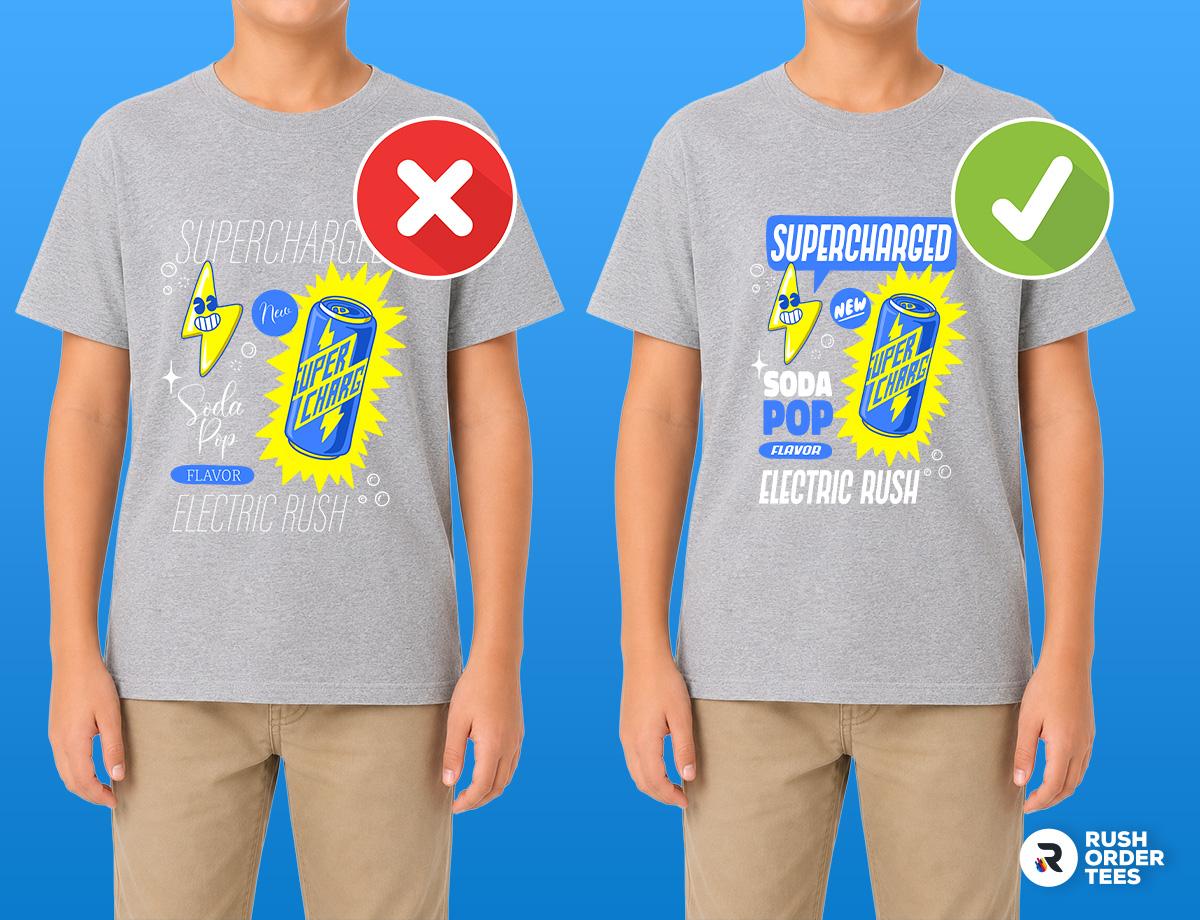
- Avoid ultra-fine details that degrade over time. Thin lines, tiny text, and intricate patterns are the first elements to crack, peel, or blur after repeated wash cycles. Bolder strokes and slightly thicker line weights hold up significantly better on kids' garments.
- Both DTF and screen printing deliver strong wash durability. The decoration method matters less than the execution. Properly cured screen prints and correctly applied DTF transfers both withstand dozens of wash cycles without significant fading or cracking. The key is working with a printer who understands proper cure times and application settings.
Design Ideas by Age Group
What kids want to wear–and what parents will actually buy–shifts dramatically as children grow. A design that delights a toddler will embarrass an eight-year-old, and what a ten-year-old thinks is cool will make a pre-teen cringe. Matching your design themes and style to each developmental stage keeps your custom apparel relevant and wearable.

Babies (0–24 Months)
- Keep it clean and simple. Babies aren't choosing their own clothes, so designs need to appeal to parents and gift-givers. Clean graphics, soft color palettes, and minimal ink coverage work best on personalized baby apparel. Think single icons, short phrases, and designs that photograph well for all those milestone posts.
- Popular themes that sell consistently. "Little brother/sister" announcements, birth stats (name, date, weight), monthly milestone markers, holiday firsts, and simple animal icons drive the bulk of custom baby orders. Personalization is huge in this category: a generic onesie is fine, but one with a baby's name on it becomes a keepsake.
- Design style: less is more. Soft pastels or high-contrast minimal designs (think black on white) both work well. Avoid busy compositions, dense ink coverage, or small text that won't read clearly at a glance. The goal is a design that's visually appealing without adding stiffness or weight to delicate fabrics.
Toddlers (2–4 Years)
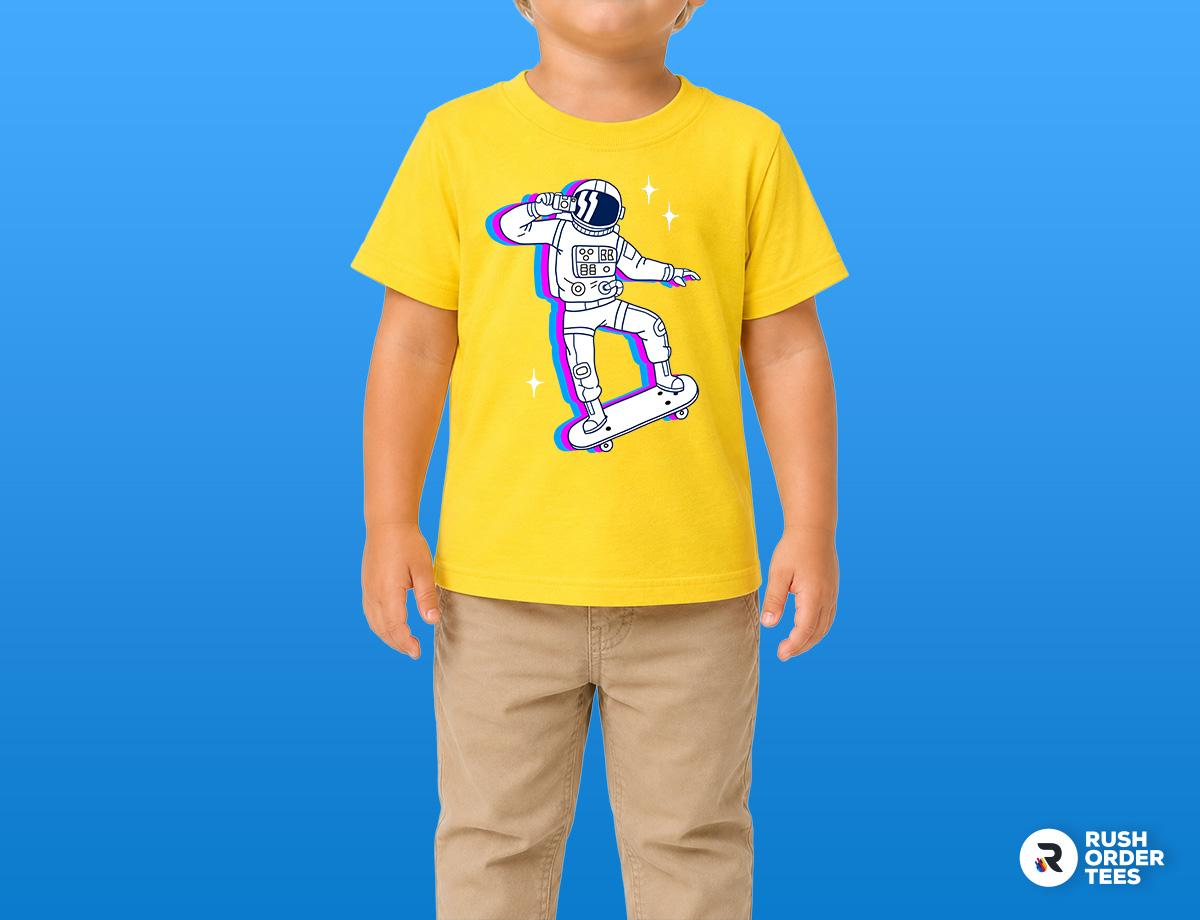
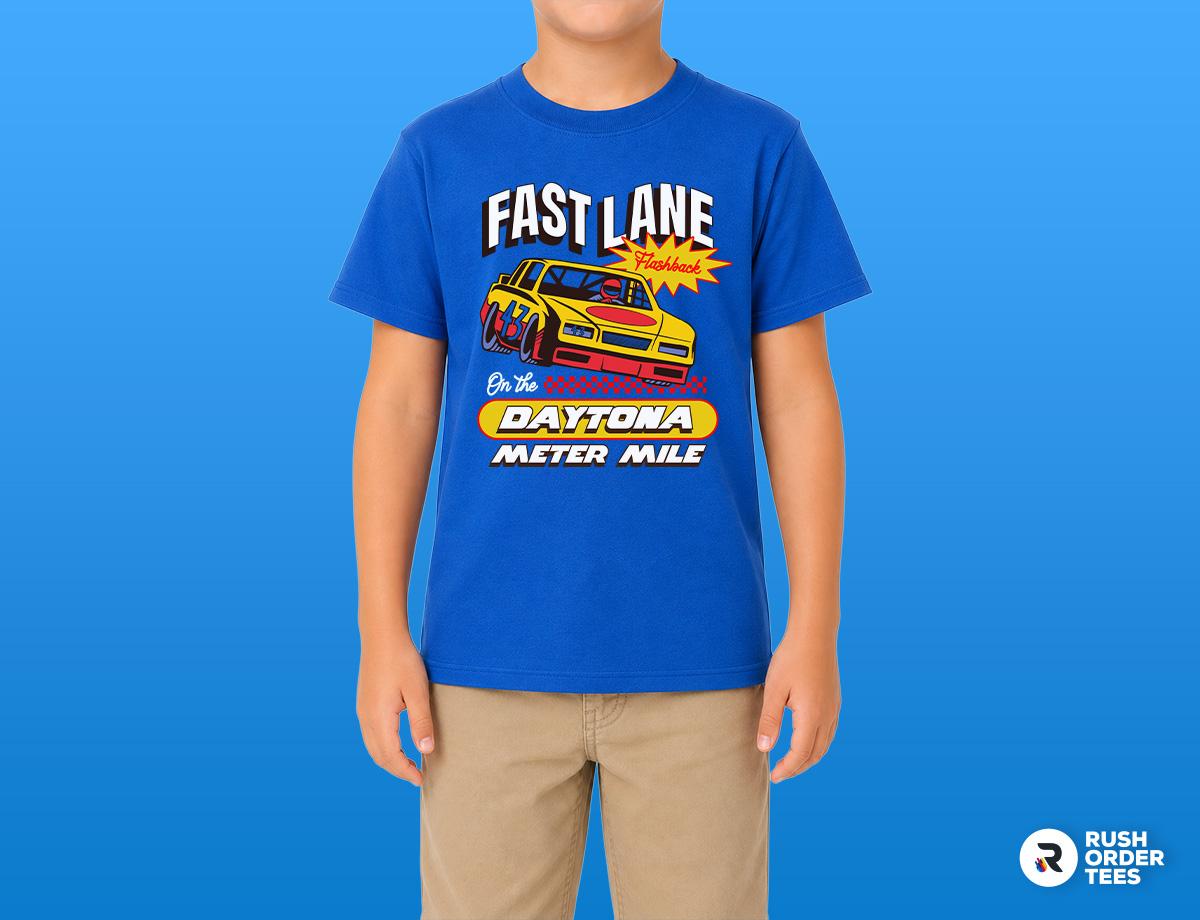
- Bold, bright, and instantly recognizable. Toddlers are drawn to color and simple shapes they can identify: animals, vehicles, dinosaurs, stars. Designs should read clearly from a distance and not rely on fine detail or small text to communicate. Big, graphic elements in saturated colors get the best reaction from this age group.
- Popular themes that sell consistently. Trucks, dinosaurs, farm and zoo animals, ABCs and 123s, and matching sibling sets are perennial favorites for toddler apparel. Coordinated family designs where the toddler version complements (but doesn't exactly duplicate) the adult version also perform well.
- Design style: fun over sophistication. This isn't the audience for subtle gradients or minimalist typography. High-contrast prints with chunky shapes and easy-to-read lettering work best. Keep placement centered and proportional; a design that overwhelms a toddler t-shirt defeats the purpose no matter how cute the artwork is.
Little Kids (5–7 Years)
- Interests and identity start to matter. This is the age when kids develop opinions about what they wear, and graphic tees become a way to express emerging interests. Superheroes, space themes, animals, sports, dance, and school mascots all resonate. Designs that connect to something a child cares about turn a plain t-shirt into a favorite they'll grab first every morning.
- Popular themes that sell consistently. School pride wear, sports graphics, personalized name designs, initials, and hobby-specific artwork (ballet shoes, soccer balls, rockets) drive this category. Bold, high-contrast prints that read clearly and feel "big kid" rather than babyish hit the sweet spot.
- Design style: bright and expressive. Big front graphics in vibrant colors tied to hobbies and interests work best. Avoid motifs that feel too young for this group. A kid who just started kindergarten doesn't want to wear the same dinosaur style their toddler sibling has. The same theme can work across ages, but the execution needs to grow up with the audience.
Big Kids (8–12 Years)
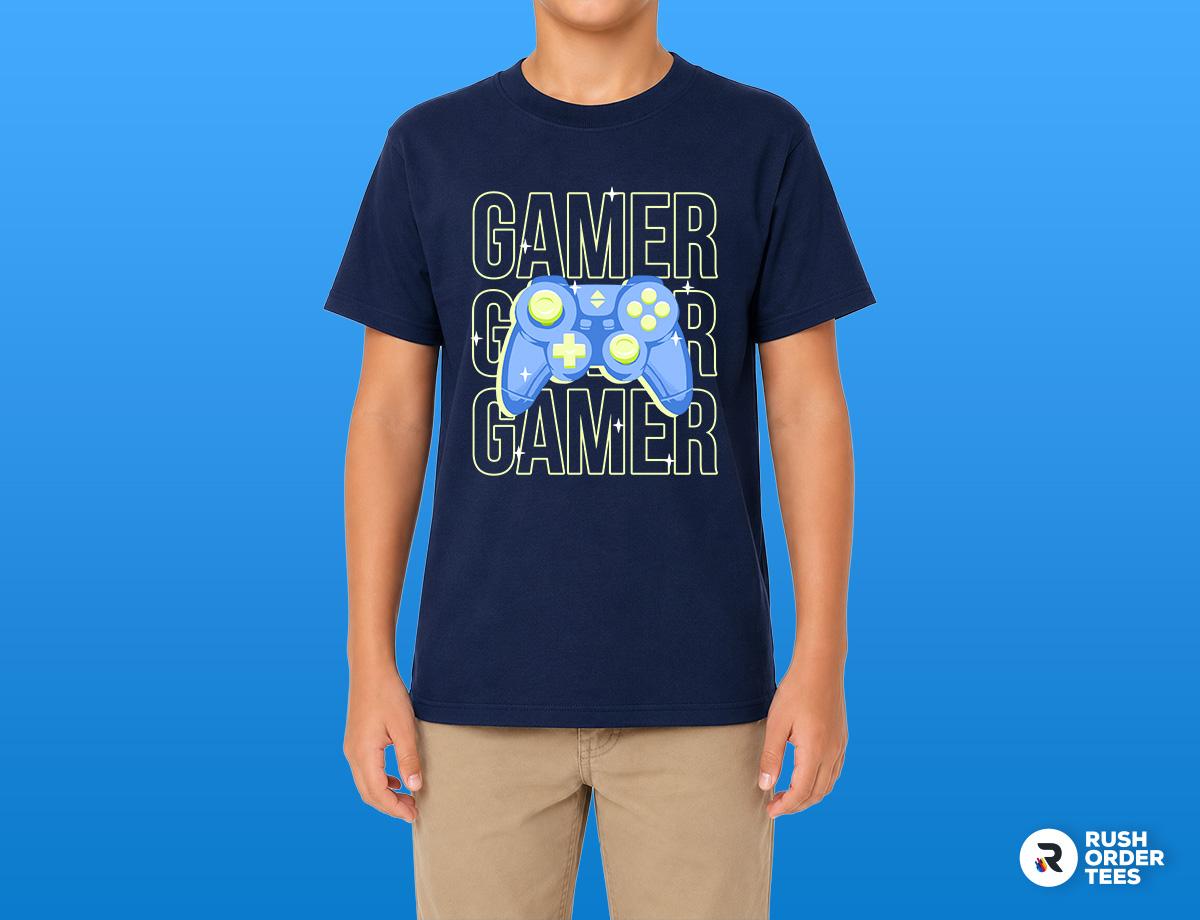
- Group identity drives design. At this age, apparel becomes about belonging to a team, a school, a friend group, or a subculture. Sports logos, team colors, club names, and coordinated group designs are what move in this category. Kids want gear that signals they're part of something, and custom hoodies, tees, and hats are how they show it.
- Popular themes that sell consistently. Travel sports and school spirit wear generate repeat orders throughout the year. Gaming references (Minecraft, Roblox-inspired aesthetics), skateboard culture, music themes, and matching friend group designs all perform well. Streetwear influences start creeping in: oversized fits, bolder graphics, and designs that mirror what older teens and adults wear.
- Design style: coordinated and intentional. Think beyond a single tee. Matched sets across tees, hoodies, and hats create a cohesive look for teams and groups. Design elements that work at multiple scales (a logo that reads on a hat brim and a hoodie chest) give you more flexibility across garment types.

Youth/Pre-Teens (13–15 Years)
- Trend-conscious and allergic to anything juvenile. Pre-teens follow social media trends closely and will reject anything that feels too young. Minimalist graphics, subtle branding, wordmarks, and clean compositions appeal to this group. If a design could appear on a toddler tee without modification, it won't work here.
- Popular themes that sell consistently. Music and band references, abstract graphics, ironic or clever text, and social media-driven trends dominate. School spirit wear still sells, but the aesthetic needs to feel more sophisticated: varsity-style lettering, tonal color schemes, and restrained logo placements over loud, multicolor graphics.
- Design style: less is more, but make it intentional. Oversized back prints with small chest logos, tonal or neutral palettes with occasional bright accents, and designs that leave breathing room all work well. This age group responds to the same design principles driving adult streetwear–clean lines, deliberate placement, and an overall sense that the piece was designed, not decorated.
Print Sizing for Kids' Apparel
Standard adult print dimensions don't work on kids' garments: a 12-inch chest print that looks balanced on an adult large will extend past the seams on a toddler tee. Scaling artwork properly for each age group is one of the most overlooked steps in custom youth apparel, and getting it wrong throws off the entire look.
Sizing Guidelines by Age Group
- Baby (0–24 months): 3–5 inches wide max for chest prints, even smaller for pocket-style placements on onesies. Keep designs compact and centered–there's very little usable space on infant garments.
- Toddler (2T–5T): 5–7 inches wide for front designs. A good rule of thumb is scaling back 20–30% from youth sizes. Designs that look modest on a youth small will look oversized on a 3T.
- Youth XS–S (roughly ages 5–8): 7–9 inches wide for full front prints, around 3 inches for left chest logos. This is where designs start to have more room to breathe, but proportional placement still matters.
- Youth M–L (roughly ages 9–12): 9–11 inches wide for full front designs, 3.5 inches for left chest. Approaching adult proportions, but not quite there–don't just default to adult sizing.
- Youth XL / Teen (ages 13–15): 10–12 inches wide for front prints, 3.5–4 inches for chest logos. These sizes closely mirror adult smalls and mediums, so standard adult print dimensions start to work.
Common Print Locations
- Center chest: Works well on collarless garments like tees and crewneck sweatshirts. Keep widths between 4–6 inches for younger kids, scaling up with garment size.
- Left chest: The classic logo spot. Size ranges from 2.5 inches on baby and toddler garments up to 3.5–4 inches on youth XL.
- Full front: Scale proportionally to the garment. A design that runs 12 inches on an adult tee might need to come down to 7 inches on a toddler size to maintain the same visual balance.
- Full back: Leave room for hood coverage on hoodies and pullover styles. Keep essential design elements in the upper portion so they aren't hidden when the hood lies flat.
Using DTF Transfers for Custom Sizing
- DTF makes multi-size runs simple. Because there's no screen setup, you can order the same design in multiple transfer sizes–one scaled for toddlers, one for youth small, one for youth large–without additional setup fees. This is the easiest way to maintain consistent branding across a full kids' size run.
- Create 2–3 scaled versions of your design. Rather than trying to make one print size work across baby through youth XL, plan for at least two or three size variants. The time spent scaling upfront pays off in a more polished, proportional result across every garment.
Personalization: The Detail That Makes the Difference
Adding a name, number, or custom detail transforms standard apparel into something personal. It's the single easiest way to increase the perceived value of a piece, and it drives repeat orders across every age group.
What Works Across All Ages
- Names and initials are the most popular personalization by far. From a baby onesie with a first name to a pre-teen hoodie with a monogram, this one never misses.
- Jersey numbers and team positions turn basic youth activewear into gear kids identify with. Even recreational leagues and school clubs see higher engagement when every kid gets their own number.
- Milestone details like birth dates, ages, and event-specific info (reunion years, camp sessions, graduation classes) give pieces a commemorative quality that parents and organizers love.
Group Personalization
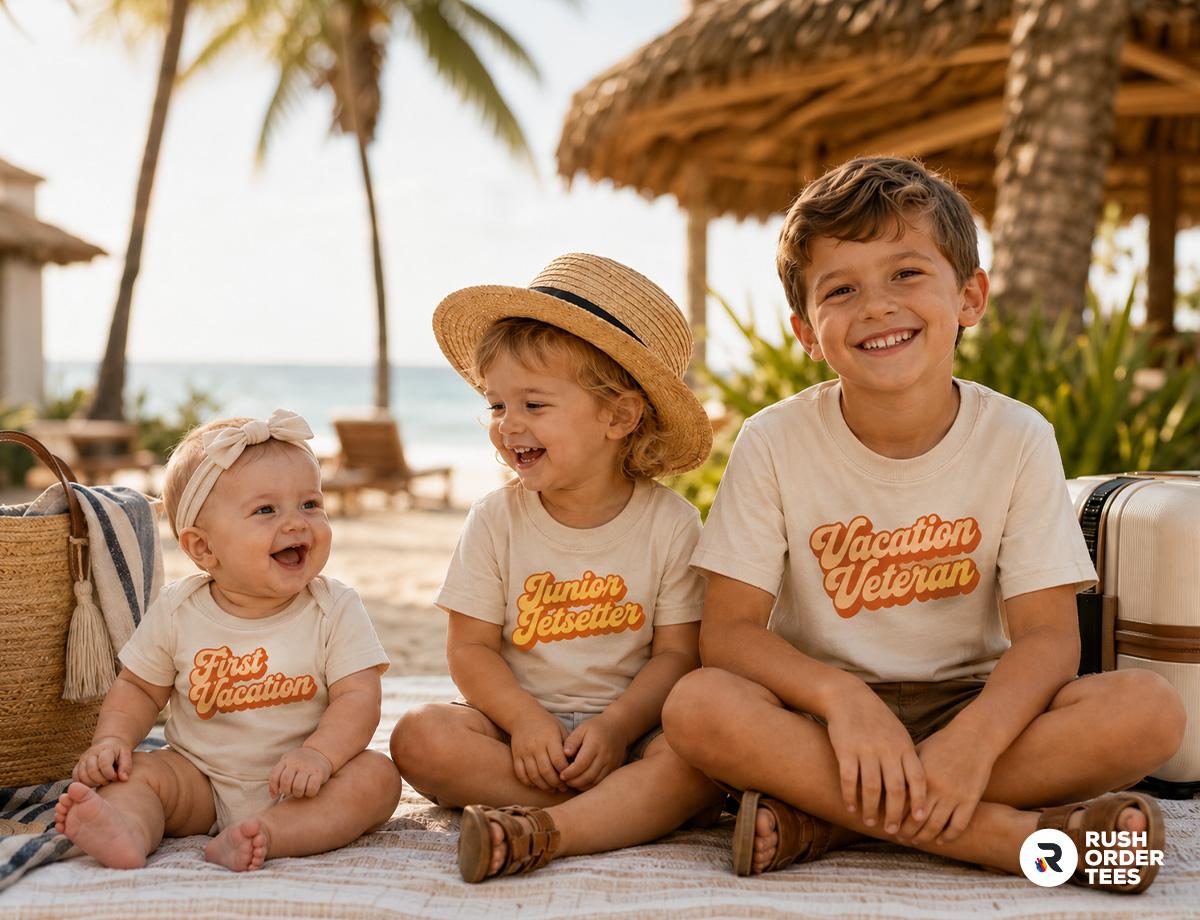
- Matching family sets with coordinated names or roles ("Mom," "Dad," "Big Sis," "Little Bro") are consistently strong sellers for reunions, vacations, and holidays.
- Team rosters and club member lists printed on the back of spirit wear create a sense of belonging that a generic logo alone can't match.
- Event-specific details like camp cabin assignments, classroom names, or reunion years add a layer of specificity that makes the piece memorable rather than disposable.
Execution Tips
- DTF handles personalization efficiently. Individual name transfers can be printed and applied one at a time, making it practical even for small orders with unique details on every piece.
- Plan font sizes for readability at scale. A font that looks great at adult sizes may become illegible on a toddler garment. Test your chosen typeface at the smallest size you'll need before committing.
- Keep placement consistent across size runs. Personalized elements should land in the same relative position on every garment, whether it's a baby onesie or a youth XL. Consistent placement keeps a group order looking cohesive rather than haphazard.
Making Custom Kids' Apparel That Actually Gets Worn
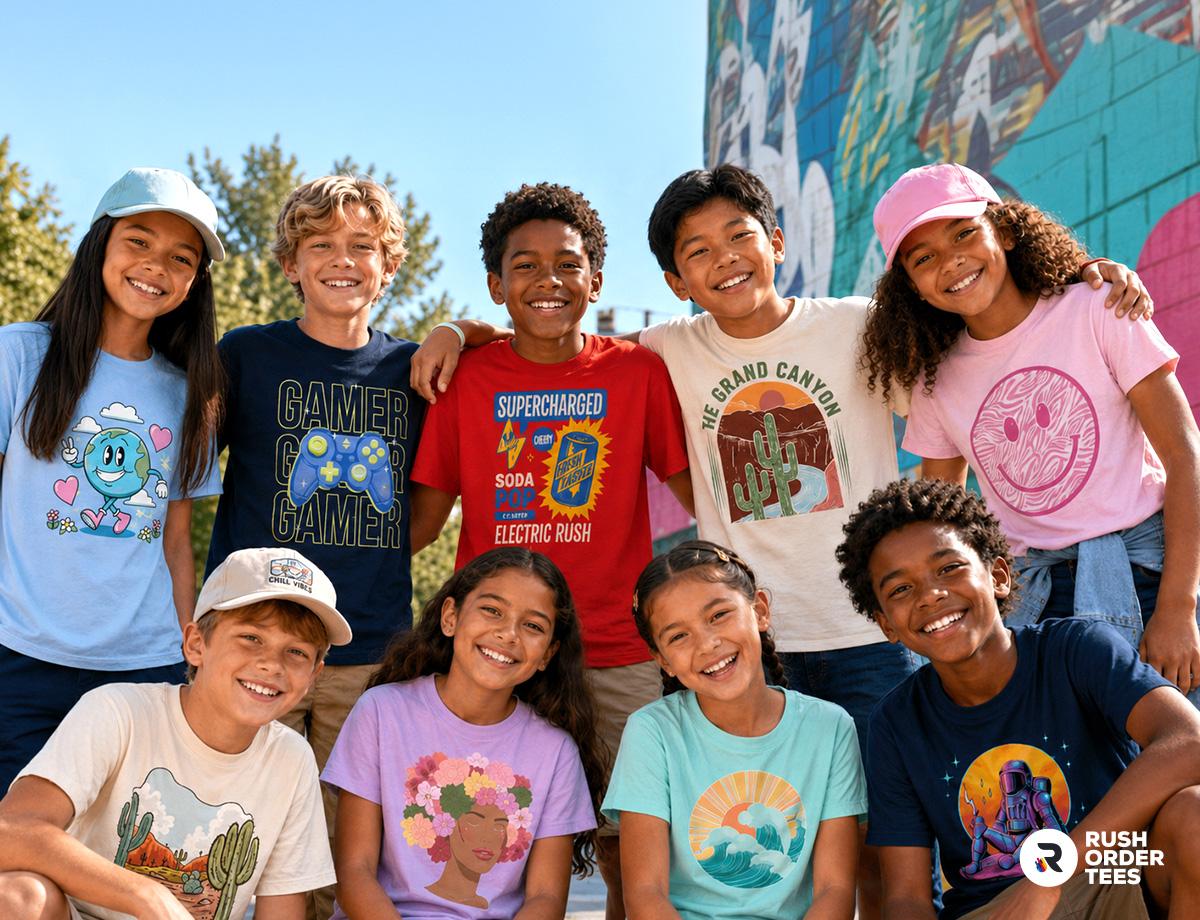
Thoughtful design and decoration choices are what separate custom kids' apparel that becomes a wardrobe favorite from pieces that sit in a drawer. Soft prints that don't sacrifice comfort for visual impact, age-appropriate themes that match what kids actually want to wear, properly scaled artwork that looks intentional rather than shrunken down, and the right decoration method for each garment type–these details add up.
DTF transfers handle most kids' applications well, soft-hand screen printing delivers for larger bulk orders, and embroidery belongs on hats, jackets, and structured outerwear where the backing won't bother sensitive skin. Pair those methods with designs scaled for smaller bodies and themes that evolve with each age group, and you'll create pieces kids reach for on their own.
RushOrderTees makes the process straightforward, whether you're printing a dozen personalized onesies for a baby shower or outfitting an entire youth sports league across multiple size runs. With DTF transfers, screen printing, and embroidery all available under one roof, plus a deep catalog of kids' apparel spanning infant through teen sizes, you can match the right garment to the right decoration method without juggling multiple vendors. For more help choosing garments, check out our guides to best-selling custom kids' apparel by age group and choosing the right fabrics for kids, or browse the full kids' collection to start building your order.

About the Author
A graduate of the Multimedia program at the University of the Arts in Philadelphia, Imri Merritt is an industry veteran with over 20 years of graphic design and color separations experience in the screen printing industry.