
Winter adds a layer of risk to every outdoor job. Shorter days cut into visibility, cold temperatures slow reaction times, and snow or ice turns familiar work zones into hazard areas. For crews working roadways, construction sites, warehouses, and utility corridors, standard warm clothing isn't enough. You need winter safety gear that combines insulation with hi-vis safety clothing to keep workers seen and safe through the worst months of the year.
This guide covers the main types of insulated hi-vis jackets, the safety standards behind them, and the features that separate reliable winter PPE from gear that falls short. We'll also walk through layering strategies, fabric choices, and the additional cold-weather accessories that round out a complete winter safety kit. And because your crew's gear should represent your organization, we'll touch on how to customize jackets without compromising the safety features that matter most.

Visibility Drops Fast in Winter–Your Gear Shouldn't
Daylight hours shrink dramatically in winter, and the conditions that fill those shorter days make visibility even worse. Fog, snow, sleet, and low-angle sun all reduce how far drivers and equipment operators can see. Add wet or reflective road surfaces that scatter headlight beams, and a worker in dark clothing becomes nearly invisible at distances where stopping in time still matters. Winter doesn't just make the job colder, it makes being seen harder at every hour of the shift.
That's where ANSI/ISEA 107 standards come in. This standard defines three performance classes based on how much fluorescent background material and retroreflective tape a garment must include.
- Class 1 covers low-traffic environments under 25 mph, requiring at least 217 square inches of fluorescent material and 155 square inches of reflective tape.
- Class 2 applies to workers near traffic between 25 and 50 mph, bumping those minimums to 775 and 201 square inches respectively.
- Class 3 provides the highest level of visibility for high-speed roadways and complex work zones, requiring 1,240 square inches of fluorescent material plus 310 square inches of reflective coverage that extends to the sleeves.
Most winter work environments–especially road construction, utility repair, and transportation–call for Class 2 or Class 3 protection.
Fluorescent colors like safety yellow-green and orange-red do the heavy lifting during daylight, creating contrast against natural backgrounds even on overcast winter days. Retroreflective tape takes over after dark, bouncing vehicle headlights back toward drivers to outline the wearer's shape from hundreds of feet away. In winter, both elements work harder than in any other season, which is why insulated hi-vis jackets need to maintain full ANSI compliance even with added bulk from insulation and weather-resistant shells. A jacket that keeps you warm but buries reflective tape under a storm flap or reduces fluorescent coverage below class minimums defeats the purpose.
Types of Insulated Hi-Vis Jackets
Not all winter safety jackets are built for the same conditions. The right choice depends on how cold it gets, how active the work is, and whether you're dealing with rain, wind, snow, or all three. Here's a breakdown of the five main styles you'll find when shopping for insulated hi-vis outerwear.
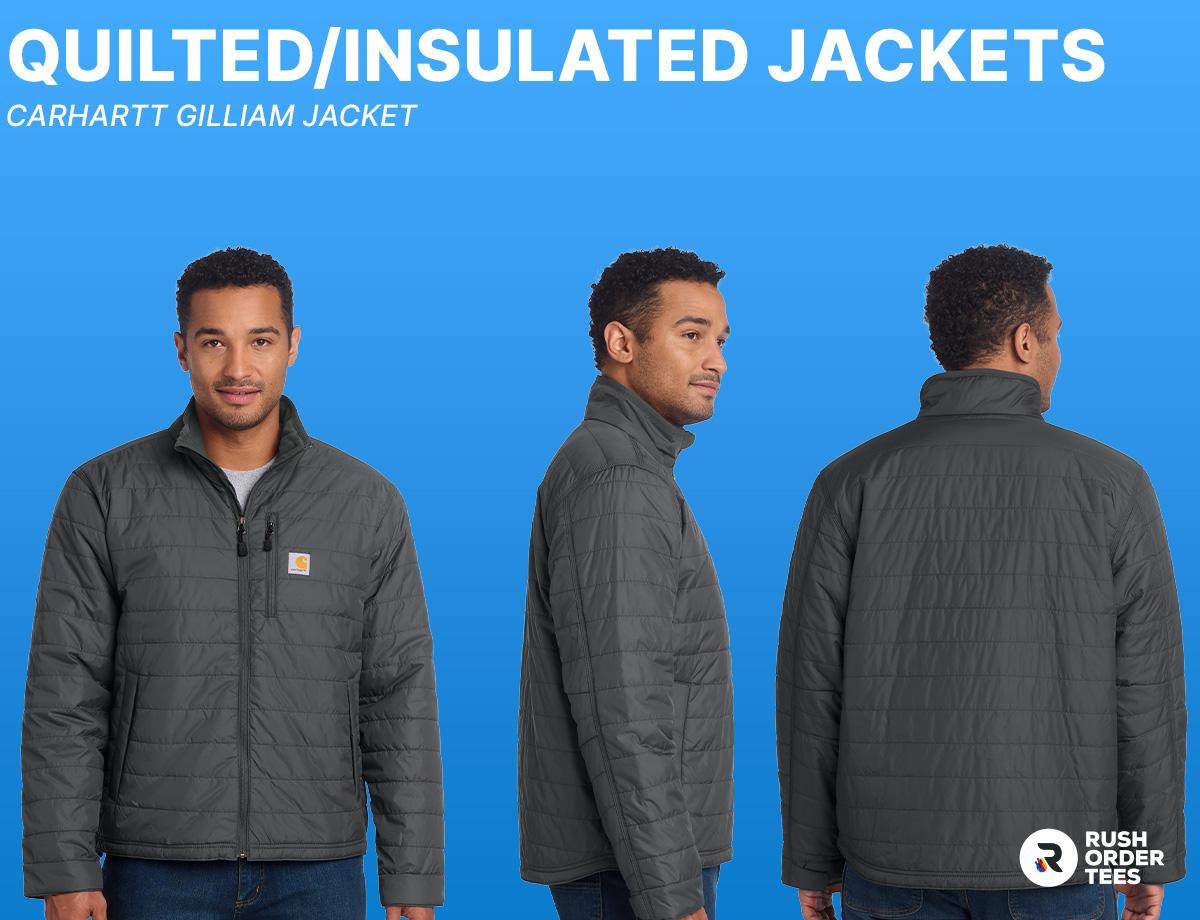
Quilted/Insulated Jackets
These are your straightforward cold-weather workhorses. Quilted hi-vis jackets use polyfill insulation stitched into a lightweight polyester shell, providing reliable warmth without adding excessive bulk. They're flexible enough for physical work like framing, wiring, or equipment operation, and most hit Class 2 or Class 3 visibility standards with reflective tape across the chest, back, and sleeves. For moderate winter conditions where temperatures hover in the 20s and 30s and precipitation isn't constant, a quilted insulated jacket handles the job well and keeps costs reasonable for outfitting full crews.
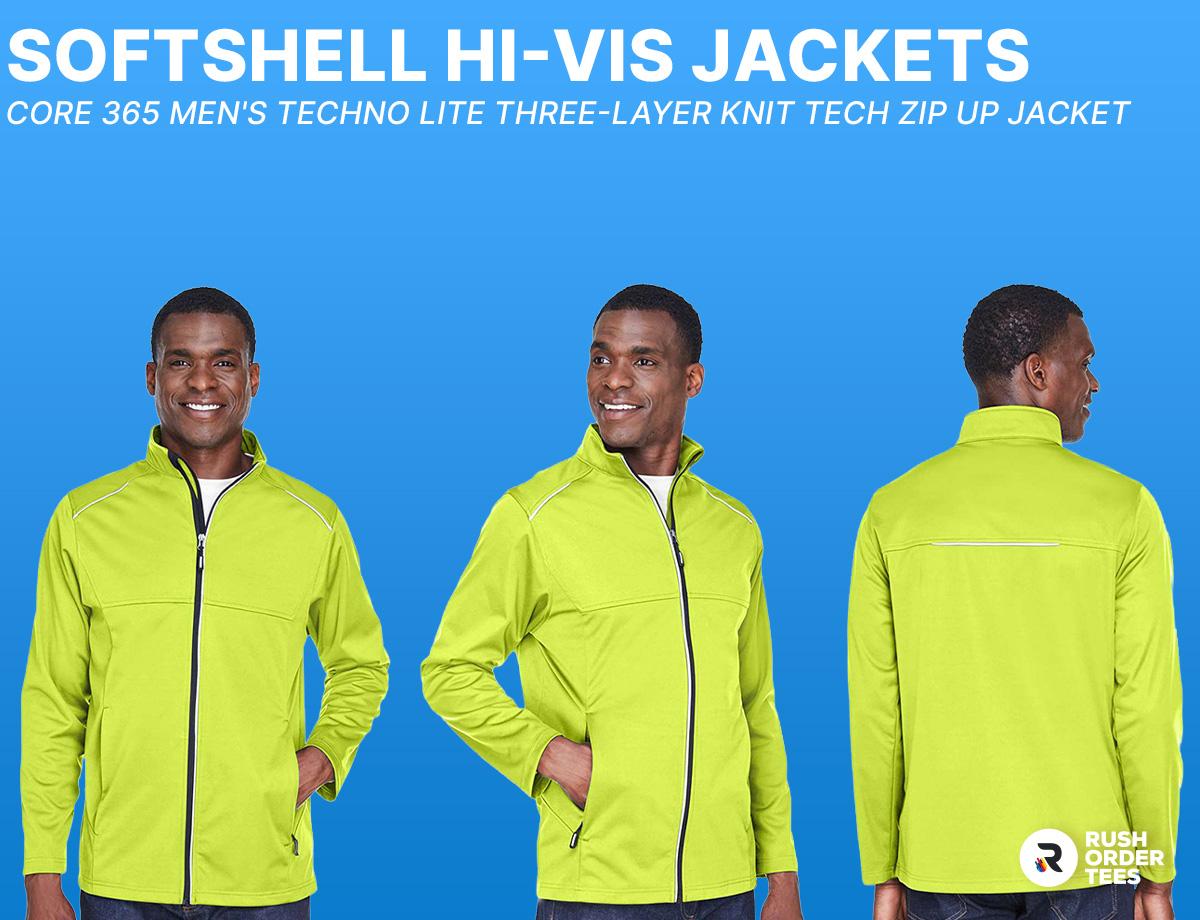
Softshell Hi-Vis Jackets
Softshell construction gives you wind blocking and water resistance in a jacket that moves with you rather than against you. The stretch fabric, typically a polyester/spandex blend with a DWR (durable water repellent) finish, sheds light rain and cuts wind chill while allowing the range of motion that active workers need for climbing, lifting, and bending. Softshell jackets won't hold up in a sustained downpour, but for jobs where you're generating body heat and need breathability as much as protection, they're hard to beat. They also tend to run slimmer, which makes layering underneath easier to manage.
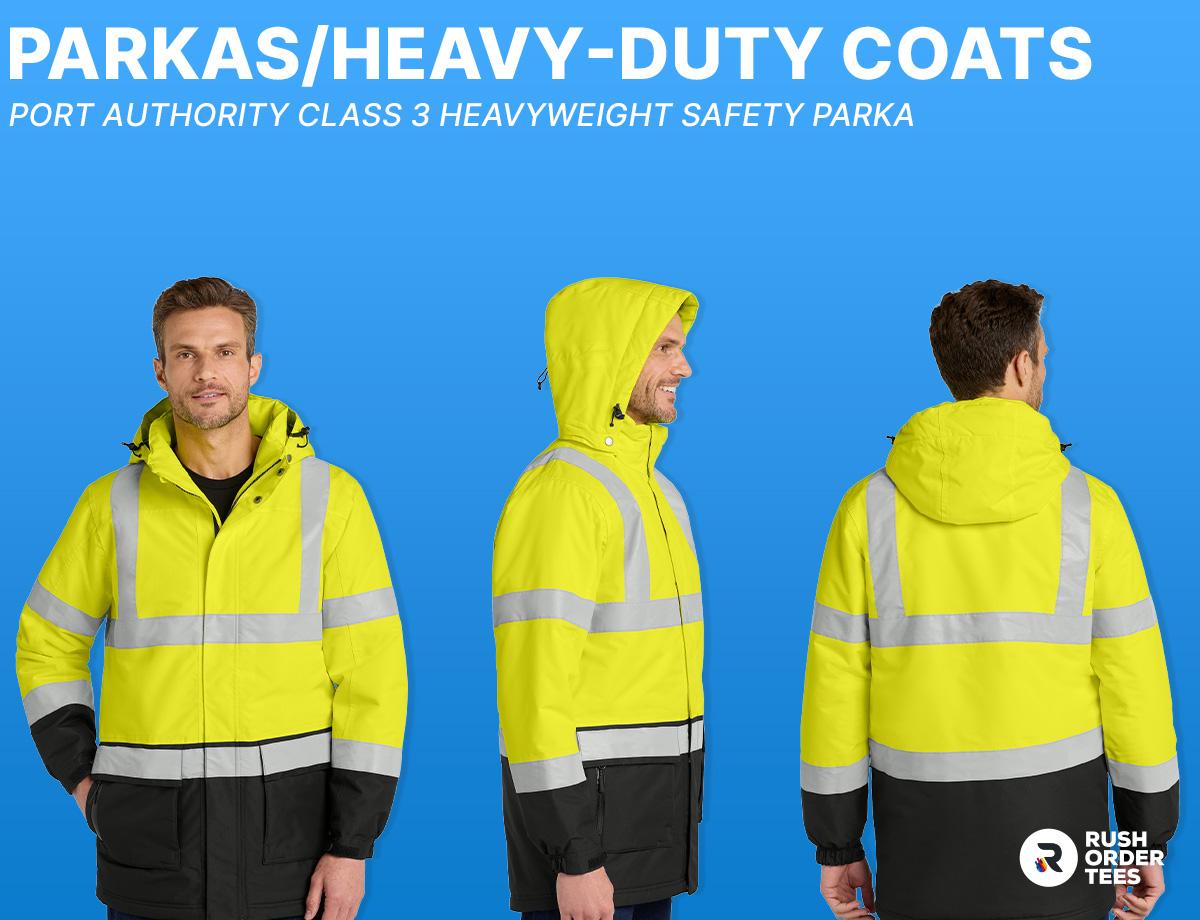
Parkas and Heavy-Duty Winter Coats
When the forecast drops below zero or crews are posted outdoors for extended shifts in brutal cold, parkas deliver the maximum insulation available in hi-vis outerwear. These jackets feature thicker polyfill (often 6 oz in the body and 4 oz in the sleeves) plus extended length that covers the hips and upper thighs for extra heat retention. Many parkas include removable hoods, fleece-lined collars, and fully seam-sealed waterproof shells rated at 8000MM or higher. The Port Authority Class 3 Heavyweight Safety Parka is a solid example: ANSI 107 Class 3 certified, 100% polyester shell, quilted lining, and 360-degree reflective tape visibility.
Hi-Vis Bomber Jackets
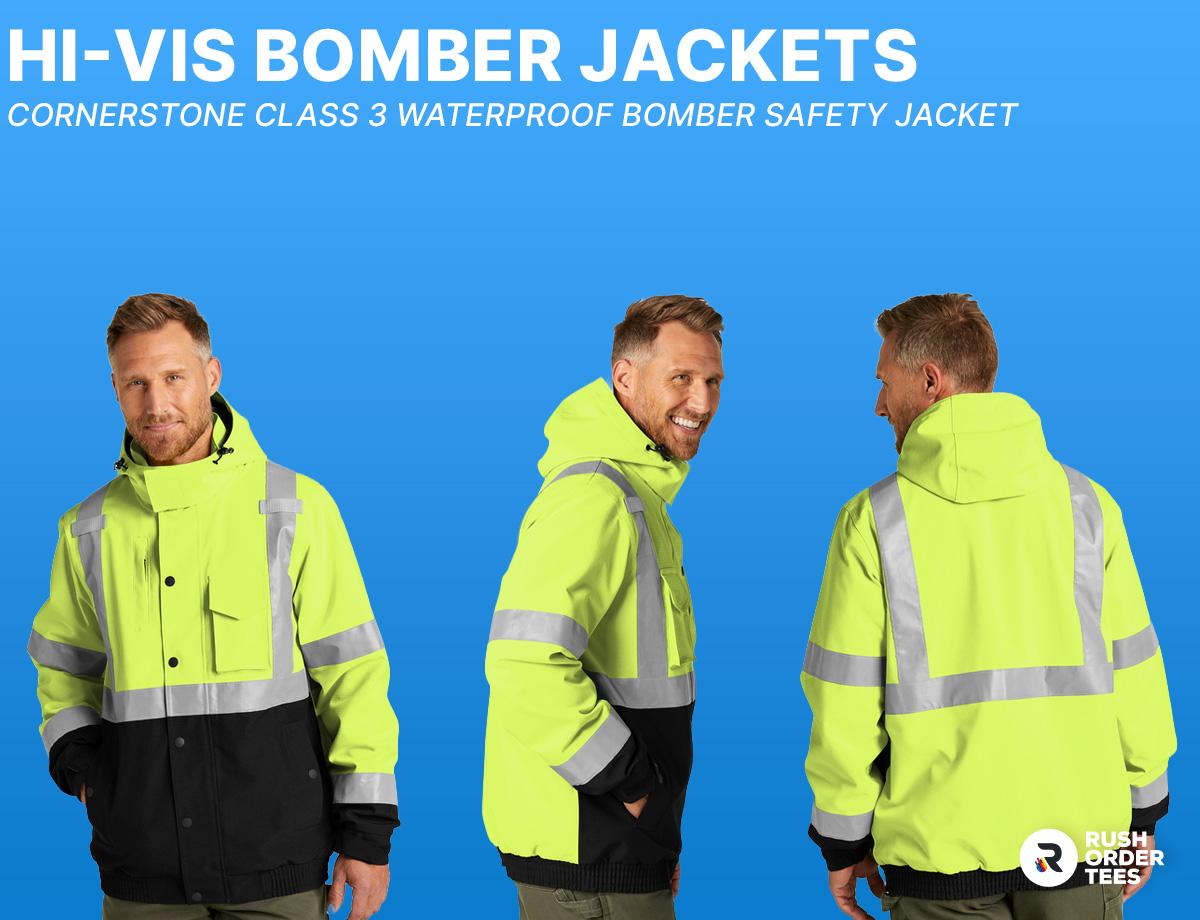
The bomber style has stuck around in workwear because it works. A shorter, waist-length cut keeps the jacket out of the way during physical tasks, while a durable shell–often waterproof nylon with a fleece lining–handles rain, wind, and moderate cold. Bomber jackets are popular with construction crews, truck drivers, and transportation workers who move between outdoor exposure and heated cabs or indoor spaces throughout the day. The classic ribbed cuffs and waistband seal in warmth and keep the fit snug, and the zip-front design makes them quick to put on and take off between tasks.
3-in-1 or Layered Systems
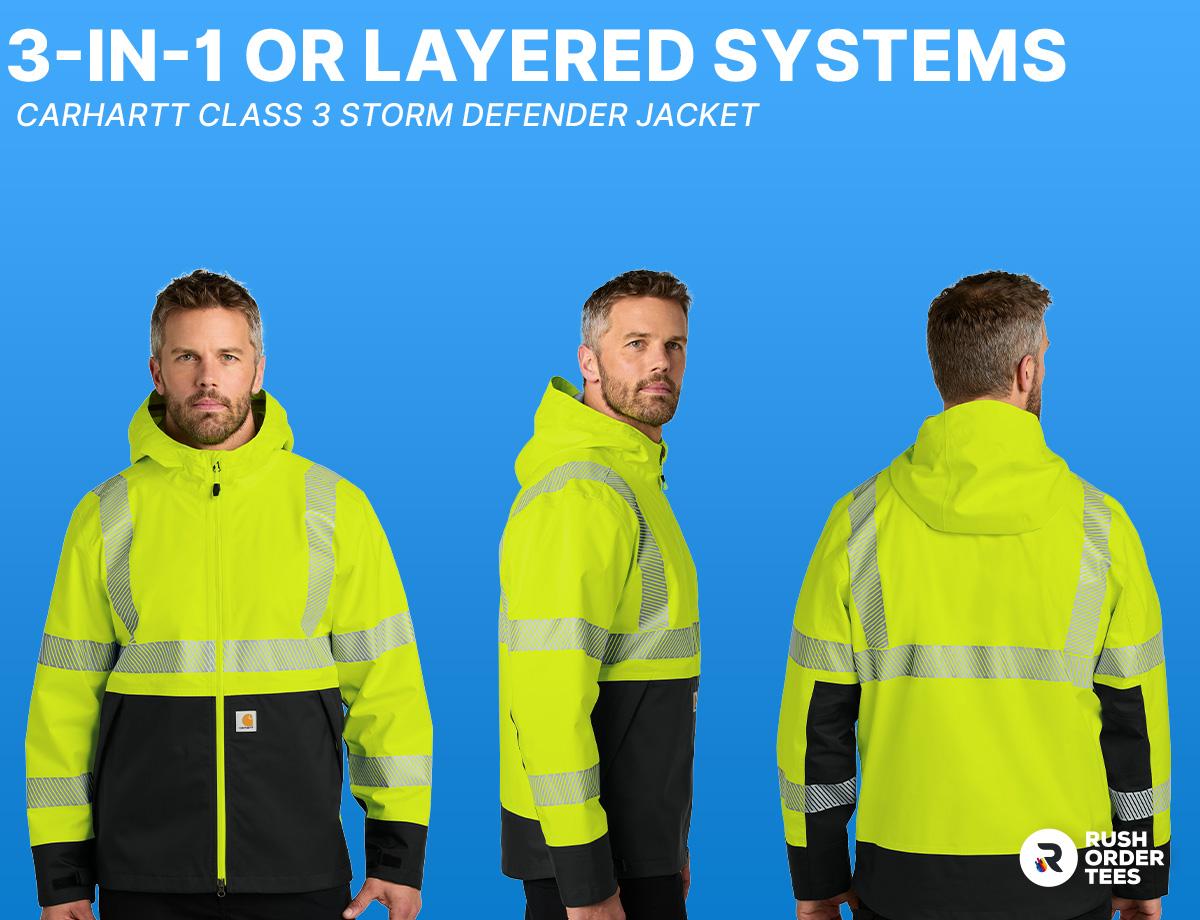
If your crew works through variable temperatures (cold mornings, milder afternoons, freezing overnight shifts) a 3-in-1 system offers the most flexibility per dollar. These jackets pair a waterproof or water-resistant outer shell with a removable insulated liner, usually fleece or quilted polyfill. Wear both pieces together in the coldest conditions, strip down to the shell when rain is the main concern, or use just the liner on cool days. Over a full winter season, a 3-in-1 system replaces two or three separate jackets, which makes it the most budget-friendly option for organizations outfitting large teams with custom safety winter jackets.
What Defines a High-Quality Winter Safety Jacket
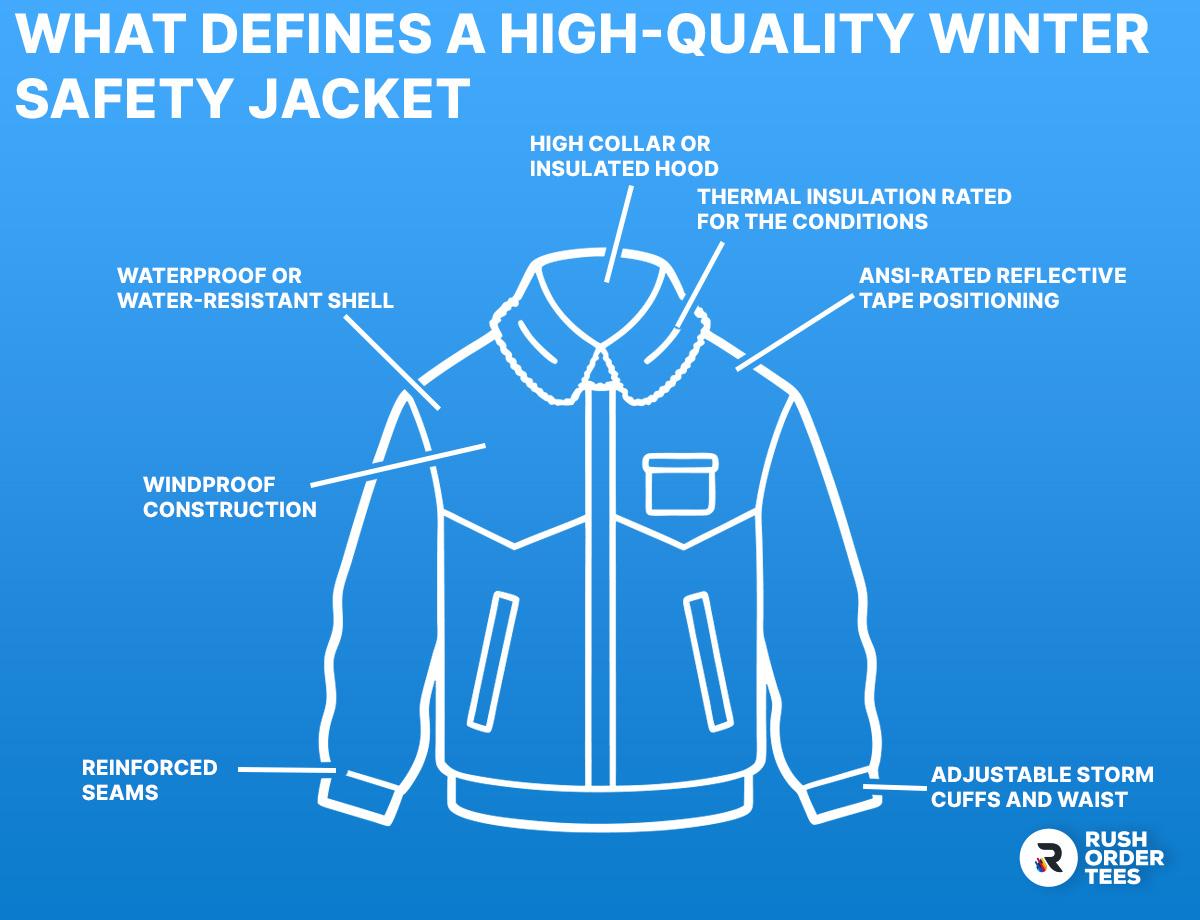
Plenty of jackets check the basic boxes for warmth and visibility, but the details separate gear that lasts a full winter season from gear that falls apart by February. Here's what to look for when evaluating insulated hi-vis jackets for your crew.
- ANSI-rated reflective tape positioning - Tape should run across the chest, back, shoulders, and sleeves for 360-degree visibility. Look for 2-inch retroreflective strips placed according to Class 2 or Class 3 requirements, with no gaps where insulation or design features interrupt the pattern.
- Waterproof or water-resistant shell - A polyester shell with a PU coating or DWR finish keeps rain and wet snow from soaking through to insulation layers. For sustained wet conditions, look for a rain jacket with waterproof rating of at least 5000MM with fully seam-sealed construction.
- Windproof construction - Cold air pushing through seams and fabric neutralizes insulation fast. Bonded shells, interior storm flaps behind zippers, and tight weave construction block wind penetration where it matters most.
- Reinforced seams - Triple-stitched or double-needle seams at stress points like shoulders, elbows, and underarms prevent splitting during physical work. This is the first place cheap jackets fail.
- Adjustable storm cuffs and waist - Hook-and-loop wrist closures and drawcord waists let workers seal out cold air and snow while adjusting fit over different base and mid layers.
- Thermal insulation rated for the conditions - Polyfill weight tells you how warm the jacket runs. A 4 oz fill handles moderate cold; 6 oz or higher suits below-freezing shifts. Synthetic insulation also retains warmth when wet, unlike down.
- High collar or insulated hood - Significant heat escapes through the neck and head. A fleece-lined stand-up collar or removable insulated hood makes a noticeable difference during long outdoor shifts.
- Job-site features - Mic tabs, radio loops, ID badge pockets, and pass-through ports for earbuds or communication equipment keep workers connected without compromising the jacket's weather seal.
Warmth, Durability & Comfort: Choose the Right Fabrics
The materials inside and outside a winter safety jacket determine how it performs in real conditions. Understanding what each fabric layer does helps you pick gear that holds up through a full season of hard use.
- Outer shells - Polyester is the most common shell material for hi-vis jackets because it holds fluorescent dyes well, resists abrasion, and accepts waterproof coatings. Ripstop weaves add tear resistance for workers around sharp edges or rough surfaces. Softshell fabrics blend polyester with spandex for stretch and mobility, trading some water protection for breathability.
- Insulation types - Polyfill (synthetic polyester fiber) is the standard for safety jackets because it retains warmth even when damp, dries quickly, and costs less than down. Quilted insulation stitches the fill into channels to prevent shifting and cold spots. Fleece linings add a soft, warm interior layer and work well in removable liner systems.
- Reflective tape construction - Stretch-reflective tape flexes with the fabric and holds up better during physical movement, reducing peeling and cracking at bend points like elbows and shoulders. Standard sewn-on tape is more affordable but stiffer, and can separate from the shell faster under heavy use.
- Waterproof coatings - PU (polyurethane) coatings bond directly to the shell fabric and provide reliable waterproofing at a lower cost. DWR (durable water repellent) finishes cause water to bead and roll off the surface, keeping the outer fabric from becoming saturated. Many jackets use both: a DWR finish on the outside with a PU membrane underneath for layered protection.
- Breathability - Active workers generate a lot of body heat, and a jacket that traps all that moisture inside becomes uncomfortable fast. Breathability ratings (measured in grams per square meter per 24 hours) tell you how much water vapor can escape through the fabric. For physical outdoor work, aim for at least 3000G/M². Pit zips and mesh-lined vents also help regulate temperature without removing the jacket.
How to Layer Properly Under a Hi-Vis Jacket
Even the best insulated hi-vis jacket can't do the job alone. A proper layering system manages moisture, traps heat, and lets you adjust throughout the day as temperatures and activity levels change.
- Base layer: moisture-wicking thermal - A synthetic or merino wool base layer pulls sweat away from skin and moves it outward, keeping you dry and warm. Look for polyester or polypropylene blends that fit snug without restricting movement. This is the most important layer in the system because once your base layer is wet, you'll feel cold no matter what's on top.
- Mid layer: fleece or insulated vest - The mid layer's job is heat retention. A fleece pullover, quarter-zip, or insulated vest traps warm air between the base layer and outer shell. Vests work well for workers who need arm mobility, while full-sleeve fleece adds warmth for stationary tasks like flagging or equipment monitoring.
- Outer layer: insulated hi-vis jacket - Your hi-vis jacket ties the system together, providing visibility, wind protection, waterproofing, and an additional layer of insulation on top of everything underneath. Make sure your jacket is sized to accommodate base and mid layers without bunching or restricting arm movement.
- Skip the cotton - Cotton absorbs moisture and holds it against your skin, which accelerates heat loss in cold conditions. This applies to undershirts, flannels, and especially socks. Synthetic fabrics or wool blends outperform cotton in every winter layering scenario.
- Manage airflow to prevent overheating - That trapped moisture chills you the moment you stop moving. Use pit zips, remove your mid layer during high-activity periods, and choose jackets with adjustable cuffs and vents so you can regulate temperature throughout a shift rather than cycling between too hot and too cold.
Complete the Winter Safety Kit With Additional Cold-Weather PPE
A jacket covers your core, but winter exposes every part of the body to cold, moisture, and reduced visibility. Rounding out your crew's winter PPE with the right accessories keeps workers protected head to toe.
- Hi-vis insulated gloves - Cold hands lose dexterity fast, which leads to dropped tools and sloppy work around dangerous equipment. Insulated gloves with hi-vis backing and reflective accents maintain hand signals' visibility while keeping fingers warm enough to grip, fasten, and operate controls.
- Thermal beanies and hard hat liners - A standard hi-vis beanie adds warmth and visibility, but workers in hard hat zones need low-profile thermal liners that fit underneath without pushing the hat out of position. Look for fleece or synthetic liners designed specifically for hard hat compatibility. Check out our selection of customized safety hats.
- Neck gaiters - A polyester fleece or merino wool gaiter protects the neck and lower face from wind and cold without the bulk of a scarf that can catch on equipment. Pull it up over the nose during extreme cold or high winds, and push it down when you move indoors.
- Hi-vis snow pants or bibs - Legs take a beating from wind, snow, and kneeling on frozen ground. Insulated hi-vis bibs with reflective tape extend full-body visibility compliance while protecting the lower half from cold and moisture. Bib-style overalls stay in place better than pants during physical work and eliminate the gap between jacket and waistband.
- Waterproof boots with thermal lining - Wet, cold feet are a direct path to frostbite and lost productivity. Insulated waterproof boots rated for the temperatures your crew faces should be non-negotiable winter PPE. Look for 400g to 800g Thinsulate or equivalent insulation depending on activity level and climate.
- Anti-slip winter traction cleats - Ice and packed snow turn job sites into slip-and-fall hazards overnight. Strap-on traction cleats with tungsten carbide or steel studs grip frozen surfaces and fit over work boots in seconds. They're cheap insurance against the most common winter worksite injury.
Keep Your Hi-Vis Gear Working All Season
Winter gear takes a beating, and neglected equipment loses its protective qualities faster than you'd expect. A few simple maintenance habits keep your hi-vis jackets performing through the entire season.
- Wash properly to preserve reflective tape. Follow the manufacturer's care label, but as a general rule, wash hi-vis gear in warm water with mild detergent on a gentle cycle. Skip the bleach and fabric softeners. Both degrade reflective tape adhesive and break down fluorescent dyes over time.
- Reapply DWR coatings as needed. That water-beading finish on your jacket's shell wears down with use and washing. When you notice water soaking into the fabric instead of rolling off, spray-on or wash-in DWR treatments restore the repellency without damaging the garment or its safety features.
- Store gear dry. Stuffing a damp jacket into a locker or truck box invites mold and mildew, which weaken fabric and create odor problems. Hang jackets to air dry completely before storing, and keep them in ventilated spaces away from direct heat sources that can warp reflective tape.
- Inspect reflective tape regularly. Tape that's peeling, cracked, or heavily scuffed loses its ability to bounce light back to drivers. Check tape conditions every few weeks during heavy-use months, and retire jackets that no longer meet the reflective coverage minimums for their ANSI class. Visibility gear that doesn't reflect isn't safety gear anymore.
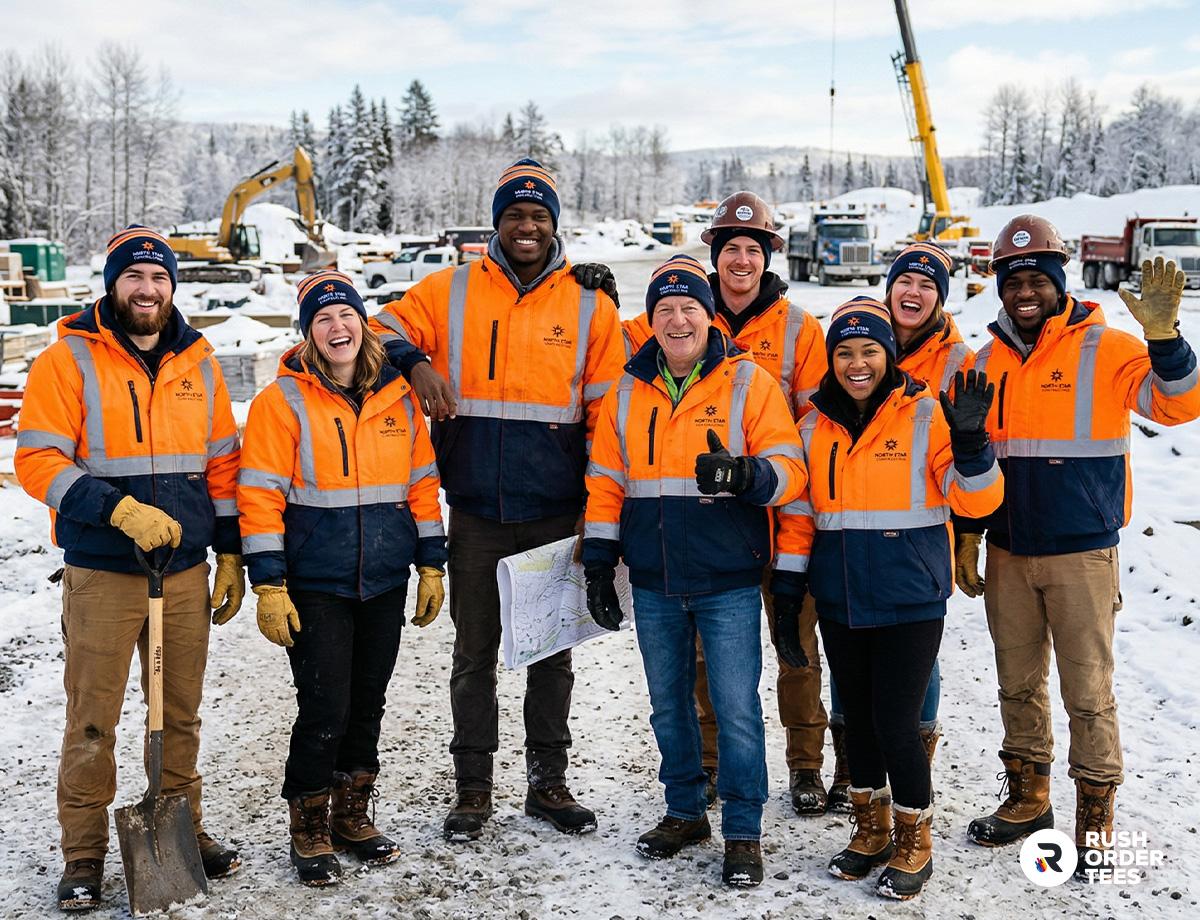
Gear Up for a Safer Winter
The right winter safety gear keeps your crew warm, visible, and productive when conditions are at their worst. Matching the jacket style to your work environment, choosing fabrics that balance insulation with breathability, layering properly underneath, and rounding out the kit with cold-weather accessories from head to toe–that's what separates a well-equipped team from one that's just trying to get through the shift.
RushOrderTees carries a full range of hi-vis safety jackets, hoodies, vests, and headwear built for winter job sites–all customizable with your company logo through embroidery, screen printing, or patches without compromising ANSI compliance. Whether you're outfitting a small crew or placing a bulk order for an entire organization, our team can help you find the right combination of warmth, visibility, and branding. Browse our hi-vis safety collection to get started, or contact us for a personalized recommendation.

About the Author
A graduate of the Multimedia program at the University of the Arts in Philadelphia, Imri Merritt is an industry veteran with over 20 years of graphic design and color separations experience in the screen printing industry.